East Orange’s post office opened in 1869, and 32% of its homes were built before 1940
More historic than 74% of U.S. towns · #155 of 468 in New Jersey. What drives it
6 places in town are on the National Register, among them two historic districts with 22 buildings between them. Below: 10 old photos and papers, maps from 1888 on, and the census since 1870.
From East Orange’s archive · credits on each photo
Quick answers
How East Orange began
When was East Orange founded?
1869
The East Orange post office opened in 1869, the earliest record of the town by name. Two smaller post offices, Brick Church (1882) and Ampere (1898), opened inside today’s city and later closed.
First census: 4,315 in 18702020 census: 69,612157 years
How historic is East Orange?
B+
More historic than 74% of U.S. towns, on its age, its old homes and the National Register.
Founding year: the first East Orange post office (Blevins & Helbock, CC0).The full story ↓
History grade
What drives East Orange’s History grade
On its age, its old homes and the National Register, East Orange is more historic than 74% of U.S. towns, #155 of 468 in New Jersey. Its share of homes from before 1940 holds the grade up; its age pulls it down.
B+
HistoryA character grade: shown, never part of East Orange’s overall grade.
New Jersey towns list more on the Register than most of the country (a typical New Jersey town has 3.7 per 10,000 residents, the U.S. 2.4), so East Orange’s 4.1 sits near the middle of its state (53% of New Jersey towns have fewer) while its 29 historic buildings outnumber those of 81% of U.S. towns.
How sure. Graded on any two of the three inputs instead, the letter would range from B− to A. The pre-1940 share (±2.1 points) is firm at this size. The founding year is the first post office, not a stated founding date.
Founding year: the first post office (other dates in Quick answers). Homes: Census ACS 2020–24. National Register: National Park Service, May 2026 list; each listing counted once (boundary changes and added documentation belong to their listing), and a historic district counts its contributing buildings. How TownRatings grades history →
What stands out about East Orange’s past
Read from the archive, the National Register and the record. The page puts what stands out first.
East Orange had its origins in Connecticut's New Haven Colony. In 1666, a group of 30 of New Haven's families traveled by water to found "a town on the Passayak" River. They arrived on territory now encompassing Newark, the Oranges, and several other municipalities. The area was situated in the northeast portion of a land grant conveyed by King Charles II of England to his brother James, Duke of York. In 1664, James conveyed the land to two proprietors, Lord John Berkeley and Sir George Carteret. Since Carteret had been Royal Governor of the Isle of Jersey, the territory became known as New Jersey.
Munn replied, 'Xo, not that I know of/ A similar inquiry was then made of 'Wally' Ougheltree, of East Orange, the chairman of the Road Committee, who replied : 'Xo. the railroad ordinance was before the East Orange City Council a long time, and no word of objection was ever received from the Park Commission, nor did any one appear there from the commission opposing its passage. Had they wanted the avenue they would have so stated to the East
Text read by machine from the scan; it may contain errors.
Biographical and genealogical history of the city of Newark and Essex County, New Jersey ..1898 · page 400Read the page →
Read the text
East Orange. • In 1880 he erected one of the largest and finest houses to be found in this section of beautiful homes, and this stately building not only served to enhance the value of surrounding property, but by its symmetry and artistic design lent an added attractiveness to East Orange. Mr.
Text read by machine from the scan; it may contain errors.
After the contest over the parkways had begun in East Orange, in November, 1896, and during the early part of 1897, as described in the preceding chapter, a number of friends in East Orange, some of them neighbors of Counsel Munn, had come to me, or in conversation regarding the parkways had warned me to "look out for Munn," stating that they believed, regardless of whatever he might say or do before the Park Commission, that he secretly favored,
Text read by machine from the scan; it may contain errors.
Scans and text from the Internet Archive. Books published in 1930 or earlier, which are in the public domain.
Timeline
East Orange, 1869 to 1975
Woven from the archive, old maps, post office records, the National Register and the people born here.
Nothing in the archives for these yearsWeddings on Main Street, storms, parades, school pictures, the old store. If it’s in your family album, it belongs here.
The East Orange post office opened in 1869, the earliest record of the town by name (U.S. post office records).
How does East Orange rank for history?
East Orange is more historic than 74% of U.S. towns, #155 of 468 in New Jersey. The History grade combines the town’s founding era, the share of homes built before 1940 and its National Register listings. It’s a character grade, so it isn’t part of the overall grade. How it works.
What is on the National Register in East Orange?
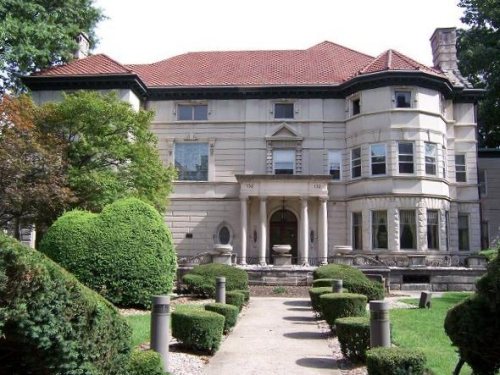
6 listings: 4 buildings, among them the Ambrose-Ward Mansion (listed 1982, the first), and 2 historic districts, the East Orange VA Hospital and the Central Avenue Commercial Historic District, with 22 contributing buildings. 29 historic buildings in all.
How old are the homes in East Orange?
32% of East Orange’s homes were built before 1940 (Census estimate, ±2.1 points), against a typical 15% for a New Jersey town; the median home was built in 1956.
Founding dates: Wikidata, Wikipedia, the U.S. post office records of Blevins & Helbock (CC0) and the Census. Homes by year built: Census ACS 2020–24. National Register of Historic Places: National Park Service (list of May 22, 2026). Old photos, postcards and papers: Wikimedia Commons, the Library of Congress and other public archives, credited on each item’s page. Maps: U.S. Geological Survey historical topographic maps (via Esri) and Sanborn fire-insurance maps (Library of Congress). History text and census tables: Wikipedia (CC BY-SA 4.0). Places that used to be: USGS Geographic Names Information System (2021).
From Wikimedia Commons (8), the Library of Congress (2), Wikidata (2), the National Register of Historic Places (6), Wikipedia, Wikidata and Wikipedia for famous people, U.S. Geological Survey historical maps, U.S. Census counts (via Wikipedia), the US Post Offices dataset (Blevins & Helbock), the USGS Geographic Names Information System, Sanborn fire insurance maps (Library of Congress) and old county and town histories (Internet Archive). Archive images are copied here with their credits and licenses, shown on each photo’s page. Refreshed monthly.




 1899
 1899
 1907
 1907
 1907
 1907
 1908


