Dover’s post office opened in 1820, and 31% of its homes were built before 1940
More historic than 93% of U.S. towns · #42 of 468 in New Jersey. What drives it
3 places in town are on the National Register, among them a historic district with 52 buildings. Below: 4 old photos and papers, maps from 1884 on, and the census since 1880.
Founding year: the first Dover post office (Blevins & Helbock, CC0).The full story ↓
History grade
What drives Dover’s History grade
On its age, its old homes and the National Register, Dover is more historic than 93% of U.S. towns, #42 of 468 in New Jersey. All 3 inputs are above most U.S. towns; its share of homes from before 1940 ranks highest and its age lowest.
A
HistoryA character grade: shown, never part of Dover’s overall grade.
New Jersey towns list more on the Register than most of the country (a typical New Jersey town has 3.7 per 10,000 residents, the U.S. 2.4), so Dover’s 29.6 sits above most of its state (77% of New Jersey towns have fewer) while its 55 historic buildings outnumber those of 86% of U.S. towns.
How sure. Graded on any two of the three inputs instead, the letter would still be A. The pre-1940 share is a Census survey estimate (±5.4 points). The founding year is the first post office, not a stated founding date.
Founding year: the first post office (other dates in Quick answers). Homes: Census ACS 2020–24. National Register: National Park Service, May 2026 list; each listing counted once (boundary changes and added documentation belong to their listing), and a historic district counts its contributing buildings. How TownRatings grades history →
What stands out about Dover’s past
Read from the archive, the National Register and the record. The page puts what stands out first.
Joseph Latham was deeded the land that includes present-day Dover in 1713, from portions of land that had been purchased from Native Americans by the Proprietors of West Jersey. On May 31, 1722, Latham and his wife Jane deeded 527 acres (2.13 km2) over to John Jackson of Flushing, New York. Jackson settled on the eastern portion of his land along Granny's Brook at the site of what would later become the Ross Ribbon Factory on Park Heights Avenue.
Extracts from Munsell's History of Morris County, page 40. 18S2: The first forge at Dover was built, it is said, by John Jackson in 1722 on what is still called Jackson's Brook, near the present (1882) residence of Alpheus Beemer. Jackson purchased a tract of 527 acres of one Joseph Latham, including the site of this forge and much of the land west of Dover. (The town of Dover [1913] includes about 600 acres.) The venture was not a successful one and in 1757 the forge passed into the hands of Josiah Beman and the farm into those of Hartshorne Fitz Randolph.
Text read by machine from the scan; it may contain errors.
Trustees appointed according to law by an association of persons in the Village of Dover in the township of Randolph, in the County of Morris, for the promotion of learning, according to the act entitled an act to incorporate Societies for the promotion of learning, do hereby certify under our hands and Seals that we have taken on ourselves the name of 'The Trustees of the Dover School House."
Text read by machine from the scan; it may contain errors.
A history of Morris County, New Jersey1914 · page 456Read the page →
Read the text
Extracts from Munsell’s History of Morris County, page 40, 1882: The first forge at Dover was built, it is said, by John Jackson in 1722 on what is still called Jackson’s Brook, near the present (1882) residence of Alpheus Beemer. Jackson purchased a tract of 527 acres of one Joseph Latham, including the site of this forge and much of the land west of Dover. (The town of Dover [1913] includes about 600 acres.) The venture was not a successful one and in 1757 the forge passed into the hands of Josiah Beman and the farm into those of Hartshorne Fitz Randolph.
Text read by machine from the scan; it may contain errors.
A history of Morris County, New Jersey1914 · page 423Read the page →
Read the text
On the first page of the oldest trustees’ record book it is recorded: “At a meeting of the inhabitants of Dover, Morris County, New Jersey convened at the school house in said village on the fourteenth day of July 1838, agreeable to public notice, according to law to appoint and elect a board of trustees for the purpose of erecting a Methodist Episcopal Meeting House in the village of Dover, David Sanford named as chairman, T. B. Dalrymple appointed secretary, the following persons were elected trustees: David Sanford, Aaron Doty, Henry C. Bonnel, James McDavit, F. B. Dalrymple.”
Text read by machine from the scan; it may contain errors.
Scans and text from the Internet Archive. Books published in 1930 or earlier, which are in the public domain.
Timeline
Dover, 1820 to 1990
Woven from the archive, old maps, post office records, the National Register and the people born here.
Nothing in the archives for these yearsWeddings on Main Street, storms, parades, school pictures, the old store. If it’s in your family album, it belongs here.
Fire insurance maps drew every building, what it was made of and what it was used for, so insurers could price the risk of fire. Pick a year, then a sheet.
The Dover post office opened in 1820, the earliest record of the town by name (U.S. post office records).
How does Dover rank for history?
Dover is more historic than 93% of U.S. towns, #42 of 468 in New Jersey. The History grade combines the town’s founding era, the share of homes built before 1940 and its National Register listings. It’s a character grade, so it isn’t part of the overall grade. How it works.
What is on the National Register in Dover?
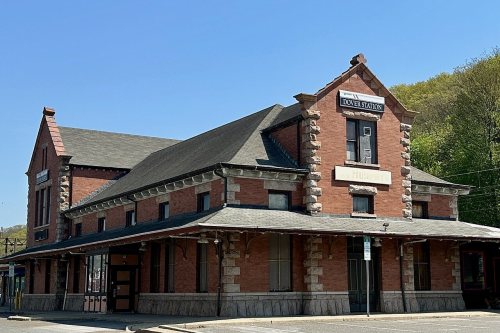
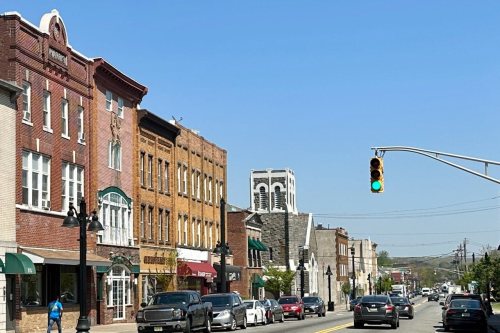
Three places: the Delaware, Lackawanna and Western Railroad Station (listed 1980), the Baker Building (1981) and the Blackwell Street Historic District (1982).
How old are the homes in Dover?
31% of Dover’s homes were built before 1940 (Census estimate, ±5.4 points), against a typical 15% for a New Jersey town; the median home was built in 1954.
Founding dates: Wikidata, Wikipedia, the U.S. post office records of Blevins & Helbock (CC0) and the Census. Homes by year built: Census ACS 2020–24. National Register of Historic Places: National Park Service (list of May 22, 2026). Old photos, postcards and papers: Wikimedia Commons, the Library of Congress and other public archives, credited on each item’s page. Maps: U.S. Geological Survey historical topographic maps (via Esri) and Sanborn fire-insurance maps (Library of Congress). History text and census tables: Wikipedia (CC BY-SA 4.0). Places that used to be: USGS Geographic Names Information System (2021).
From Wikimedia Commons (4), Wikidata (2), the National Register of Historic Places (3), Wikipedia, Wikidata and Wikipedia for famous people, U.S. Geological Survey historical maps, U.S. Census counts (via Wikipedia), the US Post Offices dataset (Blevins & Helbock), the USGS Geographic Names Information System, Sanborn fire insurance maps (Library of Congress) and old county and town histories (Internet Archive). Archive images are copied here with their credits and licenses, shown on each photo’s page. Refreshed monthly.





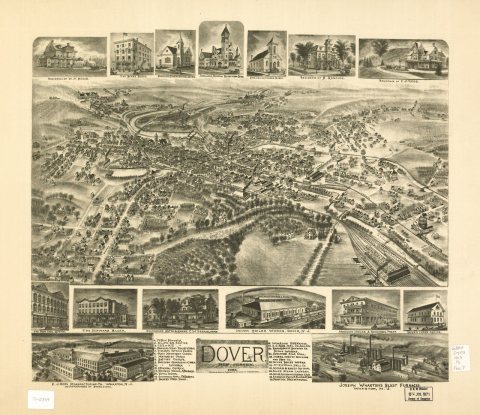 1903
 1907
 1907


