2 places in town are on the National Register, among them a historic district with 225 buildings. Below: 1 old photo or paper, maps from 1898 on, and the census since 1820.
Founding year: Wikidata. First post office: 1824.The full story ↓
History grade
What drives Troy’s History grade
On its age, its old homes and the National Register, Troy is more historic than 98% of U.S. towns. All 3 inputs are above most U.S. towns; its National Register listings ranks highest and its age lowest.
A+
HistoryA character grade: shown, never part of Troy’s overall grade.
New Hampshire towns list more on the Register than most of the country (a typical New Hampshire town has 9.5 per 10,000 residents, the U.S. 2.4), so Troy’s 1,132 sits above most of its state (99% of New Hampshire towns have fewer) while its 227 historic buildings outnumber those of 94% of U.S. towns.
How sure. Graded on any two of the three inputs instead, the letter would range from A to A+. The pre-1940 share is a Census survey estimate (±8.8 points). Two sources give 1815.
Founding year: Wikidata (other dates in Quick answers). Homes: Census ACS 2020–24. National Register: National Park Service, May 2026 list; each listing counted once (boundary changes and added documentation belong to their listing), and a historic district counts its contributing buildings. How TownRatings grades history →
What stands out about Troy’s past
Read from the archive, the National Register and the record. The page puts what stands out first.
Settled in 1762, by 1815 the community had grown so much that it sought its own incorporation. It was set off from Marlborough that year, and included parts of Fitzwilliam, Swanzey and Richmond. A prominent citizen and friend of Governor John Taylor Gilman, Captain Benjamin Mann of Mason, suggested the name "Troy". His daughter, Betsy, was married to Samuel Wilson, famous as "Uncle Sam", and at that time a resident of Troy, New York. At least seven members of Wilson's family were living in the town at the time, thus securing the name. The town hall, built in 1813–1814 near the rail-fenced common, was originally the village meetinghouse.
Passages that mention Troy, cut from the printed page as they were published.
Historical sketch of the town of Troy, New Hampshire, and her inhabitants from the first settlement of the territory now within the limits of the town in 1764-18971897 · page 134Read the page →
Read the text
pews which had been sold to individuals. The deed was as follows : Know All Men by These Presents: That we Isaac Fuller, George Farrar, Daniel W. Farrar, Daniel Cutting and David White of Troy, in the County of Cheshire and State of New Hampshire, in consideration of the sum of twenty dollars paid by the said town of Troy, the receipt whereof we do hereinacknowledge, have remised, released, and forever quitclaimed, and do by these presents remit, release, and forever quit-
Text read by machine from the scan; it may contain errors.
Historical sketch of the town of Troy, New Hampshire, and her inhabitants from the first settlement of the territory now within the limits of the town in 1764-18971897 · page 110Read the page →
Read the text
said towns of Marlborough and Fitzwilliam now have for the support of schools shall be divided between the remaining parts of Marlborough and Fitzwilliam and the town of Troy according to the present proportion of the public taxes paid by the remaining towns of Marlborough and Fitzwilliam and the parts of Troy disannexed from said towns, and the inhabitants of the town of Troy shall pay all the taxes assessed on them by the several towns from which they are hereby disannexed, and the said town of Troy shall after the next annual town meeting, sup-
Text read by machine from the scan; it may contain errors.
Scans and text from the Internet Archive. Books published in 1930 or earlier, which are in the public domain.
Timeline
Troy, 1815 to 1905
Woven from the archive, old maps, post office records, the National Register and the people born here.
Nothing in the archives for these yearsWeddings on Main Street, storms, parades, school pictures, the old store. If it’s in your family album, it belongs here.
In 1815, according to Wikidata. Troy’s post office opened in 1824, and the census of 1820 counted 676 people here.
How does Troy rank for history?
Troy is more historic than 98% of U.S. towns. The History grade combines the town’s founding era, the share of homes built before 1940 and its National Register listings. It’s a character grade, so it isn’t part of the overall grade. How it works.
What is on the National Register in Troy?
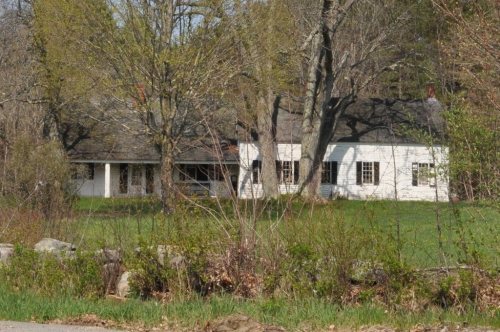
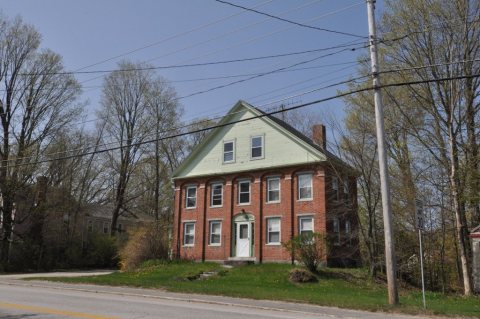
Two places: the Lawrence Farm (listed 2000) and the Troy Village Historic District (2002).
How old are the homes in Troy?
37% of Troy’s homes were built before 1940 (Census estimate, ±8.8 points), against a typical 17% for a New Hampshire town; the median home was built in 1971.
Founding dates: Wikidata, Wikipedia, the U.S. post office records of Blevins & Helbock (CC0) and the Census. Homes by year built: Census ACS 2020–24. National Register of Historic Places: National Park Service (list of May 22, 2026). Old photos, postcards and papers: Wikimedia Commons, the Library of Congress and other public archives, credited on each item’s page. Maps: U.S. Geological Survey historical topographic maps (via Esri) and Sanborn fire-insurance maps (Library of Congress). History text and census tables: Wikipedia (CC BY-SA 4.0). Places that used to be: USGS Geographic Names Information System (2021).
From Wikimedia Commons (13), Wikidata (1), the National Register of Historic Places (2), Wikipedia, Wikidata and Wikipedia for famous people, U.S. Geological Survey historical maps, U.S. Census counts (via Wikipedia), the US Post Offices dataset (Blevins & Helbock), the USGS Geographic Names Information System, Sanborn fire insurance maps (Library of Congress) and old county and town histories (Internet Archive). Archive images are copied here with their credits and licenses, shown on each photo’s page. Refreshed monthly.



 2021
 2021
 2021
 2021
 2017
 2016
 2016
 2016
 2016
 2016
 2016
 2014


