10 places in town are on the National Register, among them 2 National Historic Landmarks and two historic districts with 21 buildings between them. Below: 11 old photos and papers, maps from 1926 on, and the census since 1790.
Founding year: Wikidata; Wikipedia’s history section gives the same year. First post office: 1809.The full story ↓
History grade
What drives Cornish’s History grade
On its age, its old homes and the National Register, Cornish is more historic than 96% of U.S. towns. All 3 inputs are above most U.S. towns; its age ranks highest and its share of homes from before 1940 lowest.
A+
HistoryA character grade: shown, never part of Cornish’s overall grade.
New Hampshire towns list more on the Register than most of the country (a typical New Hampshire town has 9.5 per 10,000 residents, the U.S. 2.4), so Cornish’s 143 sits above most of its state (88% of New Hampshire towns have fewer) while its 26 historic buildings outnumber those of 81% of U.S. towns.
How sure. Graded on any two of the three inputs instead, the letter would range from A to A+. The pre-1940 share is a Census survey estimate (±4.8 points). Two sources give 1765.
Founding year: Wikidata (other dates in Quick answers). Homes: Census ACS 2020–24. National Register: National Park Service, May 2026 list; each listing counted once (boundary changes and added documentation belong to their listing), and a historic district counts its contributing buildings. How TownRatings grades history →
What stands out about Cornish’s past
Read from the archive, the National Register and the record. The page puts what stands out first.
The town was granted in 1763 and contained an area once known as "Mast Camp", because it was the shipping point for the tall masts floated down the river by English settlers. It was incorporated in 1765 by colonial governor Benning Wentworth and named for Sir Samuel Cornish, a distinguished admiral of the Royal Navy. Since the 1827 partition of Cheshire County, the town has been within Sullivan County.
Passages that mention Cornish, cut from the printed page as they were published.
History of the town of Cornish, New Hampshire, with genealogical record, 1763-19101911 · page 199Read the page →
Read the text
It is said that he was a soldier of the Revolution, and participated in the battles of Bunker Hill and Bennington. After his settlement in Cornish he helped organize the Cornish Baptist Church in 1789, and was one of its first deacons. On July 3, 1792, the church expressed their approbation that "Deacon HilUard improve his gift in pubhc." He soon after became popular as a Baptist preacher, but after some years his rehgious views changed and he became a Universahst, and as such was settled as pastor in Shrewsbury and Walhngford, Vt., and finally
Text read by machine from the scan; it may contain errors.
History of the town of Cornish, New Hampshire, with genealogical record, 1763-19101911 · page 60Read the page →
Read the text
If the honor of being the first settler in Cornish belongs to any one individual more than another it would seem that Dea. Dudley Chase can claim it. At the age of 35, in the strength of manhood and possessed of the spirit of enterprise and a desire to provide ample means for his already numerous family, he, with others, was the first to make a clearing in the wilds of Corni-sh. (See Settlement of Cornish for particulars.)
Text read by machine from the scan; it may contain errors.
Scans and text from the Internet Archive. Books published in 1930 or earlier, which are in the public domain.
Timeline
Cornish, 1765 to 1975
Woven from the archive, old maps, post office records, the National Register and the people born here.
Nothing in the archives for these yearsWeddings on Main Street, storms, parades, school pictures, the old store. If it’s in your family album, it belongs here.
In 1765, according to Wikidata and Wikipedia’s history of the town. Cornish’s post office opened in 1809, and the first U.S. census counted 982 people here in 1790.
How does Cornish rank for history?
Cornish is more historic than 96% of U.S. towns. The History grade combines the town’s founding era, the share of homes built before 1940 and its National Register listings. It’s a character grade, so it isn’t part of the overall grade. How it works.
What is on the National Register in Cornish?
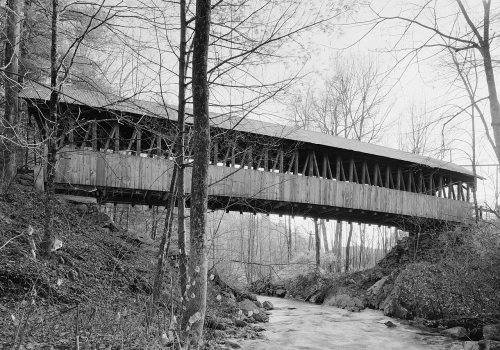
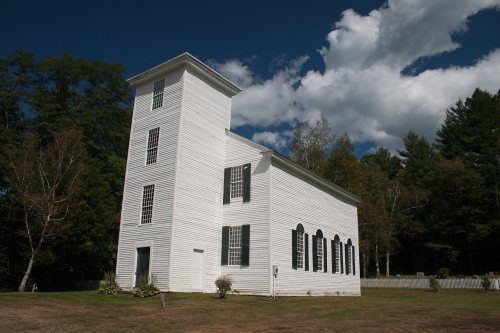
10 listings, 2 of them National Historic Landmarks: 4 buildings, 2 historic districts, the Saint-Gaudens National Historic Site and the Saint-Gaudens National Historic Site Historic District, with 21 contributing buildings, and 4 structures. 26 historic buildings in all.
How old are the homes in Cornish?
23% of Cornish’s homes were built before 1940 (Census estimate, ±4.8 points), against a typical 17% for a New Hampshire town; the median home was built in 1980.
Founding dates: Wikidata, Wikipedia, the U.S. post office records of Blevins & Helbock (CC0) and the Census. Homes by year built: Census ACS 2020–24. National Register of Historic Places: National Park Service (list of May 22, 2026). Old photos, postcards and papers: Wikimedia Commons, the Library of Congress and other public archives, credited on each item’s page. Maps: U.S. Geological Survey historical topographic maps (via Esri) and Sanborn fire-insurance maps (Library of Congress). History text and census tables: Wikipedia (CC BY-SA 4.0). Places that used to be: USGS Geographic Names Information System (2021).
From Wikimedia Commons (9), the Library of Congress (2), Wikidata (1), the National Register of Historic Places (10), Wikipedia, Wikidata and Wikipedia for famous people, U.S. Geological Survey historical maps, U.S. Census counts (via Wikipedia), the US Post Offices dataset (Blevins & Helbock), the USGS Geographic Names Information System and old county and town histories (Internet Archive). Archive images are copied here with their credits and licenses, shown on each photo’s page. Refreshed monthly.


 ★ Landmark
 ★ Landmark




 c. 1890
 c. 1907
 1908
 c. 1908
 c. 1910
 1912
 1913
 1914


