Philadelphia’s post office opened in 1837, and 4 of its places are on the National Register
More historic than 75% of U.S. towns · #20 of 100 in Mississippi. What drives it
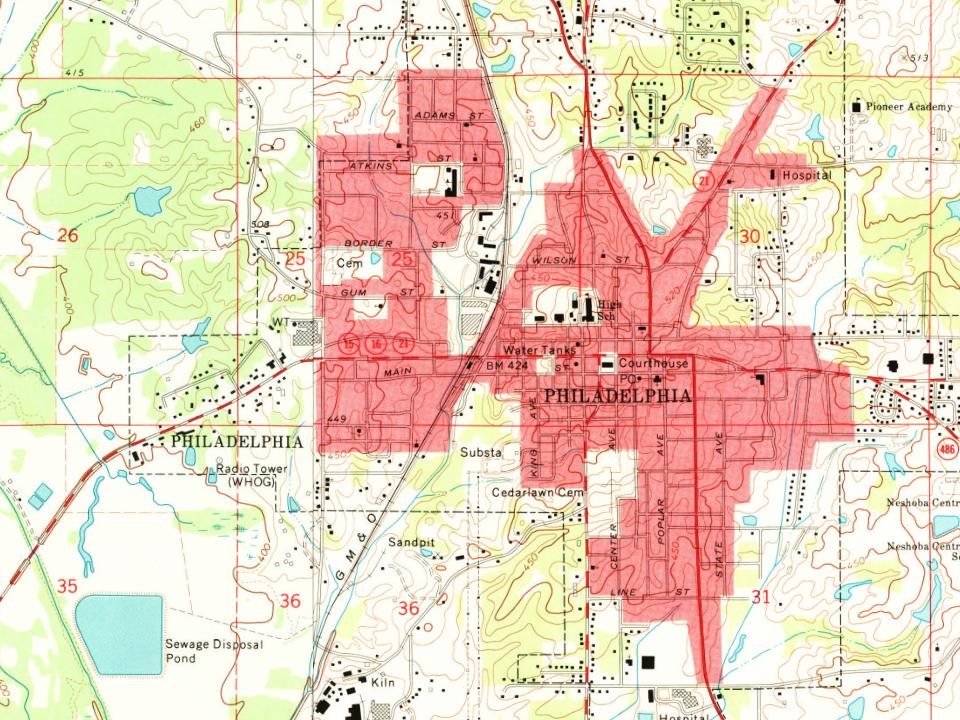
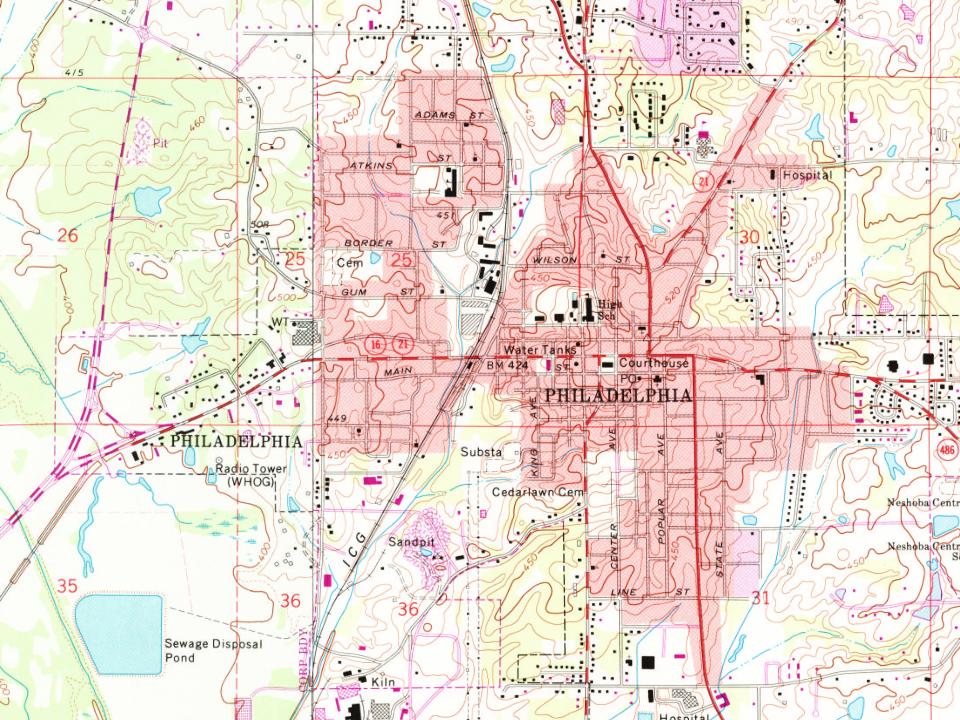
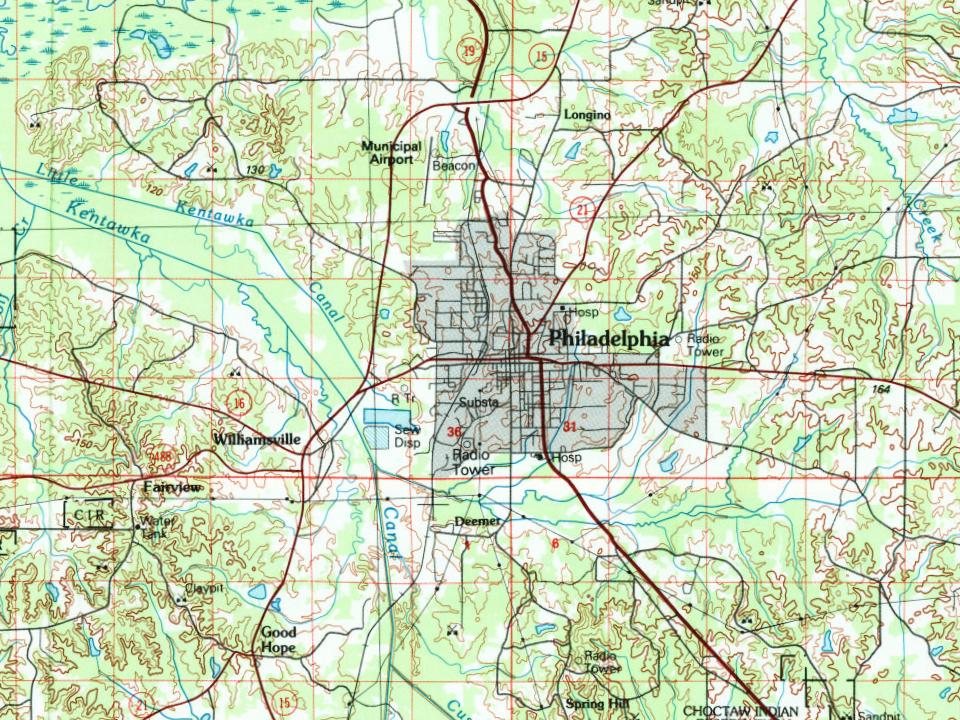
Most of Philadelphia was built recently: 7% of its homes predate 1940 and the median home dates from 1975. 4 places in town are on the National Register, among them two historic districts with 104 buildings between them. Below: 1 old photo or paper, maps from 1926 on, and the census since 1880.
Founding year: the first Philadelphia post office (Blevins & Helbock, CC0).The full story ↓
History grade
What drives Philadelphia’s History grade
On its age, its old homes and the National Register, Philadelphia is more historic than 75% of U.S. towns, #20 of 100 in Mississippi. Its National Register listings hold the grade up; its share of homes from before 1940 pulls it down.
A−
HistoryA character grade: shown, never part of Philadelphia’s overall grade.
Mississippi towns list more on the Register than most of the country (a typical Mississippi town has 71.9 per 10,000 residents, the U.S. 2.4), so Philadelphia’s 152 sits above most of its state (71% of Mississippi towns have fewer) while its 106 historic buildings outnumber those of 90% of U.S. towns.
How sure. Graded on any two of the three inputs instead, the letter would range from B to A−. The pre-1940 share is a Census survey estimate (±3.2 points). The founding year is the first post office, not a stated founding date.
Founding year: the first post office (other dates in Quick answers). Homes: Census ACS 2020–24. National Register: National Park Service, May 2026 list; each listing counted once (boundary changes and added documentation belong to their listing), and a historic district counts its contributing buildings. How TownRatings grades history →
What stands out about Philadelphia’s past
Read from the archive, the National Register and the record. The page puts what stands out first.
Philadelphia is incorporated as a municipality; it was given its current name, after Philadelphia, Pennsylvania, in 1903, two years before the railroad brought new opportunities and prosperity to the town. The history of the town and its influences—social, political and economic—can be seen in the many points of interest within and beyond the city limits. These range from the large ceremonial Indian mound and cave at Nanih Waiya, built approximately 1,700 years ago and sacred to the Choctaw; to the still thriving Williams Brothers Store, a true old-fashioned general store founded in 1907 and featured in National Geographic in 1937 as a source of anything from "horse collars to straw hats."
Passages that mention Philadelphia, cut from the printed page as they were published.
Sketches of a tour to the western country1810 · page 34Read the page →
Read the text
At half past four I arrived at Shippensburgh, which was laid out for a town, about fifty years ago, and named after the first proprietor and settler, the father of j udge Shippen of Philadelphia. It contains between 150 and 300 straggling houses, in one street, nearly a mile in length : w4th nothing else interesting to recommend it to notice. I stopt at Raume's, a Germ. an house about the middle of the town, and
Text read by machine from the scan; it may contain errors.
Sketches of a tour to the western country1810 · page 493Read the page →
Read the text
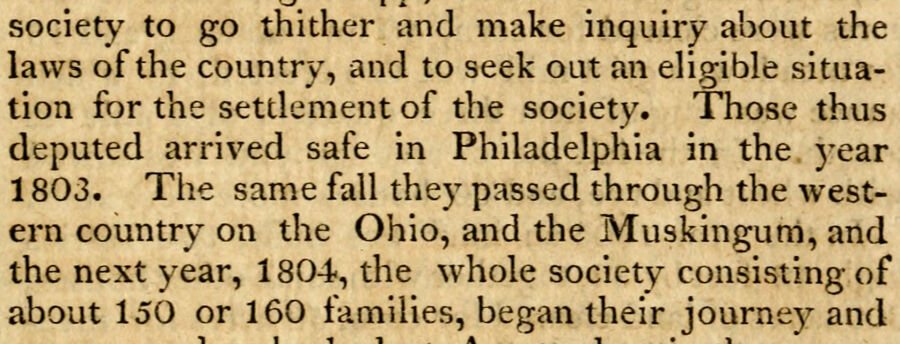
society to go thither and make inquiry about the laws of the country, and to seek out an eligible situation for the settlement of the society. Those thus deputed arrived safe in Philadelphia in the year 1 803. The same fall they passed through the western country on the Ohio, and the Muskingum, and the next year, 1804, the whole society consisting of about 150 or 160 families, began their journey and
Text read by machine from the scan; it may contain errors.
Scans and text from the Internet Archive. Books published in 1930 or earlier, which are in the public domain.
By decade
Philadelphia, decade by decade
One decade in the archive so far: the 1920s. Scroll each row; tap a photo for its story.
Nothing in the archives for these yearsWeddings on Main Street, storms, parades, school pictures, the old store. If it’s in your family album, it belongs here.
The Philadelphia post office opened in 1837, the earliest record of the town by name (U.S. post office records).
How does Philadelphia rank for history?
Philadelphia is more historic than 75% of U.S. towns, #20 of 100 in Mississippi. The History grade combines the town’s founding era, the share of homes built before 1940 and its National Register listings. It’s a character grade, so it isn’t part of the overall grade. How it works.
What is on the National Register in Philadelphia?
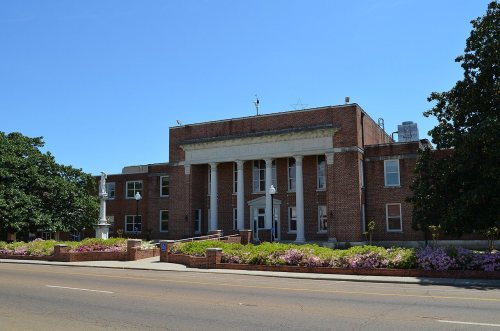
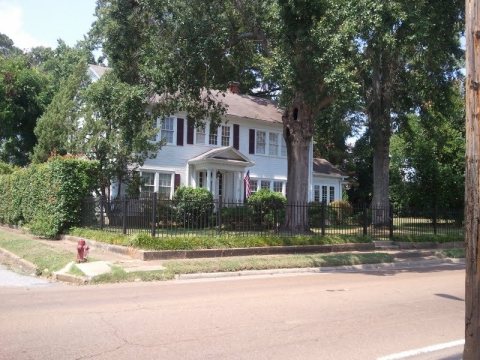
4 listings: 2 buildings and 2 historic districts, the Downtown Philadelphia Historic District and the Philadelphia Historic District, with 104 contributing buildings. 106 historic buildings in all.
How old are the homes in Philadelphia?
7% of Philadelphia’s homes were built before 1940 (Census estimate, ±3.2 points), against a typical 4.5% for a Mississippi town; the median home was built in 1975.
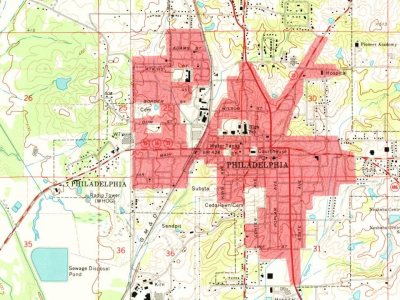
Founding dates: Wikidata, Wikipedia, the U.S. post office records of Blevins & Helbock (CC0) and the Census. Homes by year built: Census ACS 2020–24. National Register of Historic Places: National Park Service (list of May 22, 2026). Old photos, postcards and papers: Wikimedia Commons, the Library of Congress and other public archives, credited on each item’s page. Maps: U.S. Geological Survey historical topographic maps (via Esri) and Sanborn fire-insurance maps (Library of Congress). History text and census tables: Wikipedia (CC BY-SA 4.0). Places that used to be: USGS Geographic Names Information System (2021).
From Wikimedia Commons (4), Wikidata (2), the National Register of Historic Places (4), Wikipedia, Wikidata and Wikipedia for famous people, U.S. Geological Survey historical maps, U.S. Census counts (via Wikipedia), the US Post Offices dataset (Blevins & Helbock), the USGS Geographic Names Information System, Sanborn fire insurance maps (Library of Congress) and old county and town histories (Internet Archive). Archive images are copied here with their credits and licenses, shown on each photo’s page. Refreshed monthly.







 2014
 2013
 2010