Founding year: Wikidata. First post office: 1842.The full story ↓
History grade
What drives Trenton’s History grade
On its age, its old homes and the National Register, Trenton is more historic than 90% of U.S. towns, #12 of 247 in Missouri. All 3 inputs are above most U.S. towns; its share of homes from before 1940 ranks highest and its National Register listings lowest.
A
HistoryA character grade: shown, never part of Trenton’s overall grade.
Missouri towns list about as much on the Register as the country (a typical Missouri town has 2.4 per 10,000 residents, the U.S. 2.4), so Trenton’s 12.6 sits above most of its state (75% of Missouri towns have fewer) while its 7 historic buildings outnumber those of 73% of U.S. towns.
How sure. Graded on any two of the three inputs instead, the letter would range from A− to A. The pre-1940 share is a Census survey estimate (±5.5 points). Two sources give 1834.
Founding year: Wikidata (other dates in Quick answers). Homes: Census ACS 2020–24. National Register: National Park Service, May 2026 list; each listing counted once (boundary changes and added documentation belong to their listing), and a historic district counts its contributing buildings. How TownRatings grades history →
What stands out about Trenton’s past
Read from the archive, the National Register and the record. The page puts what stands out first.
Fire insurance maps drew every building, what it was made of and what it was used for, so insurers could price the risk of fire. Pick a year, then a sheet.
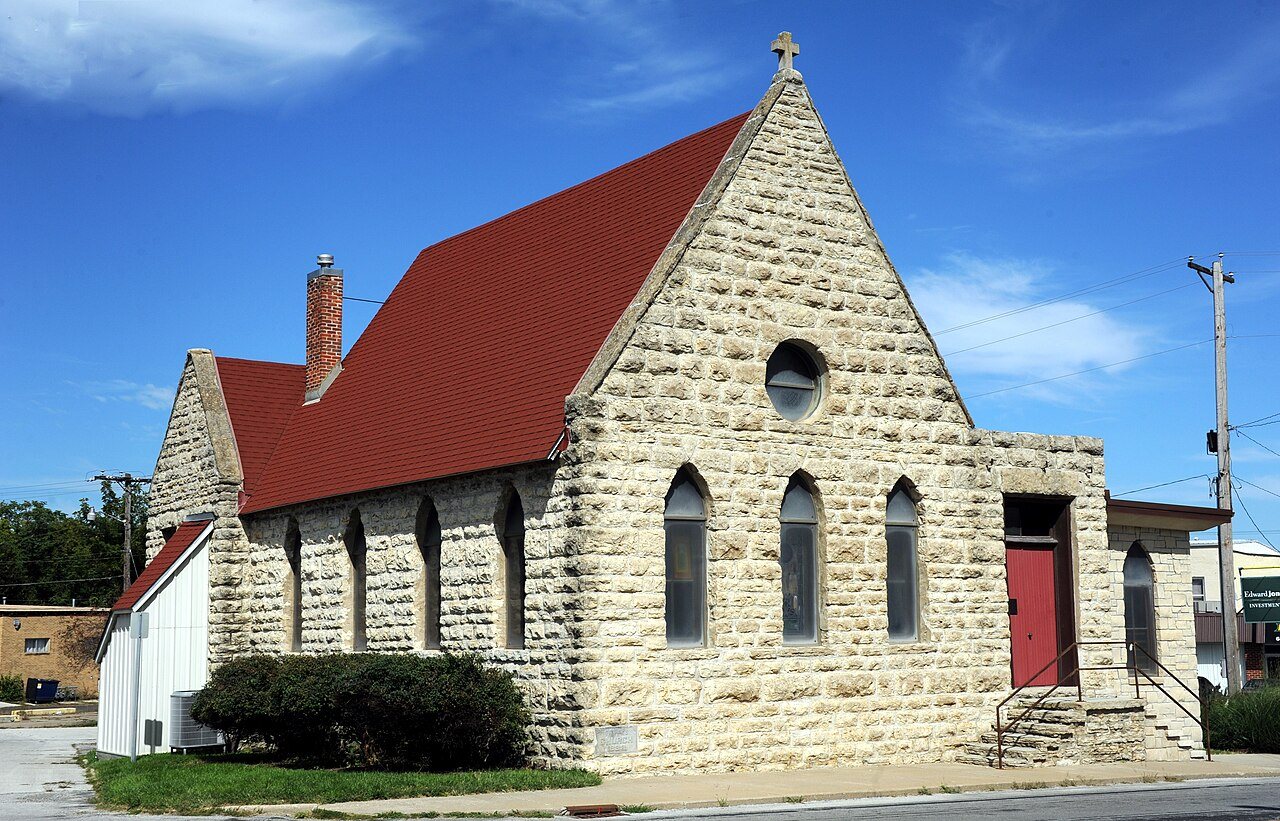
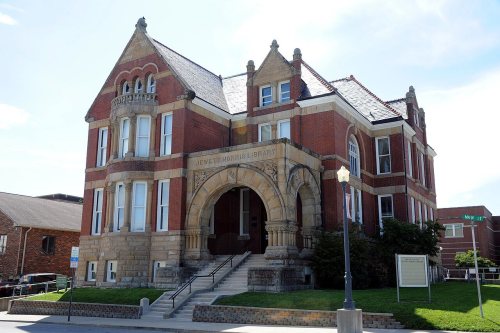
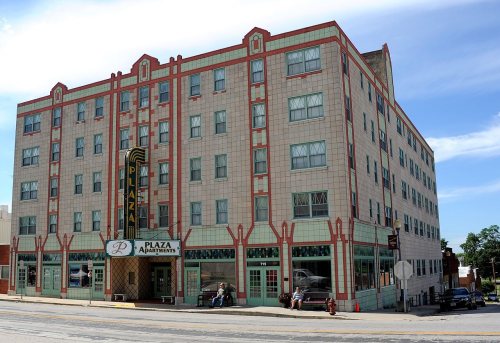
The Crowder State Park Vehicle Bridge, Jewett Norris Library, Plaza Hotel, St. Philip's Episcopal Church, Trenton High School, and WPA Stock Barn and Pavilion are listed on the National Register of Historic Places.
In 1869, the Chicago, Rock Island and Pacific Railroad arrived in Trenton. In 1890, Avalon College, which had been founded in Avalon, Missouri by the United Brethren in 1869, moved to Trenton because of proximity to the railroad.
Passages that mention Trenton, cut from the printed page as they were published.
The History of Grundy County, Missouri1881 · page 426Read the page →
Read the text
LUTHER COLLIEK, The present mayor of Trenton, was born in the town of Fayette, Howard county, Missouri, June 19, 1842. His father, William Collier, was the contractor and builder of the Grundy count}' court-house, at Trenton, and was in Trenton at the time of his son's birth, making arrangements for the removal of his family to that place. In April, 1843, the family took up their residence in Trenton, where the subject of this sketch was reared, receiving an education in the common schools and high school of Trenton.
Text read by machine from the scan; it may contain errors.
The history of Grundy county, Missouri1881 · page 316Read the page →
Read the text
Muddy Creek township, so far as the records are concerned, until the organization of the county, January 29, 1841. The first school land ordered sold in Grnndy county, was in August, 1838, and the land was the sixteenth section in Trenton, township sixty-one, range twenty-four. The first road laid out in Grundy county was from Chillicothe, in Livingston county, through the present township of Trenton, to the south line of section thirtyfive, of congressional township sixty-one, of range twenty-four. The petition to view said road was granted August 20, 1838, and the reviewers
Text read by machine from the scan; it may contain errors.
The history of Grundy county, Missouri1881 · page 241Read the page →
Read the text
The city of Trenton voted $50,000 to the capital stock of the Chicago & Southwestern Raih-oad Company in the month of July, 1869, f50,000 to the Quincy, Missouri & Pacific Koad in October, 1875, $50,000 to the Chillicothe & Des Moines City Railroad Company in November, 1875, and §13,000 for the repair and machine-shops in 1871; all together out of the various propositions $528,000 of county, town and township subscriptions were carried b}' a two-third vote as the law required, and bonds by the county and city of Trenton to the amount of $263,000 were issued. The
Text read by machine from the scan; it may contain errors.
The History of Grundy County, Missouri1881 · page 315Read the page →
Read the text
Mr. Moore was also accompanied, as stated, by his sons-in-law. They settled on what is now a part of the city of Trenton. The most of th6 early history of Trenton and also of the city of Trenton is part and parcel of the county history in its early day. Its development and growth are blended so intimately with that of the count}^ that a history of one is the record of the other. The first death, Mrs. Devaul; the first birth, Minerva Thrailkill; the first cabin and first store; the group of early se'^tlers, Moores, Thrailkill, McAfee, Cochran, Benson, and others, all represent not only Trenton town-
Text read by machine from the scan; it may contain errors.
Scans and text from the Internet Archive. Books published in 1930 or earlier, which are in the public domain.
Timeline
Trenton, 1834 to 1948
Woven from the archive, old maps, post office records, the National Register and the people born here.
In 1834, according to Wikidata. Trenton’s post office opened in 1842, and the census of 1860 counted 617 people here.
How does Trenton rank for history?
Trenton is more historic than 90% of U.S. towns, #12 of 247 in Missouri. The History grade combines the town’s founding era, the share of homes built before 1940 and its National Register listings. It’s a character grade, so it isn’t part of the overall grade. How it works.
What is on the National Register in Trenton?
6 listings: 6 buildings, among them the St. Philip's Episcopal Church (listed 1979, the first). 7 historic buildings in all.
How old are the homes in Trenton?
28% of Trenton’s homes were built before 1940 (Census estimate, ±5.5 points), against a typical 8.4% for a Missouri town; the median home was built in 1962.
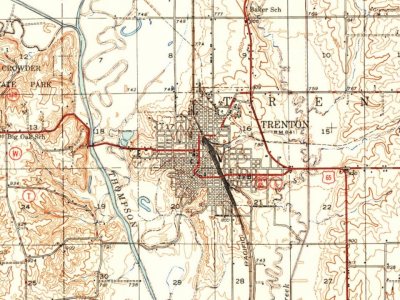
Founding dates: Wikidata, Wikipedia, the U.S. post office records of Blevins & Helbock (CC0) and the Census. Homes by year built: Census ACS 2020–24. National Register of Historic Places: National Park Service (list of May 22, 2026). Old photos, postcards and papers: Wikimedia Commons, the Library of Congress and other public archives, credited on each item’s page. Maps: U.S. Geological Survey historical topographic maps (via Esri) and Sanborn fire-insurance maps (Library of Congress). History text and census tables: Wikipedia (CC BY-SA 4.0). Places that used to be: USGS Geographic Names Information System (2021).
From Wikidata (1), the National Register of Historic Places (6), Wikipedia, Wikidata and Wikipedia for famous people, U.S. Geological Survey historical maps, U.S. Census counts (via Wikipedia), the US Post Offices dataset (Blevins & Helbock), the USGS Geographic Names Information System, Sanborn fire insurance maps (Library of Congress) and old county and town histories (Internet Archive). Archive images are copied here with their credits and licenses, shown on each photo’s page. Refreshed monthly.