Guest, Sign inJoin

Post to St. Joseph

We’ll email a one-tap link to publish your post. No password, and nothing is public until you click it.
Already a member? Sign in
A+History
History · St. Joseph

St. Joseph’s post office opened in 1843, and 28% of its homes were built before 1940

More historic than 96% of U.S. towns · #7 of 247 in Missouri. What drives it

58 places in town are on the National Register, among them the John Patee House, a National Historic Landmark, and ten historic districts with 1,289 buildings between them. Below: 4 old photos and papers, maps from 1924 on, and the census since 1860.

1843first post office
58on the National Register
28%homes built before 1940
4old photos & papers
57famous people
From St. Joseph’s archive · credits on each photo
Quick answers

How St. Joseph began

When was St. Joseph founded?

1843

The St. Joseph post office opened in 1843, the earliest record of the town by name. Two smaller post offices, Saxton (1872) and Inza (1902), opened inside today’s city and later closed.

First census: 8,932 in 18602020 census: 72,473183 years

How historic is St. Joseph?

A+

More historic than 96% of U.S. towns, on its age, its old homes and the National Register.

What drives the grade ↓
Founding year: the first St. Joseph post office (Blevins & Helbock, CC0).The full story ↓
History grade

What drives St. Joseph’s History grade

On its age, its old homes and the National Register, St. Joseph is more historic than 96% of U.S. towns, #7 of 247 in Missouri. All 3 inputs are above most U.S. towns; its National Register listings ranks highest and its age lowest.

A+
HistoryA character grade: shown, never part of St. Joseph’s overall grade.
All U.S. towns we grade (21,289)Ahead of 96%
NewerOlder
Missouri towns of 2,500+ (247)Ahead of 98%

Missouri towns list about as much on the Register as the country (a typical Missouri town has 2.4 per 10,000 residents, the U.S. 2.4), so St. Joseph’s 193 sits above most of its state (95% of Missouri towns have fewer) while its 1,373 historic buildings outnumber those of 99% of U.S. towns.

How sure. Graded on any two of the three inputs instead, the letter would range from A to A+. The pre-1940 share (±1.5 points) is firm at this size. The founding year is the first post office, not a stated founding date.

Founding year: the first post office (other dates in Quick answers). Homes: Census ACS 2020–24. National Register: National Park Service, May 2026 list; each listing counted once (boundary changes and added documentation belong to their listing), and a historic district counts its contributing buildings. How TownRatings grades history →

What stands out about St. Joseph’s past

Read from the archive, the National Register and the record. The page puts what stands out first.

★ What stands out · On the National Register

58 listings protect 1,373 historic buildings

The country’s official list of buildings and places worth saving. One is a National Historic Landmark, the highest tier. Boundary changes and added documentation are counted with their listing.

places listed
58
National Historic Landmark
1
John Patee House
historic buildings protected
1,373
each building in a district counts
first listed
1966
John Patee House
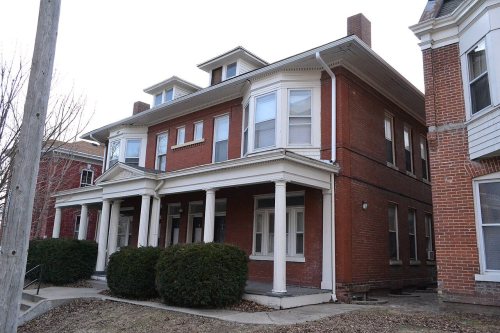
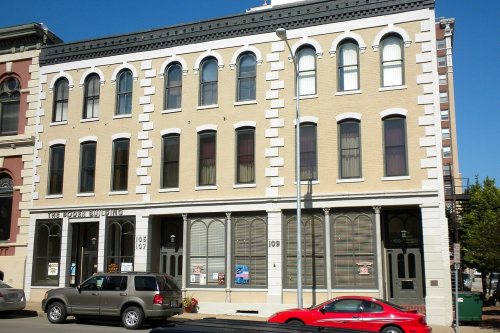
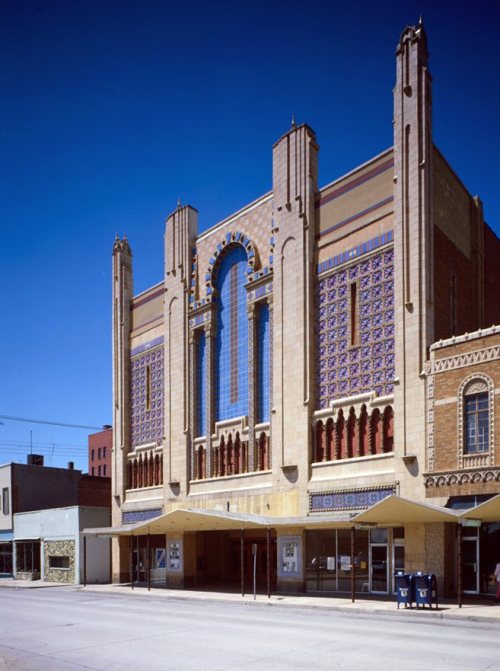
Buchanan County Courthouse and JailMaple GroveMissouri Valley Trust Company Historic DistrictWholesale RowBuchanan County CourthouseGerman-American Bank BuildingHall Street Historic DistrictMissouri Theater and Missouri Theater BuildingCorby-Forsee BuildingIssac Miller HouseRichardson, John D., Dry Goods CompanyMiller-Porter-Lacy House, built 1883St. Joseph Public LibraryThompson-Brown-Sandusky HouseRobidoux SchoolChristian Sachau SaloonCity Hose Company No. 9St. Joseph City HallWyeth FlatsDr. Jacob Geiger House-Maud Wyeth Painter HouseKelley and Browne Flats, built 1888Robidoux Hill Historic DistrictCentral-North Commercial Historic DistrictSouth Fourth Street Commercial Historic DistrictVirginia Flats, built 1888Nelson-Pettis Farmsteads Historic DistrictSt. Joseph Public Library-Carnegie BranchCathedral Hill Historic DistrictCentury ApartmentsSt. Joseph's Commerce and Banking Historic DistrictDewey Avenue-West Rosine Historic DistrictKrug Park Place Historic DistrictKemper Addition Historic DistrictHarris Addition Historic DistrictCharles A. and Annie Buddy HouseBurnside-Sandusky Gothic HouseEverett SchoolMcIntyre-Burri HouseJohn Sublett Jr. and Caroline Ashton Logan HouseAlois Herbert Double HouseWestern Tablet and Stationery Company, Building #2Lawler Motor Company BuildingBuchanan County InfirmaryCentral Police StationRyan BlockNeely Elementary SchoolHall SchoolBenton Club of St. Joseph, ThePony Express StablesRobidoux RowEdmond Jacques Eckel HouseJesse James HouseVosteen-Hauck HouseMuseum Hill Historic DistrictSt. Joseph Park and Parkway SystemPatee Town Historic DistrictMount Mora Cemetery, built 1851John Patee House, built 1858★
BuildingsDistrictsSites★ landmark

Architectural styles listings

Italianate17
Queen Anne11
Colonial Revival8
Classical Revival7
Greek Revival7
Craftsman6
All 59 listings
Corby-Forsee BuildingBuilding · listed 1980Issac Miller HouseBuilding · listed 1980Richardson, John D., Dry Goods CompanyBuilding · listed 1982Miller-Porter-Lacy HouseBuilding · listed 1982St. Joseph Public LibraryBuilding · listed 1982Thompson-Brown-Sandusky HouseBuilding · listed 1983Robidoux SchoolBuilding · listed 1983Pleasant Ridge SchoolBuilding · listed 1985Christian Sachau SaloonBuilding · listed 1985City Hose Company No. 9Building · listed 1985St. Joseph City HallBuilding · listed 1985Wyeth FlatsBuilding · listed 1985Dr. Jacob Geiger House-Maud Wyeth Painter HouseBuilding · listed 1986Kelley and Browne FlatsDistrict · listed 1989Robidoux Hill Historic DistrictDistrict · listed 1989Central-North Commercial Historic DistrictDistrict · listed 1991South Fourth Street Commercial Historic DistrictDistrict · listed 1991Virginia FlatsBuilding · listed 1992Nelson-Pettis Farmsteads Historic DistrictDistrict · listed 1995St. Joseph Public Library-Carnegie BranchBuilding · listed 1999Cathedral Hill Historic DistrictDistrict · listed 2000Century ApartmentsBuilding · listed 2001St. Joseph's Commerce and Banking Historic DistrictDistrict · listed 2001Dewey Avenue-West Rosine Historic DistrictDistrict · listed 2002Krug Park Place Historic DistrictDistrict · listed 2002Kemper Addition Historic DistrictDistrict · listed 2002Harris Addition Historic DistrictDistrict · listed 2003Charles A. and Annie Buddy HouseBuilding · listed 2004Burnside-Sandusky Gothic HouseBuilding · listed 2005Everett SchoolBuilding · listed 2005McIntyre-Burri HouseBuilding · listed 2005John Sublett Jr. and Caroline Ashton Logan HouseBuilding · listed 2007Alois Herbert Double HouseBuilding · listed 2007Western Tablet and Stationery Company, Building #2Building · listed 2007Lawler Motor Company BuildingBuilding · listed 2009Buchanan County InfirmaryBuilding · listed 2009Central Police StationBuilding · listed 2009Ryan BlockBuilding · listed 2013Neely Elementary SchoolBuilding · listed 2014Hall SchoolBuilding · listed 2017Benton Club of St. Joseph, TheBuilding · listed 2017John Patee HouseBuilding · listed 1966Pony Express StablesBuilding · listed 1970Robidoux RowBuilding · listed 1973Edmond Jacques Eckel HouseBuilding · listed 1980Jesse James HouseBuilding · listed 1980Vosteen-Hauck HouseBuilding · listed 1982Museum Hill Historic DistrictDistrict · listed 1991St. Joseph Park and Parkway SystemDistrict · listed 1995Patee Town Historic DistrictDistrict · listed 2002Mount Mora CemeterySite · listed 2006

National Park Service, National Register of Historic Places. Photos from Wikimedia Commons, credited on each place’s page.

Help out

Start St. Joseph’s collection

The first neighbors to add old photos shape how St. Joseph’s history is told.

Decades since 1900 with photos
00s10s20s30s40s50s60s70s80s90s
0 of 10 decades. The empty ones are waiting for someone’s album.
The story

How St. Joseph came to be

From Wikipedia’s history of St. Joseph.

Read it all →

St. Joseph was founded on the Missouri River by Joseph Robidoux, a local fur trader of French Canadian descent. It was officially incorporated in 1843. In its early days, it was a bustling outpost and rough frontier town, serving as a last supply point and jumping-off point for travelers on the Missouri River toward the "Wild West". It was the westernmost point in the United States accessible by rail until after the American Civil War, which helped earn it the designation "Gateway to the West."

The main east–west downtown streets were named for Robidoux's eight children: Faraon, Jules, Francois (Francis), Felix, Edmond, Charles, Sylvanie, and Messanie. The street between Sylvanie and Messanie was named for his second wife, Angelique.

Text from Wikipedia, licensed CC BY-SA 4.0.

From the old history books

What they wrote about St. Joseph, 1881–1900

Passages that mention St. Joseph, cut from the printed page as they were published.

This great thoroughfare, the first line built from St. Joseph westward, through Kansas and Nebraska, was chartered by the Territorial Legislature of Kansas, February 17, 1857, during the sessioh of 1856-57, under the name and style of "Marysville or Palmetto and Roseport Railroad Company." The firs…
The History of Buchanan County, Missouri1881 · page 578Read the page →
Read the text

This great thoroughfare, the first line built from St. Joseph westward, through Kansas and Nebraska, was chartered by the Territorial Legislature of Kansas, February 17, 1857, during the sessioh of 1856-57, under the name and style of "Marysville or Palmetto and Roseport Railroad Company." The first meeting of the incorporators of this road was held in the City of St. Joseph, February 26, 1857. On motion of ■Captain Fred W. Smith, Colonel A. M. Mitchell was called to the chair and B. H. Matthews appointed secretary pro tern. On motion, five

Text read by machine from the scan; it may contain errors.
This great thoroughfare, the first line built from St. Joseph westward, through Kansas and Nebraska, was chartered by the Territorial Legislature of Kansas, February 17, 1857, during the session of 1856-57, under the name and style of "Marysville or Palmetto and Roseport Railroad Company." The firs…
The history of Buchanan County, Missouri1881 · page 578Read the page →
Read the text

This great thoroughfare, the first line built from St. Joseph westward, through Kansas and Nebraska, was chartered by the Territorial Legislature of Kansas, February 17, 1857, during the session of 1856-57, under the name and style of "Marysville or Palmetto and Roseport Railroad Company." The first meeting of the incorporators of this road was held in the City of St. Joseph, February 26, 1857. On motion of Captain Fred W. Smith, Colonel A. M. Mitchell was called to the chair and B. H. Matthews appointed secretary pro tcvi. On motion, five

Text read by machine from the scan; it may contain errors.
Faucett was platted when the Chicago Great Western railroad extended its line, in 1890, from St. Joseph to Kansas City, and named in honor of Robert Faucett, the miller. There is a population of about 200, a school, depot, two general stores, a church, school and a large grain elevator.
The daily news' history of Buchanan County and St. Joseph, Mo.1900 · page 69Read the page →
Read the text

Faucett was platted when the Chicago Great Western railroad extended its line, in 1890, from St. Joseph to Kansas City, and named in honor of Robert Faucett, the miller. There is a population of about 200, a school, depot, two general stores, a church, school and a large grain elevator.

Text read by machine from the scan; it may contain errors.
employ of the Baltimore & Ohio Railway, and constructed all the depot buildings on the line, including the depot at Washington, District Columbia, Camden depot at Baltimore, and also the first iron bridge on the road. In 1856 he came West and took up his abode in St. Joseph, and has been actively e…
The History of Buchanan County, Missouri1881 · page 824Read the page →
Read the text

employ of the Baltimore & Ohio Railway, and constructed all the depot buildings on the line, including the depot at Washington, District Columbia, Camden depot at Baltimore, and also the first iron bridge on the road. In 1856 he came West and took up his abode in St. Joseph, and has been actively engaged at his trade since. Among the first buildings he worked on in the city were the Patee and Pacific Houses. Mr.

Text read by machine from the scan; it may contain errors.

Scans and text from the Internet Archive. Books published in 1930 or earlier, which are in the public domain.

Timeline

St. Joseph, 1843 to 1972

Woven from the archive, old maps, post office records, the National Register and the people born here.

  1. 19th century
  2. 1843Post officeThe Saint Joseph post office opens
  3. 1855In the archiveSt. Joseph (Missouri) (SAAM-1966.48.40)
  4. 1858BuiltJohn Patee House is built
  5. 1862In the archiveLe Tour du monde-05-p380
  6. 1872Post officeThe Saxton post office opens
  7. 1883BuiltMiller-Porter-Lacy House is built
  8. 1888BuiltKelley and Browne Flats is built
  9. 1888BuiltVirginia Flats is built
  10. 20th century
  11. 1900CensusPopulation peaks at 102,979
  12. 1902Post officeThe Inza post office opens
  13. 1904Born hereColeman Hawkins is born here
  14. 1915Post officeThe Inza post office closes
  15. 1916Born hereWalter Cronkite is born here
  16. 1917Born hereJane Wyman is born here
  17. 1924On the mapFirst mapped by the U.S. Geological Survey
  18. 1938Post officeThe Saxton post office closes
  19. 1961LandmarkJohn Patee House named a National Historic Landmark
  20. 1972Born hereEminem is born here
By decade

St. Joseph, decade by decade

2 decades in the archive, from the 1850s to the 1860s. Scroll each row; tap a photo for its story.

On the map

St. Joseph on the map, 1924 to 1997

Every edition of the U.S. Geological Survey’s map of St. Joseph. Tap a year, or press play to watch the town change.

St. Joseph on the 1924 USGS mapSt. Joseph on the 1971 USGS mapSt. Joseph on the 1980 USGS mapSt. Joseph on the 1997 USGS map1924St Joseph sheet · 1:62,500

U.S. Geological Survey historical topographic maps (public domain), via Esri’s collection of the scans. The red ring marks the center of St. Joseph.

Then & now

Stand where they stood

No then-and-now pairs yet. Take a photo from the same spot as an old one and they appear here side by side.

St. Joseph (Missouri) (SAAM-1966.48.40)
Retake this viewSt. Joseph (Missouri) (SAAM-1966.48.40), c. 1855

Find the spot, match the angle, and add your photo. It becomes the first then-and-now pair on St. Joseph’s page.

Retake this view · +15
People over time

St. Joseph, census by census

020,00040,00060,00080,000100,000190019502000Peak: 102,979

Peaked at 102,979 in 1900; 72,473 people lived here in 2020.

17 censuses, 1860–2020.

U.S. Census Bureau decennial counts, from the census table on St. Joseph’s Wikipedia page.

Famous people

57 famous people were born in St. Joseph

Writers, athletes, leaders and more, ranked by how widely they’re known.

See all →
Places that used to be

Lost post offices, old corners, places now gone and burying grounds

Two other post offices opened and closed inside today’s town.

Saint Joseph
1843–today
Saxton
1872–1938
Inza
1902–1915
18401930today
Hamlets and corners on the map
AshtonKirschnerSaint JosephSaxton
Gone or out of use
Green Valley SchoolschoolKirscher SchoolschoolOak Grove SchoolschoolRiverview SchoolschoolSouth Parklocale
7cemeteries and burying grounds inside St. Joseph
AshlandMemorial ParkMount AuburnMount MoraMount OlivetNelsonNew King Hill

US Post Offices dataset (Blevins & Helbock, CC0). Places and cemeteries from the USGS Geographic Names Information System (2021).

Questions about St. Joseph’s history

What year was St. Joseph founded?

The St. Joseph post office opened in 1843, the earliest record of the town by name (U.S. post office records).

How does St. Joseph rank for history?

St. Joseph is more historic than 96% of U.S. towns, #7 of 247 in Missouri. The History grade combines the town’s founding era, the share of homes built before 1940 and its National Register listings. It’s a character grade, so it isn’t part of the overall grade. How it works.

What is on the National Register in St. Joseph?

58 listings: 41 buildings, among them the John Patee House (a National Historic Landmark since 1961), 17 historic districts with 1,289 contributing buildings, and 1 site. 1,373 historic buildings in all.

How old are the homes in St. Joseph?

28% of St. Joseph’s homes were built before 1940 (Census estimate, ±1.5 points), against a typical 8.4% for a Missouri town; the median home was built in 1962.

Memory lane

What the archives can’t tell you, neighbors can.

Town Square →
Start a conversation
Sources

Where this page comes from

Founding dates: Wikidata, Wikipedia, the U.S. post office records of Blevins & Helbock (CC0) and the Census. Homes by year built: Census ACS 2020–24. National Register of Historic Places: National Park Service (list of May 22, 2026). Old photos, postcards and papers: Wikimedia Commons, the Library of Congress and other public archives, credited on each item’s page. Maps: U.S. Geological Survey historical topographic maps (via Esri) and Sanborn fire-insurance maps (Library of Congress). History text and census tables: Wikipedia (CC BY-SA 4.0). Places that used to be: USGS Geographic Names Information System (2021).

From Wikimedia Commons (4), the National Register of Historic Places (59), Wikipedia, Wikidata and Wikipedia for famous people, U.S. Geological Survey historical maps, U.S. Census counts (via Wikipedia), the US Post Offices dataset (Blevins & Helbock), the USGS Geographic Names Information System and old county and town histories (Internet Archive). Archive images are copied here with their credits and licenses, shown on each photo’s page. Refreshed monthly.