Bowling Green’s post office opened in 1824, and 1 of its places is on the National Register
More historic than 64% of U.S. towns · #86 of 247 in Missouri. What drives it
Most of Bowling Green was built recently: 10% of its homes predate 1940 and the median home dates from 1969. Below: maps from 1886 on and the census since 1850.
Founding year: the first Bowling Green post office (Blevins & Helbock, CC0).The full story ↓
History grade
What drives Bowling Green’s History grade
On its age, its old homes and the National Register, Bowling Green is more historic than 64% of U.S. towns, #86 of 247 in Missouri. Its age holds the grade up; its share of homes from before 1940 pulls it down.
B
HistoryA character grade: shown, never part of Bowling Green’s overall grade.
Missouri towns list about as much on the Register as the country (a typical Missouri town has 2.4 per 10,000 residents, the U.S. 2.4), so Bowling Green’s 2.4 sits near the middle of its state (54% of Missouri towns have fewer) while its 1 listings outnumber those of 51% of U.S. towns.
How sure. Graded on any two of the three inputs instead, the letter would range from B− to B+. The pre-1940 share is a Census survey estimate (±4.8 points). The founding year is the first post office, not a stated founding date.
Founding year: the first post office (other dates in Quick answers). Homes: Census ACS 2020–24. National Register: National Park Service, May 2026 list; each listing counted once (boundary changes and added documentation belong to their listing), and a historic district counts its contributing buildings. How TownRatings grades history →
What stands out about Bowling Green’s past
Read from the archive, the National Register and the record. The page puts what stands out first.
Fire insurance maps drew every building, what it was made of and what it was used for, so insurers could price the risk of fire. Pick a year, then a sheet.
1886Sheet 1 of 1
Edition
Sheets
BrickWoodStone
Sanborn Map Company, via the Library of Congress. Editions published in 1930 or earlier, which are in the public domain.
On the National Register
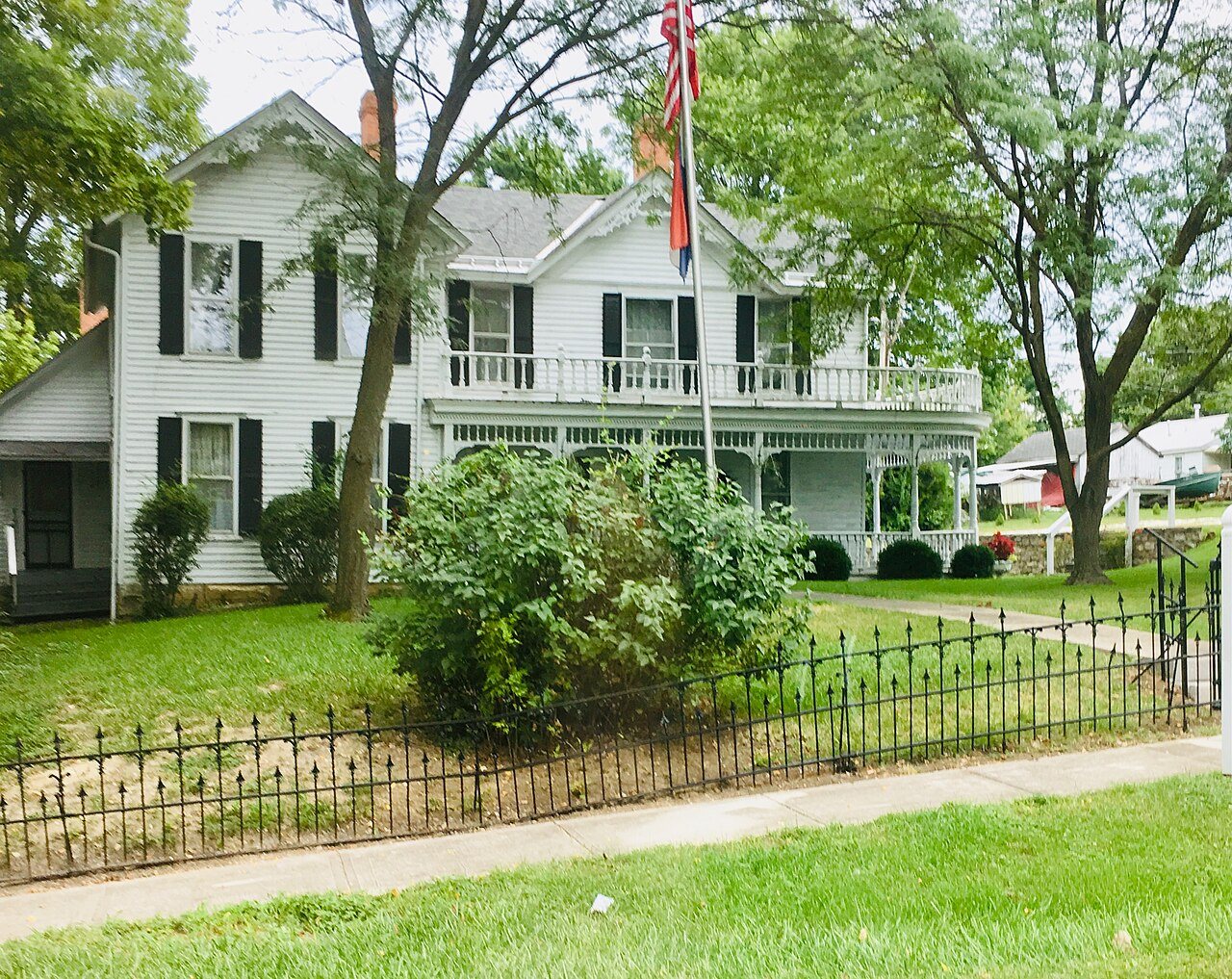
1 historic place in Bowling Green
The country’s official list of buildings and places worth saving. One is a National Historic Landmark, the highest tier.
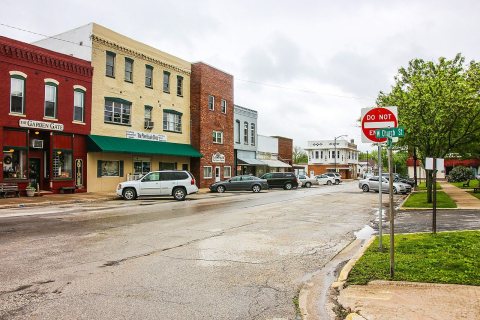
Bowling Green was settled in 1819, and designated county seat in 1824. Settled chiefly by migrants from Kentucky and Virginia, it was named after Bowling Green, Kentucky.
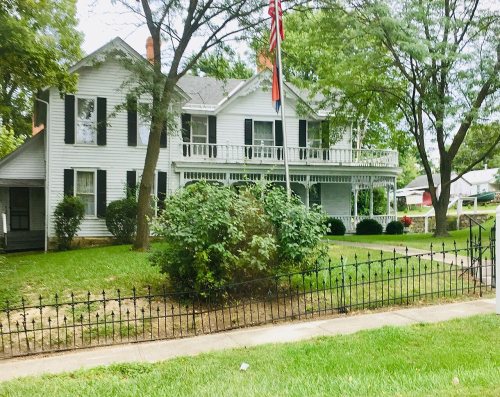
The James Beauchamp Clark House was listed on the National Register of Historic Places in 1976.
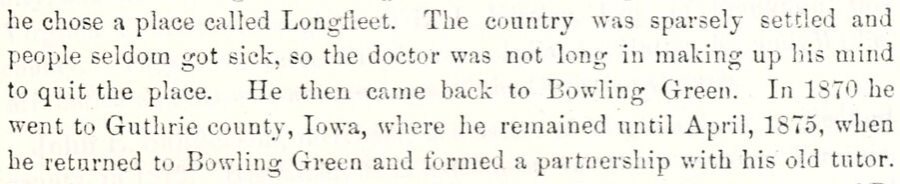
he chose a place called Longlleet. The country was sparsely settled and people seldom got sick, so the doctor was not long in making u}) liis mind to quit the place. He then came back to Bowling Green. In 1870 he went to Guthrie county, Iowa, where he remained until April, 1875, when he returned to Bowling Green and formed a partnership with his old tutor.
Text read by machine from the scan; it may contain errors.
tbe market at any time such character of stock of this kind as tbe trade may seem to demand. Although Mr. Ely is living upon a rented faim he has no less than 3SC acres of most excellent land of bis own, 2<dQ acres near Ashley and 120 acres not far from tbe town of Bowling Green. While Mr. Ely is recognized as one of tbe best, as well as one of tiie largest, traders in the county, his fair and honorable dealing has gained him tbe confidence ol J
Text read by machine from the scan; it may contain errors.
Scans and text from the Internet Archive. Books published in 1930 or earlier, which are in the public domain.
Timeline
Bowling Green, 1824 to 1976
Woven from the archive, old maps, post office records, the National Register and the people born here.
Every edition of the U.S. Geological Survey’s map of Bowling Green. Tap a year, or press play to watch the town change.
1937Bowling Green sheet · 1:62,500
U.S. Geological Survey historical topographic maps (public domain), via Esri’s collection of the scans. The red ring marks the center of Bowling Green.
People over time
Bowling Green, census by census
Between 319 and 5,334 people in every census since 1850.
18 censuses, 1850–2020.
U.S. Census Bureau decennial counts, from the census table on Bowling Green’s Wikipedia page.
Famous people
7 famous people were born in Bowling Green
Writers, athletes, leaders and more, ranked by how widely they’re known.
The Bowling Green post office opened in 1824, the earliest record of the town by name (U.S. post office records).
How does Bowling Green rank for history?
Bowling Green is more historic than 64% of U.S. towns, #86 of 247 in Missouri. The History grade combines the town’s founding era, the share of homes built before 1940 and its National Register listings. It’s a character grade, so it isn’t part of the overall grade. How it works.
What is on the National Register in Bowling Green?
One place: the James Beauchamp Clark House (listed 1976).
How old are the homes in Bowling Green?
10% of Bowling Green’s homes were built before 1940 (Census estimate, ±4.8 points), against a typical 8.4% for a Missouri town; the median home was built in 1969.
Founding dates: Wikidata, Wikipedia, the U.S. post office records of Blevins & Helbock (CC0) and the Census. Homes by year built: Census ACS 2020–24. National Register of Historic Places: National Park Service (list of May 22, 2026). Old photos, postcards and papers: Wikimedia Commons, the Library of Congress and other public archives, credited on each item’s page. Maps: U.S. Geological Survey historical topographic maps (via Esri) and Sanborn fire-insurance maps (Library of Congress). History text and census tables: Wikipedia (CC BY-SA 4.0). Places that used to be: USGS Geographic Names Information System (2021).
From Wikimedia Commons (6), the National Register of Historic Places (1), Wikipedia, Wikidata and Wikipedia for famous people, U.S. Geological Survey historical maps, U.S. Census counts (via Wikipedia), the US Post Offices dataset (Blevins & Helbock), the USGS Geographic Names Information System, Sanborn fire insurance maps (Library of Congress) and old county and town histories (Internet Archive). Archive images are copied here with their credits and licenses, shown on each photo’s page. Refreshed monthly.

 ★ Landmark


 2026
 2019
 2015
 2014
 2010
 2007


