International Falls’ post office opened in 1902, and 20% of its homes were built before 1940
More historic than 47% of U.S. towns · #116 of 273 in Minnesota. What drives it
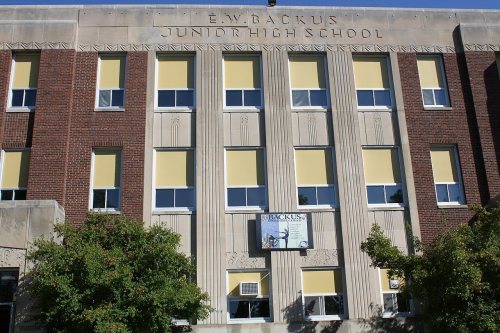
Its Register listings are the Koochiching County Courthouse and the Baker, Alexander, School and E.W. Backus Junior High School. Its Register listings are the Koochiching County Courthouse and the Baker, Alexander, School and E.W. Backus Junior High School. Below: 5 old photos and papers, maps from 1919 on, and the census since 1910.
From International Falls’ archive · credits on each photo
Quick answers
How International Falls began
When was International Falls founded?
1902
The International Falls post office opened in 1902, the earliest record of the town by name. Two smaller post offices, Koochiching (1894) and Holler (1927), opened inside today’s city and later closed.
First census: 1,487 in 19102020 census: 5,802124 years
How historic is International Falls?
B−
More historic than 47% of U.S. towns, on its age, its old homes and the National Register.
Founding year: the first International Falls post office (Blevins & Helbock, CC0).The full story ↓
History grade
What drives International Falls’ History grade
On its age, its old homes and the National Register, International Falls is more historic than 47% of U.S. towns, #116 of 273 in Minnesota. Its share of homes from before 1940 holds the grade up; its age pulls it down.
B−
HistoryA character grade: shown, never part of International Falls’ overall grade.
Minnesota towns list about as much on the Register as the country (a typical Minnesota town has 2.1 per 10,000 residents, the U.S. 2.4), so International Falls’ 5.3 sits near the middle of its state (64% of Minnesota towns have fewer) while its 3 historic buildings outnumber those of 65% of U.S. towns.
How sure. Graded on any two of the three inputs instead, the letter would range from C to A−. The pre-1940 share is a Census survey estimate (±4.9 points). The founding year is the first post office, not a stated founding date.
Founding year: the first post office (other dates in Quick answers). Homes: Census ACS 2020–24. National Register: National Park Service, May 2026 list; each listing counted once (boundary changes and added documentation belong to their listing), and a historic district counts its contributing buildings. How TownRatings grades history →
What stands out about International Falls’ past
Read from the archive, the National Register and the record. The page puts what stands out first.
International Falls’s post office has been open since 1902. Two other post offices opened and closed inside today’s town.
Koochiching
1894–1902
International Falls
1902–today
Holler
1927–1948
South International Falls
1948–today
18901960today
Hamlets and corners on the map
Crescent Drive Mobile VillageNichol's Trailer CourtRidgeview Mobile Home ParkRiverside Mobile Home CourtSouth International FallsWoodland Mobile Home Park
US Post Offices dataset (Blevins & Helbock, CC0). Places and cemeteries from the USGS Geographic Names Information System (2021).
People over time
International Falls, census by census
Peaked at 8,324 in 1990; 5,802 people lived here in 2020.
12 censuses, 1910–2020.
U.S. Census Bureau decennial counts, from the census table on International Falls’ Wikipedia page.
On the map
International Falls on the map, 1919 to 1999
Every edition of the U.S. Geological Survey’s map of International Falls. Tap a year, or press play to watch the town change.
1919International Falls sheet · 1:62,500
U.S. Geological Survey historical topographic maps (public domain), via Esri’s collection of the scans. The red ring marks the center of International Falls.
The area now known as International Falls was inhabited by many indigenous peoples. The International Falls area was well known to explorers, missionaries, and voyagers as early as the 17th century. It was not until April 1895 that the community was platted by L. A. Ogaard, a teacher and preacher for the Koochiching Company, and named Koochiching. The word "Koochiching" comes from either the Ojibwe word Gojijiing or the Cree Kocicīhk, both meaning "at the place of inlets", referring to the neighbouring Rainy Lake and River. The European inhabitants gave the names Rainy Lake and Rainy River to the nearby bodies of water because of the mist-like rain present at the falls where the lake flowed into the river.
Nothing in the archives for these yearsWeddings on Main Street, storms, parades, school pictures, the old store. If it’s in your family album, it belongs here.
The International Falls post office opened in 1902, the earliest record of the town by name (U.S. post office records).
How does International Falls rank for history?
International Falls is more historic than 47% of U.S. towns, #116 of 273 in Minnesota. The History grade combines the town’s founding era, the share of homes built before 1940 and its National Register listings. It’s a character grade, so it isn’t part of the overall grade. How it works.
What is on the National Register in International Falls?
Two places: the Koochiching County Courthouse (listed 1977) and the Baker, Alexander, School and E.W. Backus Junior High School (2004).
How old are the homes in International Falls?
20% of International Falls’ homes were built before 1940 (Census estimate, ±4.9 points), against a typical 8.1% for a Minnesota town; the median home was built in 1965.
Founding dates: Wikidata, Wikipedia, the U.S. post office records of Blevins & Helbock (CC0) and the Census. Homes by year built: Census ACS 2020–24. National Register of Historic Places: National Park Service (list of May 22, 2026). Old photos, postcards and papers: Wikimedia Commons, the Library of Congress and other public archives, credited on each item’s page. Maps: U.S. Geological Survey historical topographic maps (via Esri) and Sanborn fire-insurance maps (Library of Congress). History text and census tables: Wikipedia (CC BY-SA 4.0). Places that used to be: USGS Geographic Names Information System (2021).
From Wikimedia Commons (3), the Library of Congress (2), Wikidata (1), the National Register of Historic Places (2), Wikipedia, Wikidata and Wikipedia for famous people, U.S. Geological Survey historical maps, U.S. Census counts (via Wikipedia), the US Post Offices dataset (Blevins & Helbock) and the USGS Geographic Names Information System. Archive images are copied here with their credits and licenses, shown on each photo’s page. Refreshed monthly.


 1900
 1900
 1913