Fergus Falls’ post office opened in 1870, and 18% of its homes were built before 1940
More historic than 71% of U.S. towns · #44 of 273 in Minnesota. What drives it
13 places in town are on the National Register, among them a historic district with 21 buildings. Below: 11 old photos and papers, maps from 1884 on, and the census since 1880.
Founding year: the first Fergus Falls post office (Blevins & Helbock, CC0).The full story ↓
History grade
What drives Fergus Falls’ History grade
On its age, its old homes and the National Register, Fergus Falls is more historic than 71% of U.S. towns, #44 of 273 in Minnesota. Its National Register listings hold the grade up; its age pulls it down.
B+
HistoryA character grade: shown, never part of Fergus Falls’ overall grade.
Minnesota towns list about as much on the Register as the country (a typical Minnesota town has 2.1 per 10,000 residents, the U.S. 2.4), so Fergus Falls’ 26.8 sits above most of its state (88% of Minnesota towns have fewer) while its 38 historic buildings outnumber those of 83% of U.S. towns.
How sure. Graded on any two of the three inputs instead, the letter would range from B− to A−. The pre-1940 share is a Census survey estimate (±3.3 points). The founding year is the first post office, not a stated founding date.
Founding year: the first post office (other dates in Quick answers). Homes: Census ACS 2020–24. National Register: National Park Service, May 2026 list; each listing counted once (boundary changes and added documentation belong to their listing), and a historic district counts its contributing buildings. How TownRatings grades history →
What stands out about Fergus Falls’ past
Read from the archive, the National Register and the record. The page puts what stands out first.
Fire insurance maps drew every building, what it was made of and what it was used for, so insurers could price the risk of fire. Pick a year, then a sheet.
The falls from which the city gets part of its name were discovered by Joe Whitford (a Scottish trapper) in 1856 and promptly named in honor of his employer, James Fergus. It is not known whether Fergus ever visited the city, but Whitford did not live to see the city develop, as he was killed during the 1862 Dakota war in western Minnesota. In 1867, George B. Wright was at the land office at St. Cloud and found Whitford's lapsed claim, purchased the land, and built what is now the Central Dam in downtown Fergus Falls around 1871. After Wright died in 1882, his son Vernon moved from Boston to Minnesota and took over his father's interests in the town. Vernon Wright was also one of the two people who established the Otter Tail Power Company in 1907. The city was incorporated in the late 1870s and is situated along the dividing line between the former great deciduous forest of the Northwes…
Passages that mention Fergus Falls, cut from the printed page as they were published.
History of Otter Tail County, Minnesota1916 · page 853Read the page →
Read the text
On October 2, 1880. Mr. Frankberg arrived in Fergus Falls, Minnesota, where he immediately began to work at the contracting and building trade. He had charge of the erection of the school house in the city of Fergus Falls which was destroyed by fire in 1877. In 1884 he turned his attention to real estate and was engaged in this business for about a year, when he was appointed to till out an unexpired term as citv justice. Ikwas then elected to the same office and held it continuously for twelve years.
Text read by machine from the scan; it may contain errors.
to America and settled in Kossuth county, Iowa, where they invested in some railroad land, on which they lived until the year 1903, and then they moved to Otter Tail county, Minnesota, living there until, during the year [905, the) went to the town of Fergus Falls, where C. J. Peterson has since lived in retirement. C. I. and Christine Peterson are active and devout members of the Swedish Baptist church, a congregation in which they are highly respected and worthy communicants. To the marriage of C. J. and Christine Peterson have been horn two suns, Elmer and Leonard.
Text read by machine from the scan; it may contain errors.
Scans and text from the Internet Archive. Books published in 1930 or earlier, which are in the public domain.
Timeline
Fergus Falls, 1870 to 1941
Woven from the archive, old maps, post office records, the National Register and the people born here.
Nothing in the archives for these yearsWeddings on Main Street, storms, parades, school pictures, the old store. If it’s in your family album, it belongs here.
The Fergus Falls post office opened in 1870, the earliest record of the town by name (U.S. post office records).
How does Fergus Falls rank for history?
Fergus Falls is more historic than 71% of U.S. towns, #44 of 273 in Minnesota. The History grade combines the town’s founding era, the share of homes built before 1940 and its National Register listings. It’s a character grade, so it isn’t part of the overall grade. How it works.
What is on the National Register in Fergus Falls?
13 listings: 13 buildings, among them the C. J. Wright House (listed 1978, the first), and 1 historic district, the Fergus Falls State Hospital, with 21 contributing buildings. 38 historic buildings in all.
How old are the homes in Fergus Falls?
18% of Fergus Falls’ homes were built before 1940 (Census estimate, ±3.3 points), against a typical 8.1% for a Minnesota town; the median home was built in 1975.
Founding dates: Wikidata, Wikipedia, the U.S. post office records of Blevins & Helbock (CC0) and the Census. Homes by year built: Census ACS 2020–24. National Register of Historic Places: National Park Service (list of May 22, 2026). Old photos, postcards and papers: Wikimedia Commons, the Library of Congress and other public archives, credited on each item’s page. Maps: U.S. Geological Survey historical topographic maps (via Esri) and Sanborn fire-insurance maps (Library of Congress). History text and census tables: Wikipedia (CC BY-SA 4.0). Places that used to be: USGS Geographic Names Information System (2021).
From Wikimedia Commons (8), the Library of Congress (3), Wikidata (6), the National Register of Historic Places (14), Wikipedia, U.S. Geological Survey historical maps, U.S. Census counts (via Wikipedia), the US Post Offices dataset (Blevins & Helbock), the USGS Geographic Names Information System, Sanborn fire insurance maps (Library of Congress) and old county and town histories (Internet Archive). Archive images are copied here with their credits and licenses, shown on each photo’s page. Refreshed monthly.


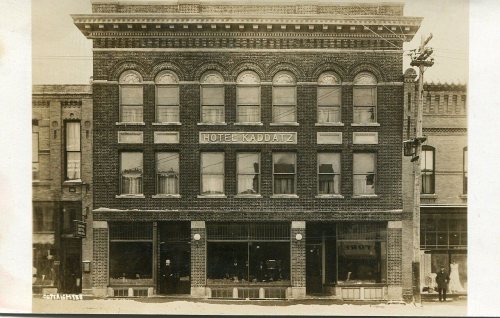

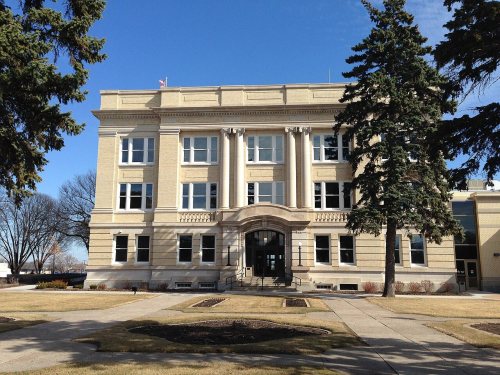


 1908
 1908
 1908
 1908
 1919
 1919
 1919


