Founding year: Wikidata; Wikipedia’s history section gives the same year. First post office: 1871.The full story ↓
History grade
What drives Detroit Lakes’ History grade
On its age, its old homes and the National Register, Detroit Lakes is more historic than 65% of U.S. towns, #61 of 273 in Minnesota. Its National Register listings hold the grade up; its age pulls it down.
B
HistoryA character grade: shown, never part of Detroit Lakes’ overall grade.
Minnesota towns list about as much on the Register as the country (a typical Minnesota town has 2.1 per 10,000 residents, the U.S. 2.4), so Detroit Lakes’ 12.0 sits above most of its state (78% of Minnesota towns have fewer) while its 12 historic buildings outnumber those of 77% of U.S. towns.
How sure. Graded on any two of the three inputs instead, the letter would range from C+ to A−. The pre-1940 share is a Census survey estimate (±4.1 points). Two sources give 1871.
Founding year: Wikidata (other dates in Quick answers). Homes: Census ACS 2020–24. National Register: National Park Service, May 2026 list; each listing counted once (boundary changes and added documentation belong to their listing), and a historic district counts its contributing buildings. How TownRatings grades history →
What stands out about Detroit Lakes’ past
Read from the archive, the National Register and the record. The page puts what stands out first.
Fire insurance maps drew every building, what it was made of and what it was used for, so insurers could price the risk of fire. Pick a year, then a sheet.
Detroit Lakes was founded in 1871 by Colonel George Johnston. It was called Detroit until 1927, when it was renamed to avoid confusion with Detroit, Michigan. The name was given by a French missionary. "Détroit" means "strait" or "narrows", and refers to the sandbar separating Big Detroit lake from Little Detroit lake. In the late 19th century, the sandbar was dredged and partially submerged to make the Pelican River watershed navigable by steamboat.
Detroit Lakes was a resting place on the Red River Oxcart Trails. Its Ojibwe name is Gaiajawangag, meaning a lake with a crossing in a sandy place.
Passages that mention Detroit Lakes, cut from the printed page as they were published.
A pioneer history of Becker County, Minnesota, including a brief account of its natural history ... and a history of the early settlement of the county1907 · page 289Read the page →
Read the text
In the summer of 1870 when at work on the Northern Pacific Railroad survey helping to run the preliminary lines east of the IMississippi, I learned that the country near Otter Tail River and Detroit Lakes was a good location to make settlement. In the month of August, 1870, I left Sauk Rapids, which at that time was the end of railway communication, and in company with William Redpath and James G. and Timothy Chilton started across the country on foot, and after about six days' travel
Text read by machine from the scan; it may contain errors.
Scans and text from the Internet Archive. Books published in 1930 or earlier, which are in the public domain.
Timeline
Detroit Lakes, 1871 to 1990
Woven from the archive, old maps, post office records, the National Register and the people born here.
Nothing in the archives for these yearsWeddings on Main Street, storms, parades, school pictures, the old store. If it’s in your family album, it belongs here.
Every edition of the U.S. Geological Survey’s map of Detroit Lakes. Tap a year, or press play to watch the town change.
1959Detroit Lakes sheet · 1:24,000
U.S. Geological Survey historical topographic maps (public domain), via Esri’s collection of the scans. The red ring marks the center of Detroit Lakes.
Then & now
Stand where they stood
No then-and-now pairs yet. Take a photo from the same spot as an old one and they appear here side by side.
Retake this viewMN1893 pg058 A VIEW OF DETROIT LAKE, 1893
Find the spot, match the angle, and add your photo. It becomes the first then-and-now pair on Detroit Lakes’ page.
In 1871, according to Wikidata and Wikipedia’s history of the town. Detroit Lakes’ post office opened in 1871, and the census of 1880 counted 554 people here.
How does Detroit Lakes rank for history?
Detroit Lakes is more historic than 65% of U.S. towns, #61 of 273 in Minnesota. The History grade combines the town’s founding era, the share of homes built before 1940 and its National Register listings. It’s a character grade, so it isn’t part of the overall grade. How it works.
What is on the National Register in Detroit Lakes?
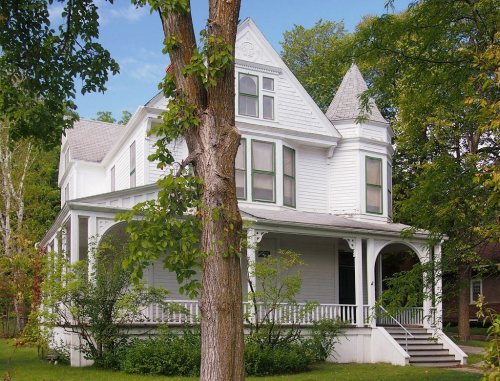
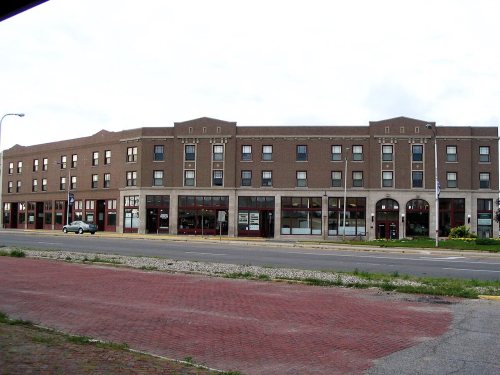
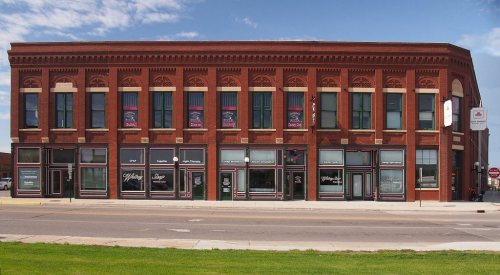
7 listings: 6 buildings, among them the Detroit Lakes Carnegie Library (listed 1976, the first), and 1 site. 12 historic buildings in all.
How old are the homes in Detroit Lakes?
16% of Detroit Lakes’ homes were built before 1940 (Census estimate, ±4.1 points), against a typical 8.1% for a Minnesota town; the median home was built in 1979.
Founding dates: Wikidata, Wikipedia, the U.S. post office records of Blevins & Helbock (CC0) and the Census. Homes by year built: Census ACS 2020–24. National Register of Historic Places: National Park Service (list of May 22, 2026). Old photos, postcards and papers: Wikimedia Commons, the Library of Congress and other public archives, credited on each item’s page. Maps: U.S. Geological Survey historical topographic maps (via Esri) and Sanborn fire-insurance maps (Library of Congress). History text and census tables: Wikipedia (CC BY-SA 4.0). Places that used to be: USGS Geographic Names Information System (2021).
From Wikimedia Commons (10), Wikidata (2), the National Register of Historic Places (7), Wikipedia, Wikidata and Wikipedia for famous people, U.S. Geological Survey historical maps, U.S. Census counts (via Wikipedia), the US Post Offices dataset (Blevins & Helbock), the USGS Geographic Names Information System, Sanborn fire insurance maps (Library of Congress) and old county and town histories (Internet Archive). Archive images are copied here with their credits and licenses, shown on each photo’s page. Refreshed monthly.


 1893
 2013
 2013
 2012
 2012
 2012
 2012
 2009
 2009