Founding year: the first Wyandotte post office (Blevins & Helbock, CC0). Wikidata: 1867.The full story ↓
History grade
What drives Wyandotte’s History grade
On its age, its old homes and the National Register, Wyandotte is more historic than 76% of U.S. towns, #160 of 701 in Michigan. Its share of homes from before 1940 holds the grade up; its age pulls it down.
A−
HistoryA character grade: shown, never part of Wyandotte’s overall grade.
Few Michigan towns list much on the Register (a typical Michigan town has 0.0 per 10,000 residents, the U.S. 2.4), so Wyandotte’s 3.3 sits above most of its state (73% of Michigan towns have fewer) while its 8 historic buildings outnumber those of 74% of U.S. towns.
How sure. Graded on any two of the three inputs instead, the letter would range from B to A. The pre-1940 share is a Census survey estimate (±3.0 points). The founding year is the first post office, not a stated founding date; Wikidata’s 1867 falls in the same era, so the grade doesn’t depend on which one is used.
Founding year: the first post office (other dates in Quick answers). Homes: Census ACS 2020–24. National Register: National Park Service, May 2026 list; each listing counted once (boundary changes and added documentation belong to their listing), and a historic district counts its contributing buildings. How TownRatings grades history →
What stands out about Wyandotte’s past
Read from the archive, the National Register and the record. The page puts what stands out first.
Nothing in the archives for these yearsWeddings on Main Street, storms, parades, school pictures, the old store. If it’s in your family album, it belongs here.
Peaked at 43,519 in 1960; 25,058 people lived here in 2020.
16 censuses, 1870–2020.
U.S. Census Bureau decennial counts, from the census table on Wyandotte’s Wikipedia page.
Every building
Wyandotte, building by building, 1890–1922
Fire insurance maps drew every building, what it was made of and what it was used for, so insurers could price the risk of fire. Pick a year, then a sheet.
In the 18th century, this area was a small village of the Wyandot (or Wendat) called Maquaqua. Local French colonists called it Monguagon, a transliteration of its pronunciation in French.
The Wyandot were Iroquoian-speaking and part of the Huron nation from the Georgian Bay area of Canada. They generally lived peacefully with the few white French farmers, exchanging products and favors.
During the French and Indian War (part of the Seven Years' War in Europe), the Wyandot were allied with the Potawatomi and the French. English had taken control of the garrisoned Fort of Detroit. Near here, Chief Pontiac plotted his attack against the British fort in 1763 but failed.
Passages that mention Wyandotte, cut from the printed page as they were published.
The history of Detroit and Michigan, or, The metropolis illustrated [microform]1884 · page 872Read the page →
Read the text
This bank was organized November 20, 1871, with a capital of $50,000, and is located in the city of Wyandotte, The original and present officers are John S. Van Alstyne, president, and W. Van Miller, cashier.
Text read by machine from the scan; it may contain errors.
The History Of Detroit And Michigan1889 · page 1123Read the page →
Read the text
of the following season as master of a vessel and in the autumn began teaching a winter school in Flat Rock, Wayne County, Michigan. The following summer he resided at Wyandotte, superintending for his father the erection of the rolling mill at that place. The succeeding winter he taught school at Ecorse, and afterwards in Wyandotte and Trenton, pursuing as best he could the preparatory
Text read by machine from the scan; it may contain errors.
Scans and text from the Internet Archive. Books published in 1930 or earlier, which are in the public domain.
Timeline
Wyandotte, 1855 to 1992
Woven from the archive, old maps, post office records, the National Register and the people born here.
The Wyandotte post office opened in 1855, the earliest record of the town by name (U.S. post office records). Wikidata gives 1867.
How does Wyandotte rank for history?
Wyandotte is more historic than 76% of U.S. towns, #160 of 701 in Michigan. The History grade combines the town’s founding era, the share of homes built before 1940 and its National Register listings. It’s a character grade, so it isn’t part of the overall grade. How it works.
What is on the National Register in Wyandotte?
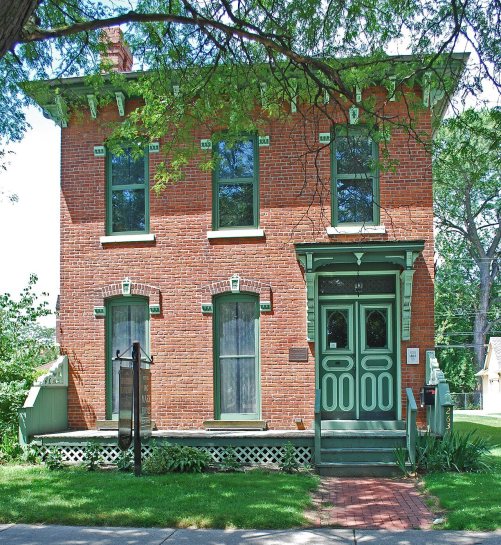
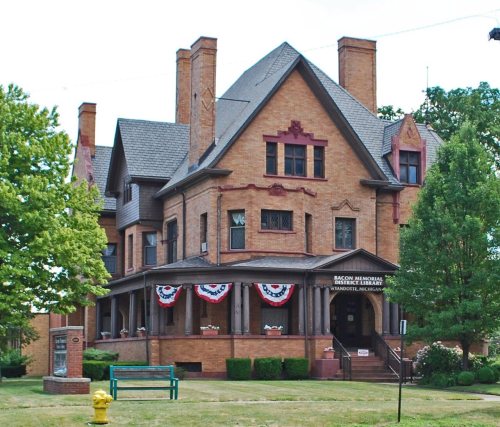
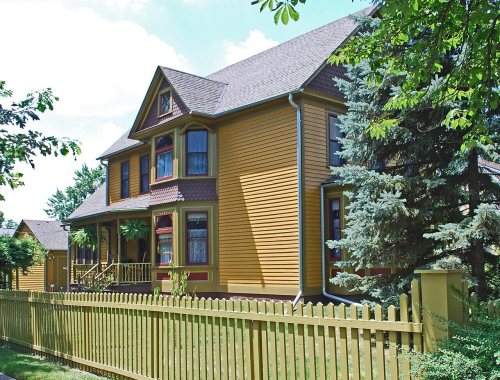
7 listings: 7 buildings, among them the Marx House (listed 1976, the first). 8 historic buildings in all.
How old are the homes in Wyandotte?
30% of Wyandotte’s homes were built before 1940 (Census estimate, ±3.0 points), against a typical 12% for a Michigan town; the median home was built in 1951.
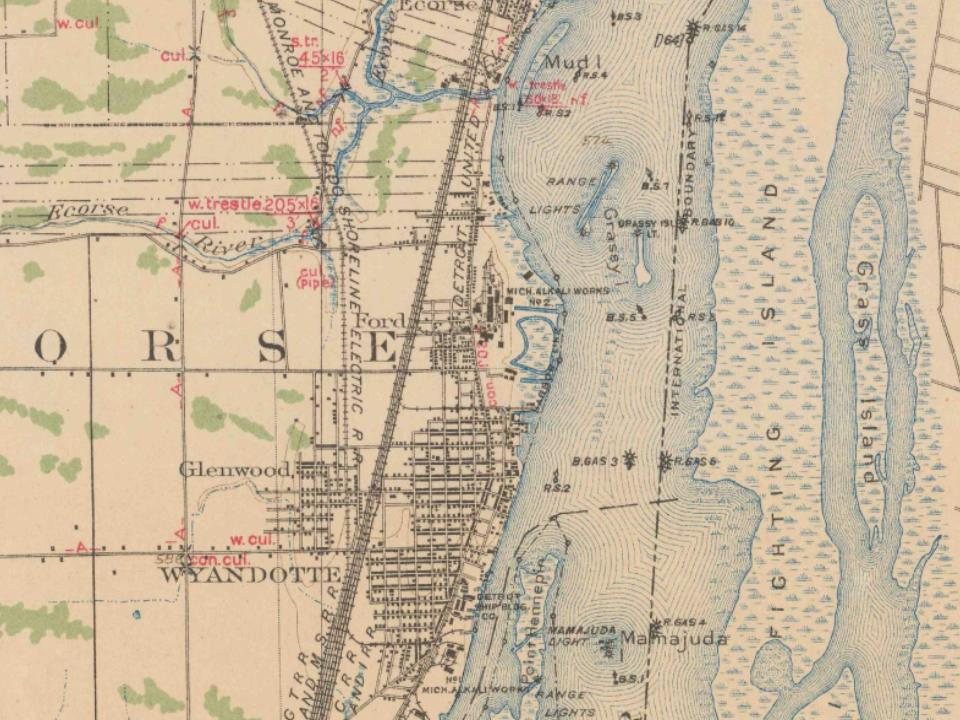
Founding dates: Wikidata, Wikipedia, the U.S. post office records of Blevins & Helbock (CC0) and the Census. Homes by year built: Census ACS 2020–24. National Register of Historic Places: National Park Service (list of May 22, 2026). Old photos, postcards and papers: Wikimedia Commons, the Library of Congress and other public archives, credited on each item’s page. Maps: U.S. Geological Survey historical topographic maps (via Esri) and Sanborn fire-insurance maps (Library of Congress). History text and census tables: Wikipedia (CC BY-SA 4.0). Places that used to be: USGS Geographic Names Information System (2021).
From Wikimedia Commons (42), the Library of Congress (40), Wikidata (2), the National Register of Historic Places (7), Wikipedia, Wikidata and Wikipedia for famous people, U.S. Geological Survey historical maps, U.S. Census counts (via Wikipedia), the US Post Offices dataset (Blevins & Helbock), the USGS Geographic Names Information System, Sanborn fire insurance maps (Library of Congress) and old county and town histories (Internet Archive). Archive images are copied here with their credits and licenses, shown on each photo’s page. Refreshed monthly.


 1865
 1884
 1884
 1891
 1891
 1891
 1891
 1892
 1896
 1896
 1900
 1900
 1900
 1901
 1901
 1902
 1902
 1902
 1902
 1902
 1902
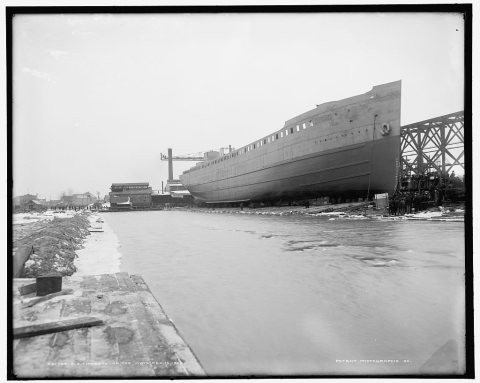 1902
 1902
 1903
 1906
 1906
 1909
 1909
 1909
 1909
 1909
 1909
 1909
 1909
 1909
 1910
 1910
 1910
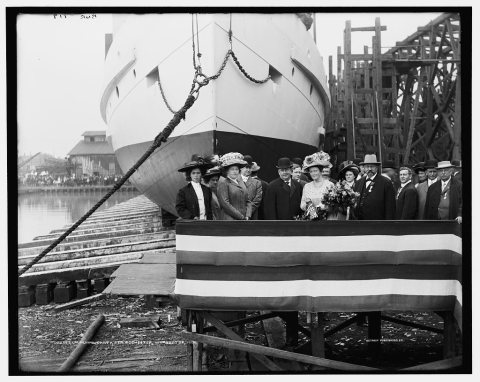 1910
 1910
 1910
 1910
 1910
 1910
 1910
 1910
 1912
 1912
 1912
 1912
 1912
 1912
 1913
 1916
 1916
 1918
 c. 1930
 1988
 1992
 1996
 2026
 2021
 2020
 2020
 2017
 2017
 2017
 2016
 2016
 2015
 2015
 2015
 2014
 2014
 2014
 2014
 2013
 2013
 2011
 2011
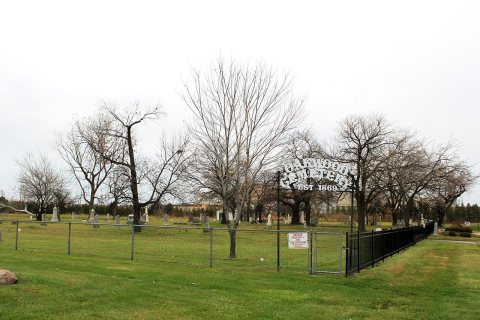 2011
 2011