Troy’s post office opened in 1826, and 2 of its places are on the National Register
More historic than 59% of U.S. towns · #297 of 701 in Michigan. What drives it
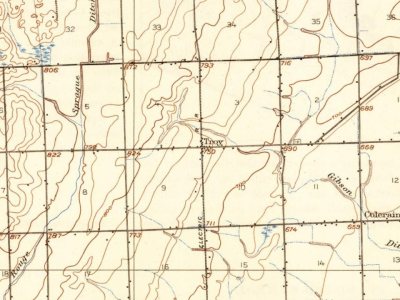
Most of Troy was built recently: 3% of its homes predate 1940 and the median home dates from 1977. Its Register listings are the Caswell House and the Brooks Farm. Below: 2 old photos and papers, maps from 1908 on, and the census since 1960.
The Troy post office opened in 1826, the earliest record of the town by name. Two smaller post offices, Big Beaver (1844) and Colerain (1890), opened inside today’s city and later closed.
First census: 19,402 in 19602020 census: 87,294200 years
How historic is Troy?
B
More historic than 59% of U.S. towns, on its age, its old homes and the National Register.
Founding year: the first Troy post office (Blevins & Helbock, CC0).The full story ↓
History grade
What drives Troy’s History grade
On its age, its old homes and the National Register, Troy is more historic than 59% of U.S. towns, #297 of 701 in Michigan. Its age holds the grade up; its share of homes from before 1940 pulls it down.
B
HistoryA character grade: shown, never part of Troy’s overall grade.
Few Michigan towns list much on the Register (a typical Michigan town has 0.0 per 10,000 residents, the U.S. 2.4), so Troy’s 0.7 sits near the middle of its state (65% of Michigan towns have fewer) while its 6 historic buildings outnumber those of 72% of U.S. towns.
How sure. Graded on any two of the three inputs instead, the letter would range from C+ to A−. The pre-1940 share (±0.9 points) is firm at this size. The founding year is the first post office, not a stated founding date.
Founding year: the first post office (other dates in Quick answers). Homes: Census ACS 2020–24. National Register: National Park Service, May 2026 list; each listing counted once (boundary changes and added documentation belong to their listing), and a historic district counts its contributing buildings. How TownRatings grades history →
What stands out about Troy’s past
Read from the archive, the National Register and the record. The page puts what stands out first.
The earliest recorded purchases of land in what was known as Troy Township occurred in 1819. A couple of years later, a settlement known as Troy Corners was established due to Johnson Niles buying 160 acres in the region. The area is currently the north-central area of Troy. In 1827, Troy Township was established. In 1955, Troy was officially incorporated primarily as a strategy for preventing border cities from taking more land. This also helped to establish more robust city services for Troy residents, whose numbers increased rapidly during this time due to Detroiters fleeing the city for the surrounding suburbs.
Passages that mention Troy, cut from the printed page as they were published.
History of Oakland County, Michigan1912 · page 88Read the page →
Read the text
General Green in the War of the Revolution and was wounded in an action in his native state. He came to Michigan in 1835 and took up his residence with his son Johnson Niles, the first settler in the township of Troy, and remained here until his death in July, 1838. Buried in Crook's cemetery, Troy, Oakland county, Michigan. His wife. Smellage Sisson, died in 1835; m. 2nd, Lucy Roberts.
Text read by machine from the scan; it may contain errors.
History of Oakland County, Michigan1912 · page 290Read the page →
Read the text
He located as a "squatter" a little above the present station of Amy, on the Grand Trunk line. Aaron Webster, of Cayuga county, New York, was the first property owner and permanent settler of Auburn, coming from Troy township. Webster went to the nearest sawmill, that at Pontiac, for the purpose of getting lumber with which to build his cabin, but when he interviewed Colonel Alack he decided that the price asked (ten dollars per thousand) was too high, and concluded that he himself would build a sawmill and cut his own lumber. He had noticed the
Text read by machine from the scan; it may contain errors.
Scans and text from the Internet Archive. Books published in 1930 or earlier, which are in the public domain.
Timeline
Troy, 1826 to 1990
Woven from the archive, old maps, post office records, the National Register and the people born here.
Nothing in the archives for these yearsWeddings on Main Street, storms, parades, school pictures, the old store. If it’s in your family album, it belongs here.
The Troy post office opened in 1826, the earliest record of the town by name (U.S. post office records).
How does Troy rank for history?
Troy is more historic than 59% of U.S. towns, #297 of 701 in Michigan. The History grade combines the town’s founding era, the share of homes built before 1940 and its National Register listings. It’s a character grade, so it isn’t part of the overall grade. How it works.
What is on the National Register in Troy?
Two places: the Caswell House (listed 1972) and the Brooks Farm (1972).
How old are the homes in Troy?
3% of Troy’s homes were built before 1940 (Census estimate), against a typical 12% for a Michigan town; the median home was built in 1977.
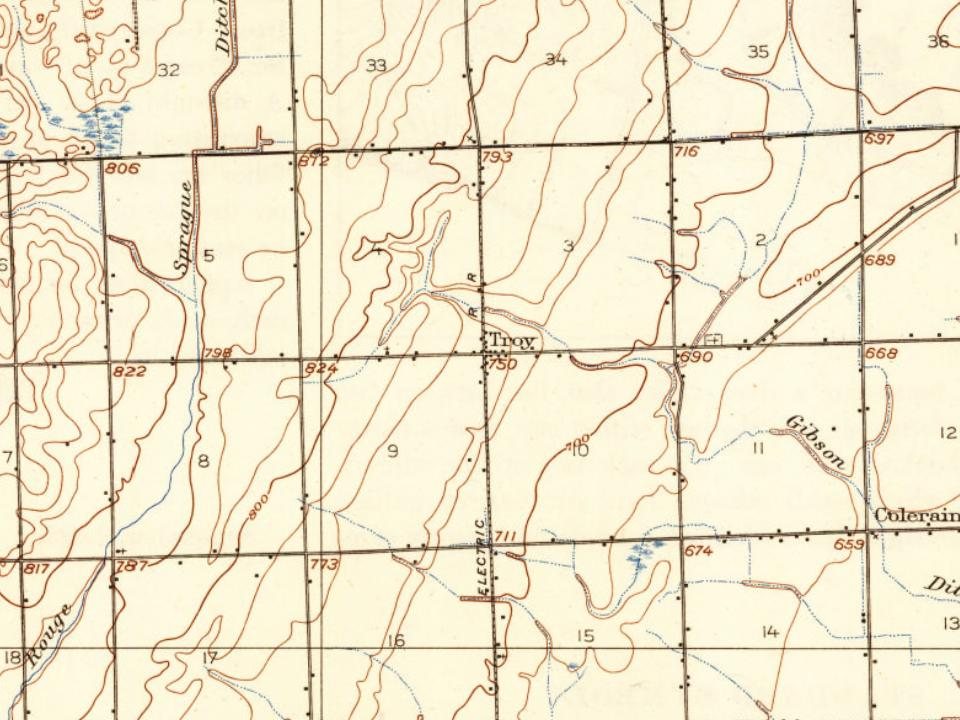
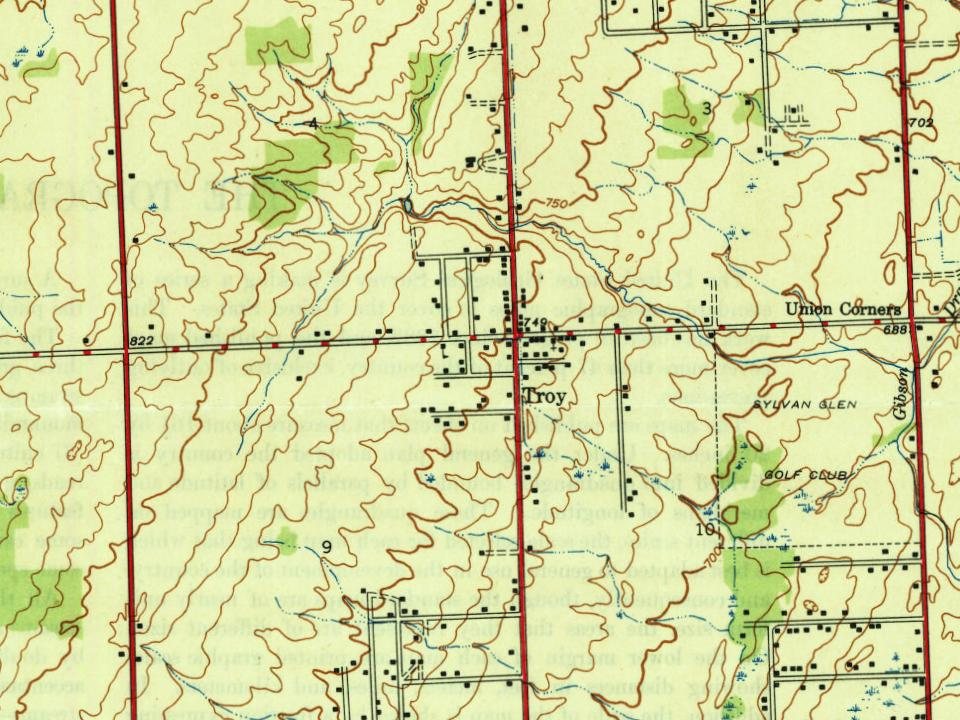
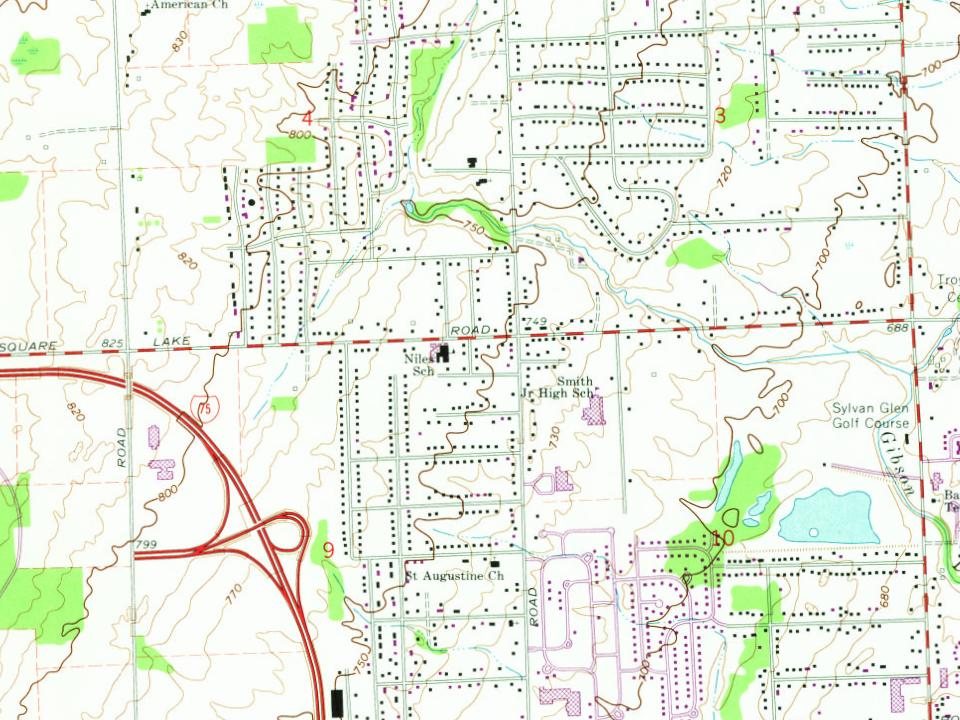
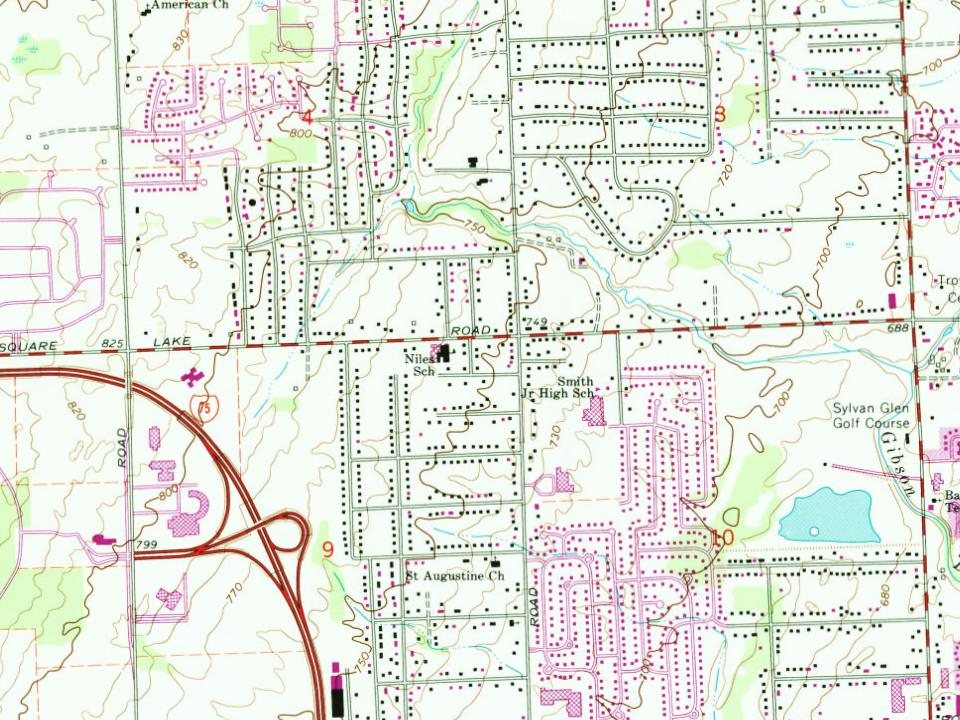
Founding dates: Wikidata, Wikipedia, the U.S. post office records of Blevins & Helbock (CC0) and the Census. Homes by year built: Census ACS 2020–24. National Register of Historic Places: National Park Service (list of May 22, 2026). Old photos, postcards and papers: Wikimedia Commons, the Library of Congress and other public archives, credited on each item’s page. Maps: U.S. Geological Survey historical topographic maps (via Esri) and Sanborn fire-insurance maps (Library of Congress). History text and census tables: Wikipedia (CC BY-SA 4.0). Places that used to be: USGS Geographic Names Information System (2021).
From Wikimedia Commons (12), the National Register of Historic Places (2), Wikipedia, Wikidata and Wikipedia for famous people, U.S. Geological Survey historical maps, U.S. Census counts (via Wikipedia), the US Post Offices dataset (Blevins & Helbock), the USGS Geographic Names Information System and old county and town histories (Internet Archive). Archive images are copied here with their credits and licenses, shown on each photo’s page. Refreshed monthly.









 2009
 2009
 2009
 2009
 2009
 2008
 2005
 2005
 2005
 2005


