On its age, its old homes and the National Register, Lake Orion is among the most historic 1% of U.S. towns, #1 of 701 in Michigan. All 2 inputs put Lake Orion near the top nationally; its National Register listings ranks highest.
A+
HistoryA character grade: shown, never part of Lake Orion’s overall grade.
Few Michigan towns list much on the Register (a typical Michigan town has 0.0 per 10,000 residents, the U.S. 2.4), so Lake Orion’s 758 sits above most of its state (99% of Michigan towns have fewer) while its 217 historic buildings outnumber those of 94% of U.S. towns.
How sure. Graded on two of the three inputs, so a change in either one moves the letter more than it would with three. The pre-1940 share is a Census survey estimate (±9.0 points).
Founding year: our sources. Homes: Census ACS 2020–24. National Register: National Park Service, May 2026 list; each listing counted once (boundary changes and added documentation belong to their listing), and a historic district counts its contributing buildings. How TownRatings grades history →
What stands out about Lake Orion’s past
Read from the archive, the National Register and the record. The page puts what stands out first.
Judah Church and Moses (or Samuel) Munson were among the first settlers. Munson, who arrived in 1824, built a sawmill in 1825, and planted the first orchard. Jesse Decker arrived from upstate New York with his wife, Mary, in 1825. He was energetic and became "everything to everybody", so that the place soon became known as "Decker's Settlement" and the town "Canandaigua," after Canandaigua, New York, where the settlers originated. The settlement grew into a bustling commercial center with a sawmill, tavern, post office, general store, blacksmith shop, school and cemetery. In 1828, a power dam was built uniting several small lakes and forming the mile-wide Lake Canandaigua, just west of the village.
Passages that mention Lake Orion, cut from the printed page as they were published.
History of Oakland County, Michigan1912 · page 5Read the page →
Read the text
atory, a wharf and boathouse for "Little Dick," and other improvements and attractions were inaugurated and completed, which gave the Lake Orion region quite a wide reputation among the really popular summer resorts of southern Michigan. In 181)9 the Lake Orion Assembly Resort was organized, which practically purchased all the lake front. The company erected fine Iniildings, hotels and boathouses, and for ten years operated a Chautauqua on quite an extensive scale. In 1910 the Lake Orion Summer Homes Company succeeded by purchase to the assets of
Text read by machine from the scan; it may contain errors.
Scans and text from the Internet Archive. Books published in 1930 or earlier, which are in the public domain.
By decade
Lake Orion, decade by decade
One decade in the archive so far: the 1890s. Scroll each row; tap a photo for its story.
Nothing in the archives for these yearsWeddings on Main Street, storms, parades, school pictures, the old store. If it’s in your family album, it belongs here.
The country’s official list of buildings and places worth saving.
place listed
1
National Historic Landmarks
0
none yet
historic buildings protected
217
each building in a district counts
National Park Service, National Register of Historic Places. Photos from Wikimedia Commons, credited on each place’s page.
People over time
Lake Orion, census by census
Between 292 and 3,057 people in every census since 1860.
17 censuses, 1860–2020.
U.S. Census Bureau decennial counts, from the census table on Lake Orion’s Wikipedia page.
Questions about Lake Orion’s history
How does Lake Orion rank for history?
Lake Orion is among the most historic 1% of U.S. towns, #1 of 701 in Michigan. The History grade combines the town’s founding era, the share of homes built before 1940 and its National Register listings. It’s a character grade, so it isn’t part of the overall grade. How it works.
How old are the homes in Lake Orion?
37% of Lake Orion’s homes were built before 1940 (Census estimate, ±9.0 points), against a typical 12% for a Michigan town; the median home was built in 1959.
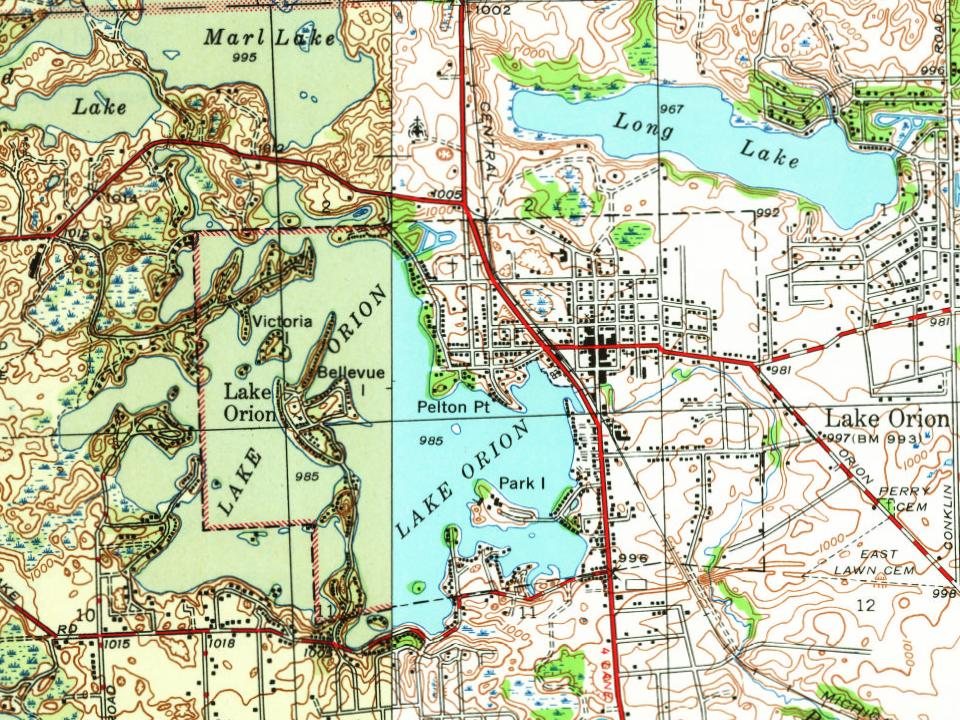
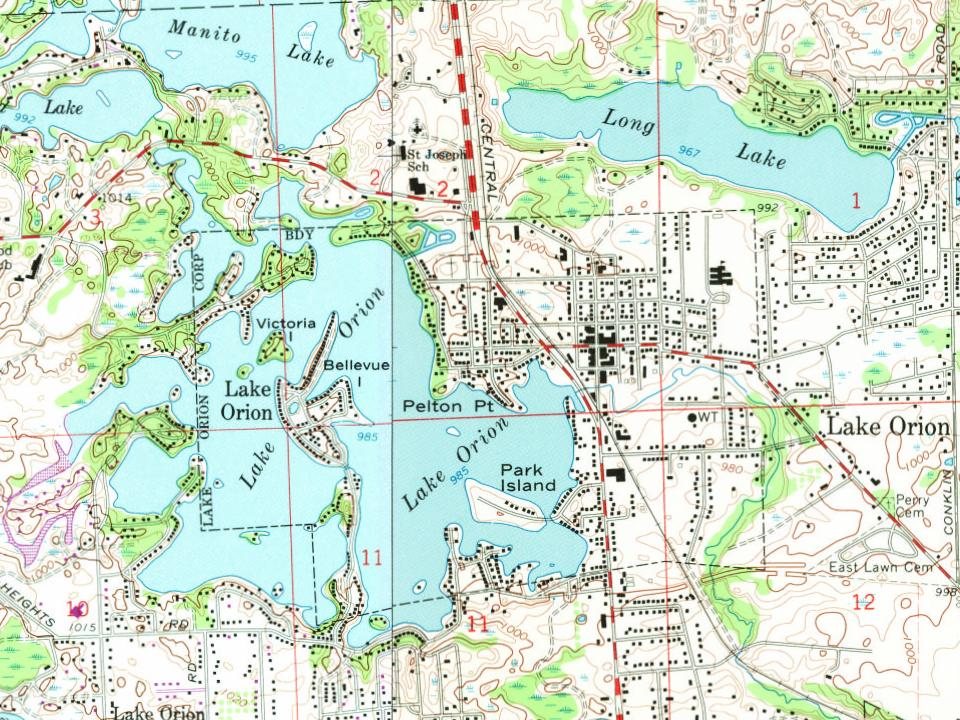
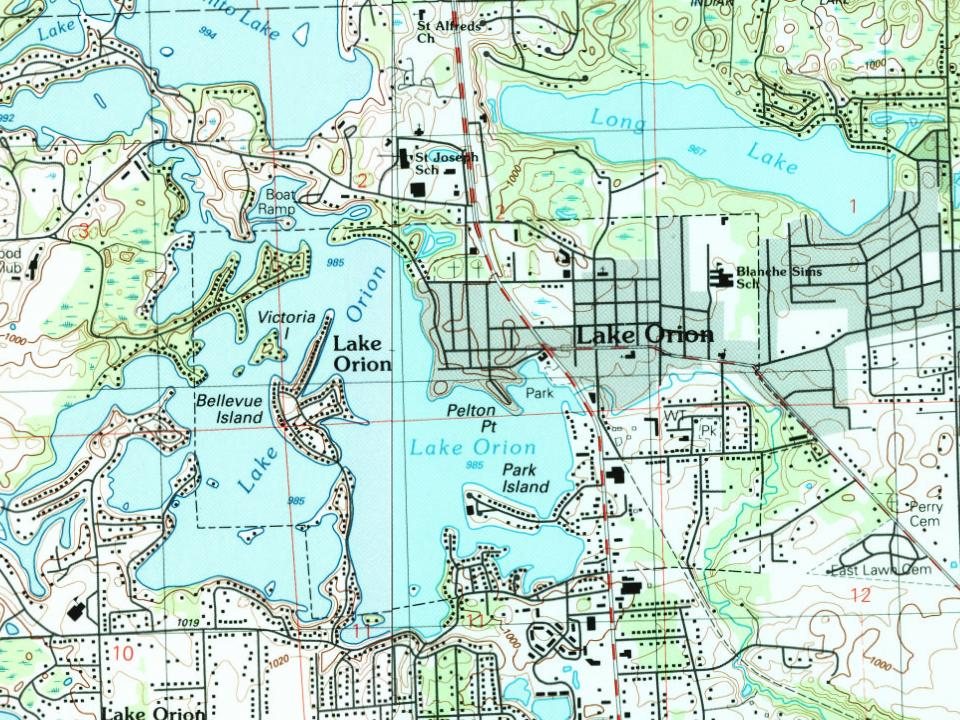
Founding dates: Wikidata, Wikipedia, the U.S. post office records of Blevins & Helbock (CC0) and the Census. Homes by year built: Census ACS 2020–24. National Register of Historic Places: National Park Service (list of May 22, 2026). Old photos, postcards and papers: Wikimedia Commons, the Library of Congress and other public archives, credited on each item’s page. Maps: U.S. Geological Survey historical topographic maps (via Esri) and Sanborn fire-insurance maps (Library of Congress). History text and census tables: Wikipedia (CC BY-SA 4.0). Places that used to be: USGS Geographic Names Information System (2021).
From Wikimedia Commons (3), the Library of Congress (2), Wikipedia, U.S. Geological Survey historical maps, U.S. Census counts (via Wikipedia) and old county and town histories (Internet Archive). Archive images are copied here with their credits and licenses, shown on each photo’s page. Refreshed monthly.


 1890
 1890
 2013
 2011
 2005