Guest, Sign inJoin

Post to Greenville

We’ll email a one-tap link to publish your post. No password, and nothing is public until you click it.
Already a member? Sign in
AHistory
History · Greenville

Greenville dates to 1844, and 24% of its homes were built before 1940

More historic than 93% of U.S. towns · #48 of 701 in Michigan. What drives it

2 places in town are on the National Register, among them a historic district with 60 buildings. Below: maps from 1884 on and the census since 1860.

1844founded
2on the National Register
24%homes built before 1940
8famous people
Quick answers

How Greenville began

When was Greenville founded?

1844

Greenville dates its founding to 1844 (Wikidata). The census first counted it in 1860.

First census: 398 in 18602020 census: 8,816182 years

How historic is Greenville?

A

More historic than 93% of U.S. towns, on its age, its old homes and the National Register.

What drives the grade ↓
Founding year: Wikidata. First post office: 1848.The full story ↓
History grade

What drives Greenville’s History grade

On its age, its old homes and the National Register, Greenville is more historic than 93% of U.S. towns, #48 of 701 in Michigan. All 3 inputs are above most U.S. towns; its National Register listings ranks highest and its age lowest.

A
HistoryA character grade: shown, never part of Greenville’s overall grade.
All U.S. towns we grade (21,289)Ahead of 93%
NewerOlder
Michigan towns of 2,500+ (701)Ahead of 93%

Few Michigan towns list much on the Register (a typical Michigan town has 0.0 per 10,000 residents, the U.S. 2.4), so Greenville’s 67.8 sits above most of its state (92% of Michigan towns have fewer) while its 61 historic buildings outnumber those of 86% of U.S. towns.

How sure. Graded on any two of the three inputs instead, the letter would range from A− to A. The pre-1940 share is a Census survey estimate (±6.5 points). Two sources give 1844.

Founding year: Wikidata (other dates in Quick answers). Homes: Census ACS 2020–24. National Register: National Park Service, May 2026 list; each listing counted once (boundary changes and added documentation belong to their listing), and a historic district counts its contributing buildings. How TownRatings grades history →

What stands out about Greenville’s past

Read from the archive, the National Register and the record. The page puts what stands out first.

★ What stands out · Help out

Start Greenville’s collection

The first neighbors to add old photos shape how Greenville’s history is told.

Decades since 1900 with photos
00s10s20s30s40s50s60s70s80s90s
0 of 10 decades. The empty ones are waiting for someone’s album.
On the National Register

2 listings protect 61 historic buildings

The country’s official list of buildings and places worth saving.

places listed
2
National Historic Landmarks
0
none yet
historic buildings protected
61
each building in a district counts
first listed
1980
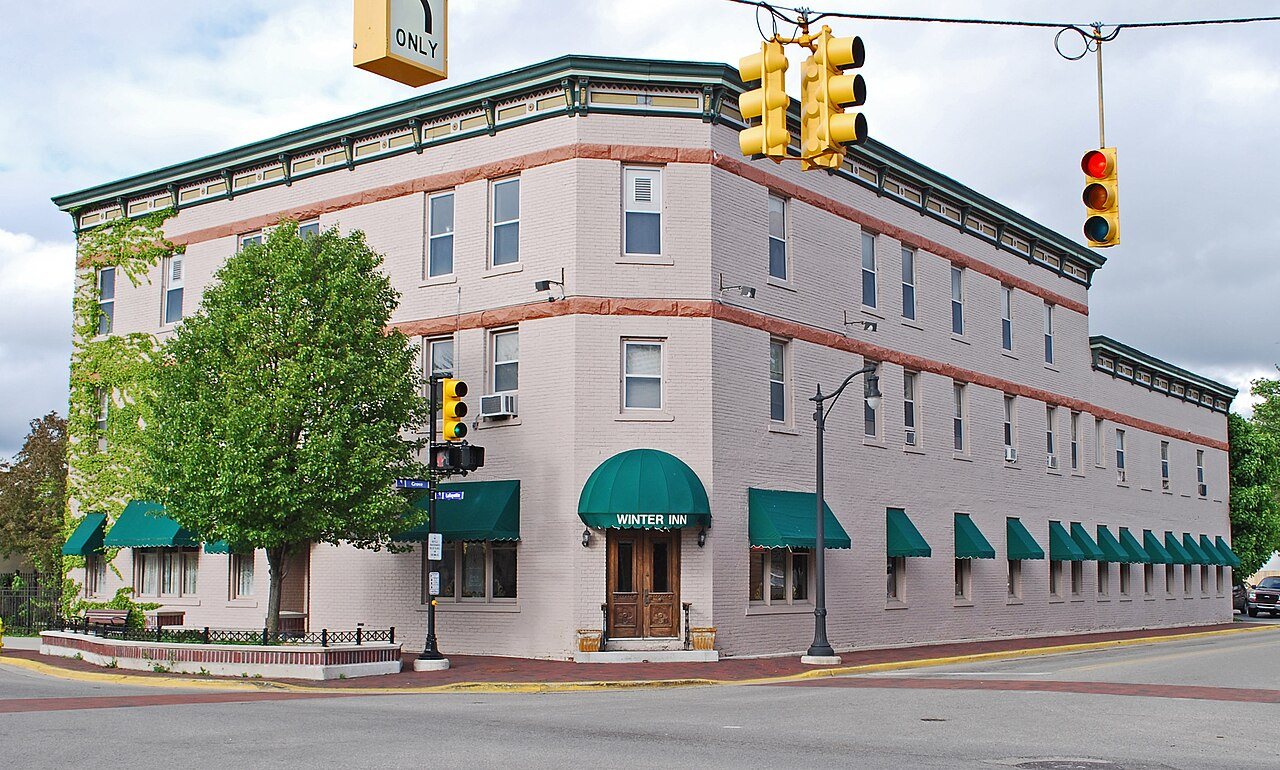
Winter Inn
BuildingsDistricts

Architectural styles listings

Late Victorian2
Italianate1
Commercial Style1
Gothic1
Colonial Revival1

National Park Service, National Register of Historic Places. Photos from Wikimedia Commons, credited on each place’s page.

Every building

Greenville, building by building, 1884–1918

Fire insurance maps drew every building, what it was made of and what it was used for, so insurers could price the risk of fire. Pick a year, then a sheet.

Greenville fire insurance map, 1884, sheet 11884Sheet 1 of 4
Edition
BrickWoodStone

Sanborn Map Company, via the Library of Congress. Editions published in 1930 or earlier, which are in the public domain.

The story

How Greenville came to be

From Wikipedia’s history of Greenville.

Read it all →

Greenville is named after its founder, John Green, who settled in the wilderness of the southwest part of Montcalm County in 1844. Green constructed a sawmill on the Flat River that is credited for attracting other settlers. The newly formed "Green's Village" attracted many people of Danish origin who followed another early Danish settler's positive letters home regarding the area. Because of the town's heritage, Greenville celebrates the Danish Festival every year on the third weekend of August. A post office was established on January 20, 1848, with Abel French as the first postmaster. John Green had the village platted in 1853, and it was a station on the Detroit, Grand Rapids and Western Railroad. Greenville incorporated as a village in 1867 and as a city in 1871.

Text from Wikipedia, licensed CC BY-SA 4.0.

Timeline

Greenville, 1844 to 1986

Woven from the archive, old maps, post office records, the National Register and the people born here.

  1. 19th century
  2. 1844
    FoundingGreenville is established
  3. 1848Post officeThe Greenville post office opens
  4. 1854Post officeThe Eureka post office opens
  5. 1858Post officeThe Eureka post office closes
  6. 1876Born hereCharlie Hemphill is born here
  7. 20th century
  8. 1902BuiltWinter Inn is built
  9. 1918Born hereFrederick C. Bock is born here
  10. 1964Born hereShane Mahan is born here
  11. 1972On the mapFirst mapped by the U.S. Geological Survey
  12. 1986Born hereIvy Winters is born here
By decade

Greenville, decade by decade

On the map

Greenville on the map, 1972 to 1985

Every edition of the U.S. Geological Survey’s map of Greenville. Tap a year, or press play to watch the town change.

Greenville on the 1972 USGS mapGreenville on the 1985 USGS map1972Greenville West sheet · 1:24,000

U.S. Geological Survey historical topographic maps (public domain), via Esri’s collection of the scans. The red ring marks the center of Greenville.

People over time

Greenville, census by census

02,0004,0006,0008,0001900195020008,816

Grew from 398 people in 1860 to 8,816 in 2020, more than tenfold.

17 censuses, 1860–2020.

U.S. Census Bureau decennial counts, from the census table on Greenville’s Wikipedia page.

Famous people

8 famous people were born in Greenville

Writers, athletes, leaders and more, ranked by how widely they’re known.

See all →
Places that used to be

Lost post offices, old corners and burying grounds

Greenville’s post office has been open since 1848. Another post office, Eureka, opened and closed inside today’s town.

Greenville
1848–today
Eureka
1854–1858
18401930today
Hamlets and corners on the map
Pond View Estates Mobile Home Park
4cemeteries and burying grounds inside Greenville
EurekaForest HomeSaint CharlesWest Washington

US Post Offices dataset (Blevins & Helbock, CC0). Places and cemeteries from the USGS Geographic Names Information System (2021).

Stories next door

History across the town line

Each neighbor’s History grade, on the same three inputs.

Questions about Greenville’s history

What year was Greenville founded?

In 1844, according to Wikidata. Greenville’s post office opened in 1848, and the census of 1860 counted 398 people here.

How does Greenville rank for history?

Greenville is more historic than 93% of U.S. towns, #48 of 701 in Michigan. The History grade combines the town’s founding era, the share of homes built before 1940 and its National Register listings. It’s a character grade, so it isn’t part of the overall grade. How it works.

What is on the National Register in Greenville?

Two places: the Winter Inn (listed 1980) and the Greenville Downtown Historic District (2008).

How old are the homes in Greenville?

24% of Greenville’s homes were built before 1940 (Census estimate, ±6.5 points), against a typical 12% for a Michigan town; the median home was built in 1967.

Memory lane

What the archives can’t tell you, neighbors can.

Town Square →
Start a conversation
Sources

Where this page comes from

Founding dates: Wikidata, Wikipedia, the U.S. post office records of Blevins & Helbock (CC0) and the Census. Homes by year built: Census ACS 2020–24. National Register of Historic Places: National Park Service (list of May 22, 2026). Old photos, postcards and papers: Wikimedia Commons, the Library of Congress and other public archives, credited on each item’s page. Maps: U.S. Geological Survey historical topographic maps (via Esri) and Sanborn fire-insurance maps (Library of Congress). History text and census tables: Wikipedia (CC BY-SA 4.0). Places that used to be: USGS Geographic Names Information System (2021).

From Wikimedia Commons (5), Wikidata (1), the National Register of Historic Places (2), Wikipedia, Wikidata and Wikipedia for famous people, U.S. Geological Survey historical maps, U.S. Census counts (via Wikipedia), the US Post Offices dataset (Blevins & Helbock), the USGS Geographic Names Information System and Sanborn fire insurance maps (Library of Congress). Archive images are copied here with their credits and licenses, shown on each photo’s page. Refreshed monthly.