Eaton Rapids dates to 1835, and 44% of its homes were built before 1940
More historic than 98% of U.S. towns · #12 of 701 in Michigan. What drives it
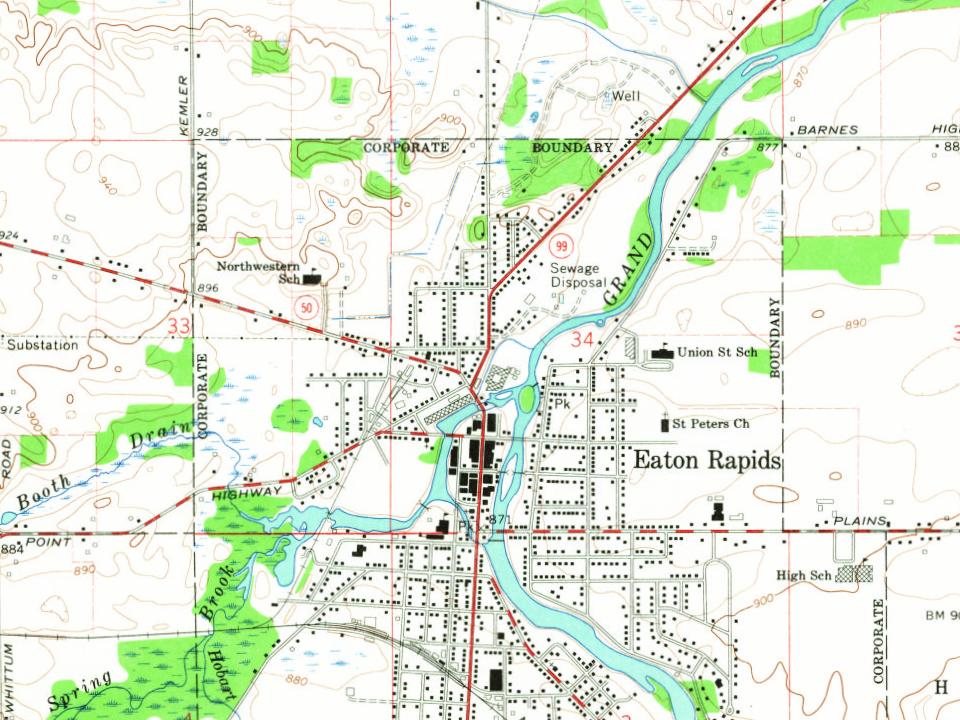
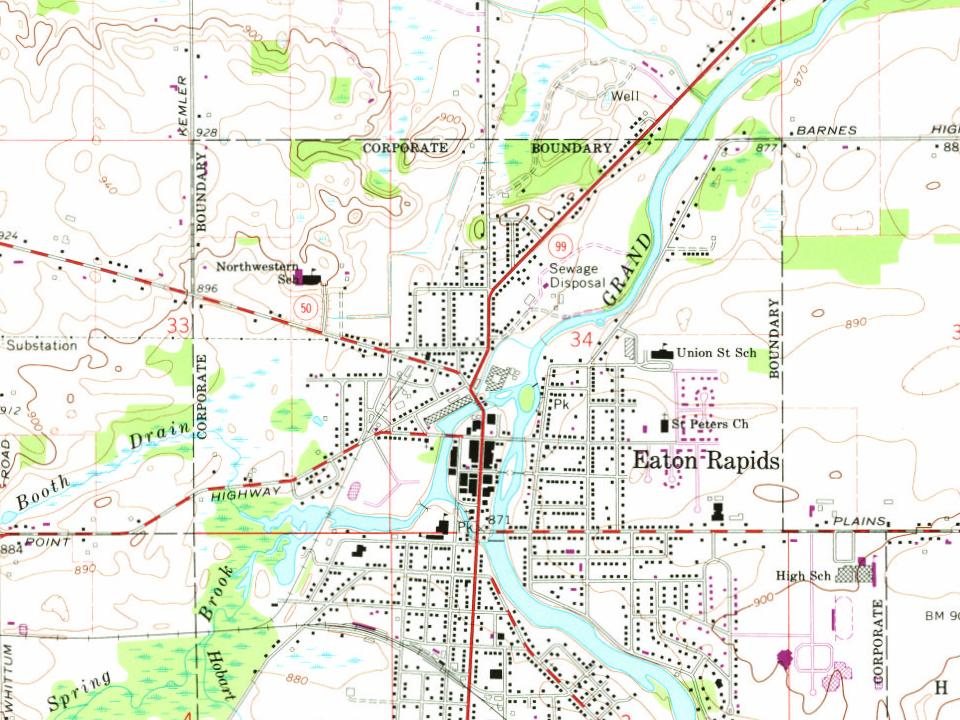
2 places in town are on the National Register, among them a historic district with 83 buildings. Below: 2 old photos and papers, maps from 1886 on, and the census since 1860.
Founding year: Wikidata. First post office: 1838.The full story ↓
History grade
What drives Eaton Rapids’ History grade
On its age, its old homes and the National Register, Eaton Rapids is more historic than 98% of U.S. towns, #12 of 701 in Michigan. All 3 inputs are above most U.S. towns; its share of homes from before 1940 ranks highest and its age lowest.
A+
HistoryA character grade: shown, never part of Eaton Rapids’ overall grade.
Few Michigan towns list much on the Register (a typical Michigan town has 0.0 per 10,000 residents, the U.S. 2.4), so Eaton Rapids’ 162 sits above most of its state (96% of Michigan towns have fewer) while its 84 historic buildings outnumber those of 88% of U.S. towns.
How sure. Graded on any two of the three inputs instead, the letter would range from A to A+. The pre-1940 share is a Census survey estimate (±7.5 points). Two sources give 1835.
Founding year: Wikidata (other dates in Quick answers). Homes: Census ACS 2020–24. National Register: National Park Service, May 2026 list; each listing counted once (boundary changes and added documentation belong to their listing), and a historic district counts its contributing buildings. How TownRatings grades history →
What stands out about Eaton Rapids’ past
Read from the archive, the National Register and the record. The page puts what stands out first.
National Park Service, National Register of Historic Places. Photos from Wikimedia Commons, credited on each place’s page.
Every building
Eaton Rapids, building by building, 1886–1918
Fire insurance maps drew every building, what it was made of and what it was used for, so insurers could price the risk of fire. Pick a year, then a sheet.
The Potawatomi people established a village in the area of what is now Eaton Rapids in about 1774. This was part of their wide territory in historic times.
The area constituting Eaton Rapids was first settled by Euro-Americans around the year 1835, who were drawn there because of the timber and water power in the area. It became a center of industry. The following year, a sawmill was constructed near Spring Brook in Spicerville; it provided the lumber settlers used to build Eaton Rapids. In 1837, the Old Red Mill was constructed by the mill company; it used waterpower from the stream to grind corn. The mill company later used wood from Spicerville to construct their own sawmill along the Grand River, as well as a wool carding mill.
Passages that mention Eaton Rapids, cut from the printed page as they were published.
Pioneer history of Eaton County, Michigan, 1833-18661929 · page 37Read the page →
Read the text
month John Tyler should become president to fill out three years and eleven months of Taylor 's presidential term. The township so remained for nine years until the village of Eaton Rapids having grown upon its north boundary line, and the town meetings and most of the offices being held in the village it was petitioned to have the two united. By act of legislature March 14, 1850, the two were
Text read by machine from the scan; it may contain errors.
Pioneer history of Eaton County, Michigan, 1833-18661929 · page 91Read the page →
Read the text
Signed, James Gallery," The postoffice was established at Eaton Rapids about 1837-38, with Benjamin Knight as postmaster. The original plat of the village was laid out July 19, 1838, by Amos Spicer, P, E, Spicer, C, Darling and Samuel Hamlin, In 1839, the place was still very small. The frame of the old ''Eaton Rapids Hotel" was built that season. The "Morgan
Text read by machine from the scan; it may contain errors.
Scans and text from the Internet Archive. Books published in 1930 or earlier, which are in the public domain.
Timeline
Eaton Rapids, 1835 to 1965
Woven from the archive, old maps, post office records, the National Register and the people born here.
In 1835, according to Wikidata. Eaton Rapids’ post office opened in 1838, and the census of 1860 counted 581 people here.
How does Eaton Rapids rank for history?
Eaton Rapids is more historic than 98% of U.S. towns, #12 of 701 in Michigan. The History grade combines the town’s founding era, the share of homes built before 1940 and its National Register listings. It’s a character grade, so it isn’t part of the overall grade. How it works.
What is on the National Register in Eaton Rapids?
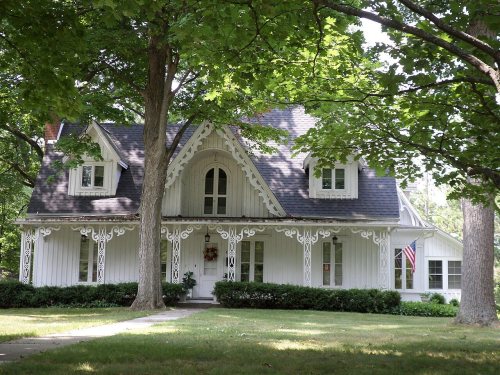
Two places: the Isaac N. Reynolds House (listed 1974) and the Island City Historic District (2012).
How old are the homes in Eaton Rapids?
44% of Eaton Rapids’ homes were built before 1940 (Census estimate, ±7.5 points), against a typical 12% for a Michigan town; the median home was built in 1954.
Founding dates: Wikidata, Wikipedia, the U.S. post office records of Blevins & Helbock (CC0) and the Census. Homes by year built: Census ACS 2020–24. National Register of Historic Places: National Park Service (list of May 22, 2026). Old photos, postcards and papers: Wikimedia Commons, the Library of Congress and other public archives, credited on each item’s page. Maps: U.S. Geological Survey historical topographic maps (via Esri) and Sanborn fire-insurance maps (Library of Congress). History text and census tables: Wikipedia (CC BY-SA 4.0). Places that used to be: USGS Geographic Names Information System (2021).
From Wikimedia Commons (11), Wikidata (1), the National Register of Historic Places (2), Wikipedia, Wikidata and Wikipedia for famous people, U.S. Geological Survey historical maps, U.S. Census counts (via Wikipedia), the US Post Offices dataset (Blevins & Helbock), the USGS Geographic Names Information System, Sanborn fire insurance maps (Library of Congress) and old county and town histories (Internet Archive). Archive images are copied here with their credits and licenses, shown on each photo’s page. Refreshed monthly.




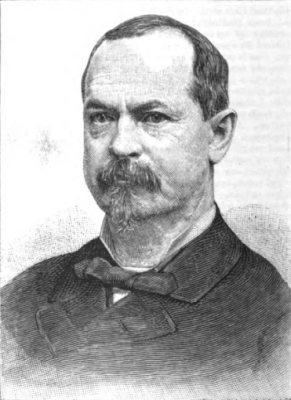


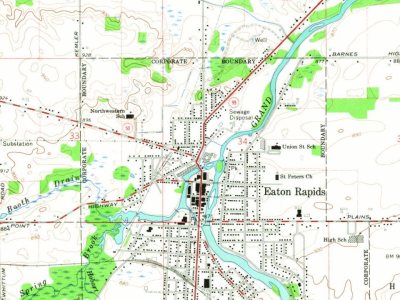
 1875
 2014
 2014
 2014
 2013
 2013
 2013
 2013
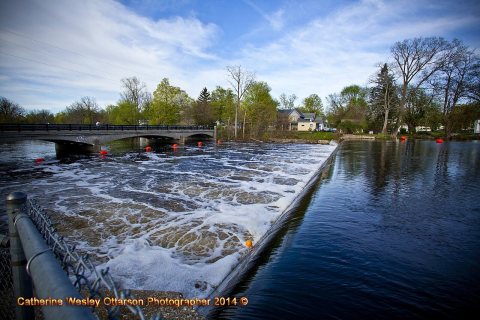 2013
 2011