Alpena dates to 1840, and 29% of its homes were built before 1940
More historic than 95% of U.S. towns · #29 of 701 in Michigan. What drives it
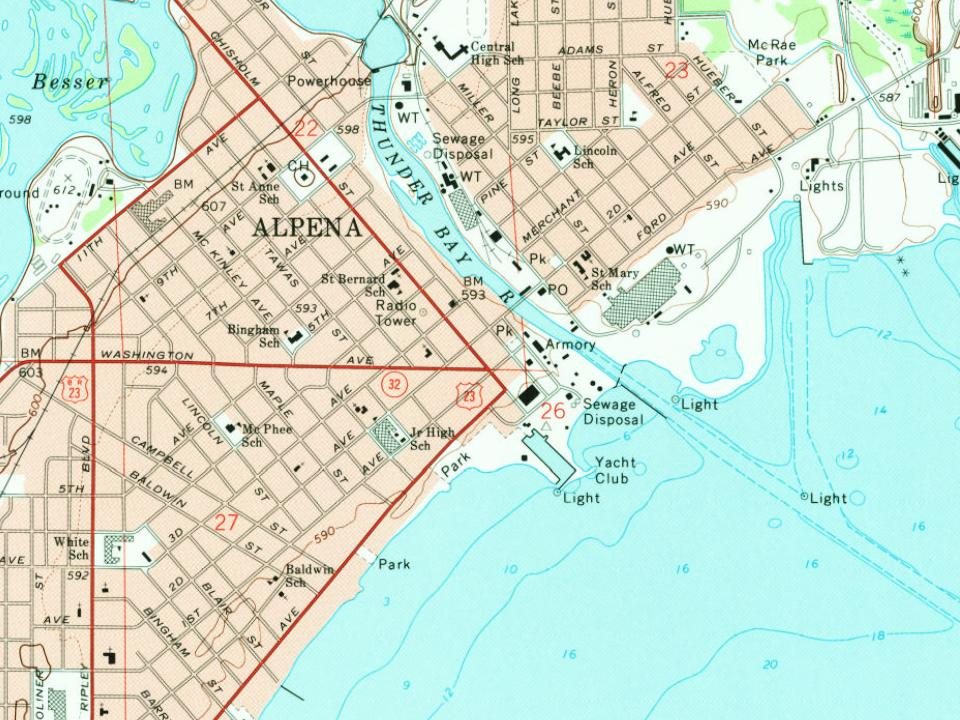
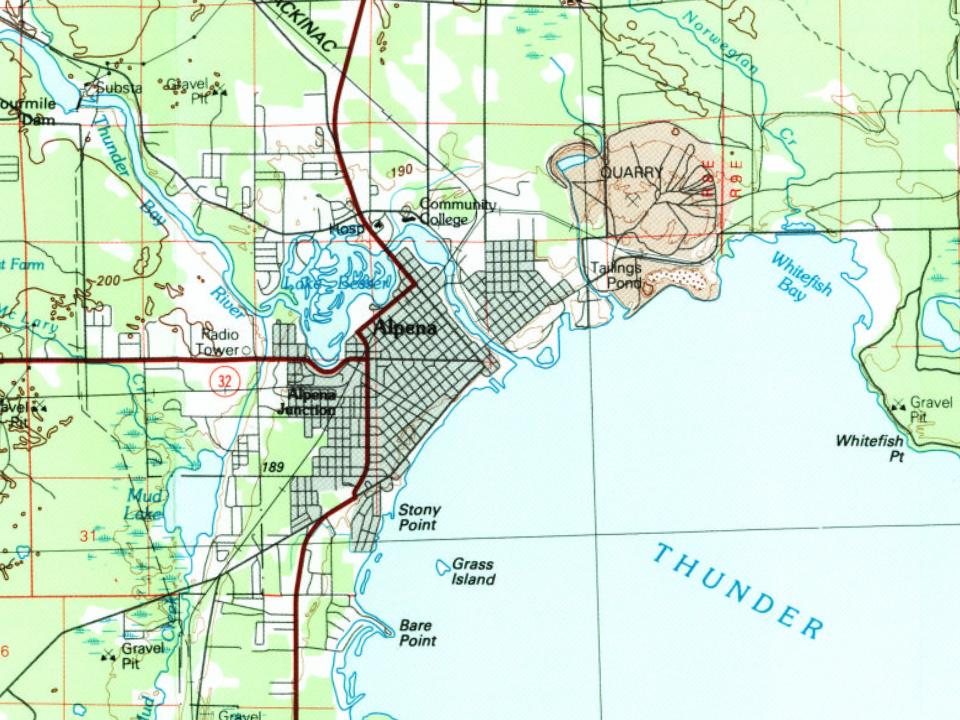
6 places in town are on the National Register, among them a historic district with 119 buildings. Below: 7 old photos and papers, maps from 1884 on, and the census since 1880.
Founding year: Wikidata. First post office: 1857.The full story ↓
History grade
What drives Alpena’s History grade
On its age, its old homes and the National Register, Alpena is more historic than 95% of U.S. towns, #29 of 701 in Michigan. All 3 inputs are above most U.S. towns; its National Register listings ranks highest and its age lowest.
A+
HistoryA character grade: shown, never part of Alpena’s overall grade.
Few Michigan towns list much on the Register (a typical Michigan town has 0.0 per 10,000 residents, the U.S. 2.4), so Alpena’s 122 sits above most of its state (95% of Michigan towns have fewer) while its 124 historic buildings outnumber those of 91% of U.S. towns.
How sure. Graded on any two of the three inputs instead, the letter would range from A to A+. The pre-1940 share is a Census survey estimate (±4.3 points). Two sources give 1840.
Founding year: Wikidata (other dates in Quick answers). Homes: Census ACS 2020–24. National Register: National Park Service, May 2026 list; each listing counted once (boundary changes and added documentation belong to their listing), and a historic district counts its contributing buildings. How TownRatings grades history →
What stands out about Alpena’s past
Read from the archive, the National Register and the record. The page puts what stands out first.
National Park Service, National Register of Historic Places. Photos from Wikimedia Commons, credited on each place’s page.
People over time
Alpena, census by census
Peaked at 14,682 in 1960; 10,197 people lived here in 2020.
15 censuses, 1880–2020.
U.S. Census Bureau decennial counts, from the census table on Alpena’s Wikipedia page.
Every building
Alpena, building by building, 1884–1910
Fire insurance maps drew every building, what it was made of and what it was used for, so insurers could price the risk of fire. Pick a year, then a sheet.
The Alpena area is home to the Ojibwe, Ottawa, and Potawatomi people. These people groups inhabit the area surrounding the Great Lakes, including Michigan. The Thunder Bay Band of Chippewa and Ottawa merged with the Mackinac Bands of Chippewa and Ottawa Indians in the mid-1800s under Chief Way-ge-maw-waw-be.
Alpena County was originally set off from Michilimackinac County as Anamickee County founded in 1840, which in 1843 was changed to Alpena, a pseudo-Native American word — a neologism coined by Henry Schoolcraft, meaning something like "a good partridge country." This was part of a much larger effort to rename a great many of the Michigan counties at the time.
Passages that mention Alpena, cut from the printed page as they were published.
Centennial history of Alpena County, Michigan1903 · page 154Read the page →
Read the text
Sec. 1. The People of the Sfcde of Michigan enact, That the School Inspectors of the township of Alpena, in the county of Alpena, are hereby authorized to organize the said township of Alpena, or so much thereof as they may deem necessary, into a school district, to be known as Union School District Number One, of said township.
Text read by machine from the scan; it may contain errors.
Centennial history of Alpena County, Michigan1903 · page 150Read the page →
Read the text
In January, 1875, quite an impulse was given to tLe railroad agitators by a man of the name of Jefferds, who proposed to build a railroad, from Alpena, direct to Sterling, on the Saginaw and Mackinaw road, and the spring opened with a fair prospect of a railroad to Alpena, and made quite a stir for a short time.
Text read by machine from the scan; it may contain errors.
Scans and text from the Internet Archive. Books published in 1930 or earlier, which are in the public domain.
Timeline
Alpena, 1840 to 1971
Woven from the archive, old maps, post office records, the National Register and the people born here.
Nothing in the archives for these yearsWeddings on Main Street, storms, parades, school pictures, the old store. If it’s in your family album, it belongs here.
In 1840, according to Wikidata. Alpena’s post office opened in 1857, and the census of 1880 counted 6,153 people here.
How does Alpena rank for history?
Alpena is more historic than 95% of U.S. towns, #29 of 701 in Michigan. The History grade combines the town’s founding era, the share of homes built before 1940 and its National Register listings. It’s a character grade, so it isn’t part of the overall grade. How it works.
What is on the National Register in Alpena?
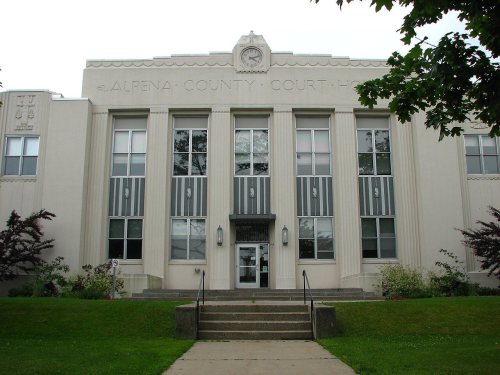
6 listings: 4 buildings, among them the Alpena County Courthouse (listed 1983, the first), 1 historic district, the Alpena Central Historic District, with 119 contributing buildings, and 1 structure. 124 historic buildings in all.
How old are the homes in Alpena?
29% of Alpena’s homes were built before 1940 (Census estimate, ±4.3 points), against a typical 12% for a Michigan town; the median home was built in 1955.
Founding dates: Wikidata, Wikipedia, the U.S. post office records of Blevins & Helbock (CC0) and the Census. Homes by year built: Census ACS 2020–24. National Register of Historic Places: National Park Service (list of May 22, 2026). Old photos, postcards and papers: Wikimedia Commons, the Library of Congress and other public archives, credited on each item’s page. Maps: U.S. Geological Survey historical topographic maps (via Esri) and Sanborn fire-insurance maps (Library of Congress). History text and census tables: Wikipedia (CC BY-SA 4.0). Places that used to be: USGS Geographic Names Information System (2021).
From Wikimedia Commons (25), Wikidata (4), the National Register of Historic Places (6), Wikipedia, Wikidata and Wikipedia for famous people, U.S. Geological Survey historical maps, U.S. Census counts (via Wikipedia), the US Post Offices dataset (Blevins & Helbock), the USGS Geographic Names Information System, Sanborn fire insurance maps (Library of Congress) and old county and town histories (Internet Archive). Archive images are copied here with their credits and licenses, shown on each photo’s page. Refreshed monthly.




 1917
 1917
 1917
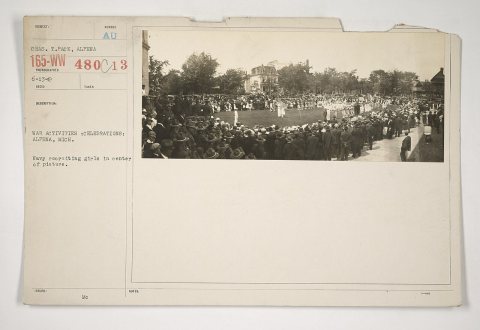 1917
 2014
 2014
 2014
 2014
 2013
 2012
 2012
 2011
 2011
 2011
 2010
 2010
 2009
 2009
 2009
 2007
 2005
 2004