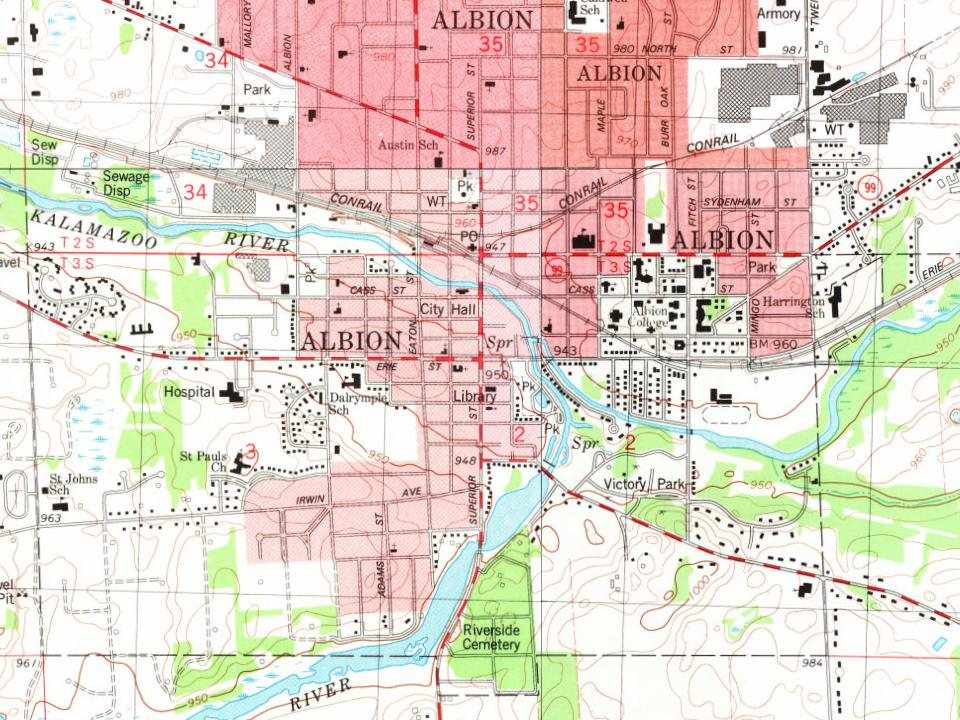
Albion dates to 1835, and 49% of its homes were built before 1940
More historic than 98% of U.S. towns · #11 of 701 in Michigan. What drives it
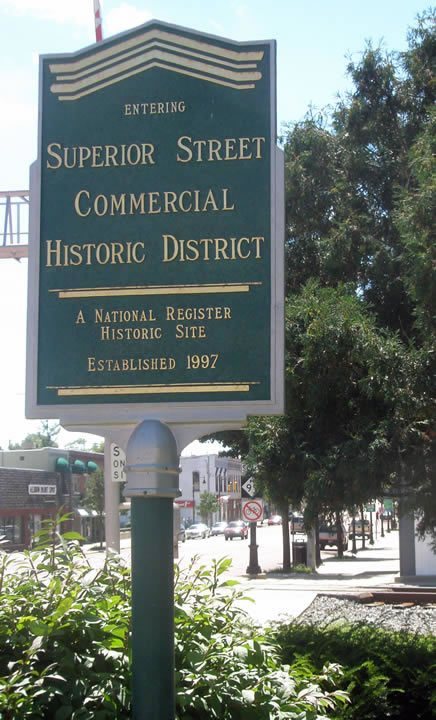
2 places in town are on the National Register, among them a historic district with 75 buildings. Below: 5 old photos and papers, maps from 1888 on, and the census since 1850.
Founding year: Wikidata. First post office: 1838.The full story ↓
History grade
What drives Albion’s History grade
On its age, its old homes and the National Register, Albion is more historic than 98% of U.S. towns, #11 of 701 in Michigan. All 3 inputs are above most U.S. towns; its share of homes from before 1940 ranks highest and its age lowest.
A+
HistoryA character grade: shown, never part of Albion’s overall grade.
Few Michigan towns list much on the Register (a typical Michigan town has 0.0 per 10,000 residents, the U.S. 2.4), so Albion’s 101 sits above most of its state (94% of Michigan towns have fewer) while its 76 historic buildings outnumber those of 88% of U.S. towns.
How sure. Graded on any two of the three inputs instead, the letter would range from A to A+. The pre-1940 share is a Census survey estimate (±5.2 points). Two sources give 1835.
Founding year: Wikidata (other dates in Quick answers). Homes: Census ACS 2020–24. National Register: National Park Service, May 2026 list; each listing counted once (boundary changes and added documentation belong to their listing), and a historic district counts its contributing buildings. How TownRatings grades history →
What stands out about Albion’s past
Read from the archive, the National Register and the record. The page puts what stands out first.
National Park Service, National Register of Historic Places. Photos from Wikimedia Commons, credited on each place’s page.
Every building
Albion, building by building, 1888–1918
Fire insurance maps drew every building, what it was made of and what it was used for, so insurers could price the risk of fire. Pick a year, then a sheet.
The first European-American settler, Tenney Peabody, arrived in 1833 along with his brother-in-law, Charles Blanchard, and another young man, Clark Dowling. Peabody's family followed soon after. In 1835, the Albion Company, a land development company formed by Jesse Crowell, platted a village. Peabody's wife was asked to name the settlement. She considered the name "Peabodyville", but selected "Albion" instead, after the former residence of Jesse Crowell. Crowell was appointed in 1838 as the first US postmaster there.
Passages that mention Albion, cut from the printed page as they were published.
History of Calhoun county, Michigan1913 · page 445Read the page →
Read the text
He has been president of the village of Albion and mayor and treasurer of the city of Albion, served upon the school board, director and treasurer of several industrial companies and at present he is treasurer of Albion College. From IS!)! to 1S!I2. lie was li'wisurer o\' tlu' .Michipin Bankers" Association.
Text read by machine from the scan; it may contain errors.
History of Calhoun county, Michigan1913 · page 126Read the page →
Read the text
He came to Albion in 1848 and began his service as presiding elder of Indian missions for lower Michigan, as pastor at South Albion, and at the same time as agent for the college. He was also an active business man, building houses and stores in Albion and superintending the grading of the branch of the Lake Shore railroad from Jonesville to Lansing. He was active in public affairs, member of the state house of representatives, state senator, a trustee and president of the village.
Text read by machine from the scan; it may contain errors.
Scans and text from the Internet Archive. Books published in 1930 or earlier, which are in the public domain.
Timeline
Albion, 1835 to 1980
Woven from the archive, old maps, post office records, the National Register and the people born here.
Nothing in the archives for these yearsWeddings on Main Street, storms, parades, school pictures, the old store. If it’s in your family album, it belongs here.
In 1835, according to Wikidata. Albion’s post office opened in 1838, and the census of 1850 counted 881 people here.
How does Albion rank for history?
Albion is more historic than 98% of U.S. towns, #11 of 701 in Michigan. The History grade combines the town’s founding era, the share of homes built before 1940 and its National Register listings. It’s a character grade, so it isn’t part of the overall grade. How it works.
What is on the National Register in Albion?
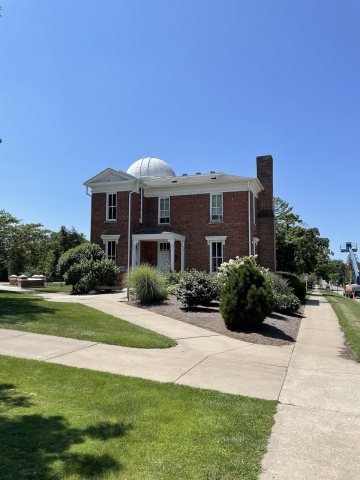
Two places: the Eugene P. Robertson House (listed 1988) and the Superior Street Commercial Historic District (1997).
How old are the homes in Albion?
49% of Albion’s homes were built before 1940 (Census estimate, ±5.2 points), against a typical 12% for a Michigan town; the median home was built in 1942.
Founding dates: Wikidata, Wikipedia, the U.S. post office records of Blevins & Helbock (CC0) and the Census. Homes by year built: Census ACS 2020–24. National Register of Historic Places: National Park Service (list of May 22, 2026). Old photos, postcards and papers: Wikimedia Commons, the Library of Congress and other public archives, credited on each item’s page. Maps: U.S. Geological Survey historical topographic maps (via Esri) and Sanborn fire-insurance maps (Library of Congress). History text and census tables: Wikipedia (CC BY-SA 4.0). Places that used to be: USGS Geographic Names Information System (2021).
From Wikimedia Commons (22), the Library of Congress (1), Wikidata (1), the National Register of Historic Places (2), Wikipedia, Wikidata and Wikipedia for famous people, U.S. Geological Survey historical maps, U.S. Census counts (via Wikipedia), the US Post Offices dataset (Blevins & Helbock), the USGS Geographic Names Information System, Sanborn fire insurance maps (Library of Congress) and old county and town histories (Internet Archive). Archive images are copied here with their credits and licenses, shown on each photo’s page. Refreshed monthly.






 1915
 1917
 1917
 2024
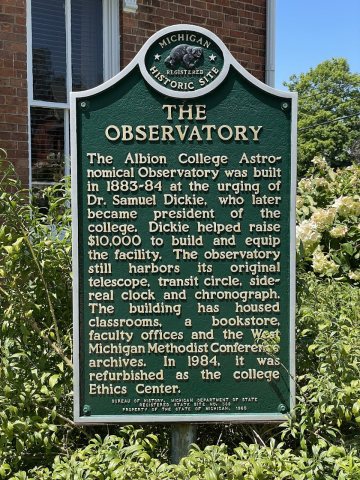 2024
 2024
 2021
 2019
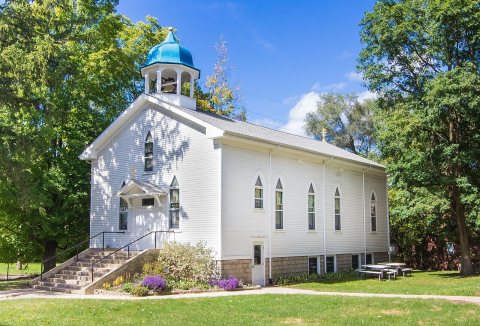 2018
 2018
 2018
 2016
 2016
 2016
 2016
 2016
 2016
 2014
 2012
 2011
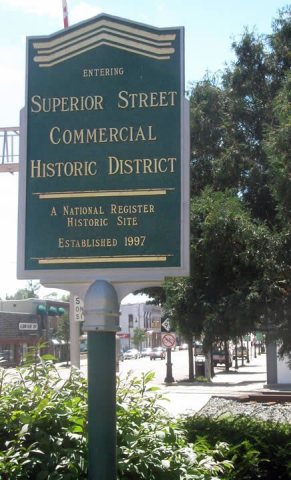 2010