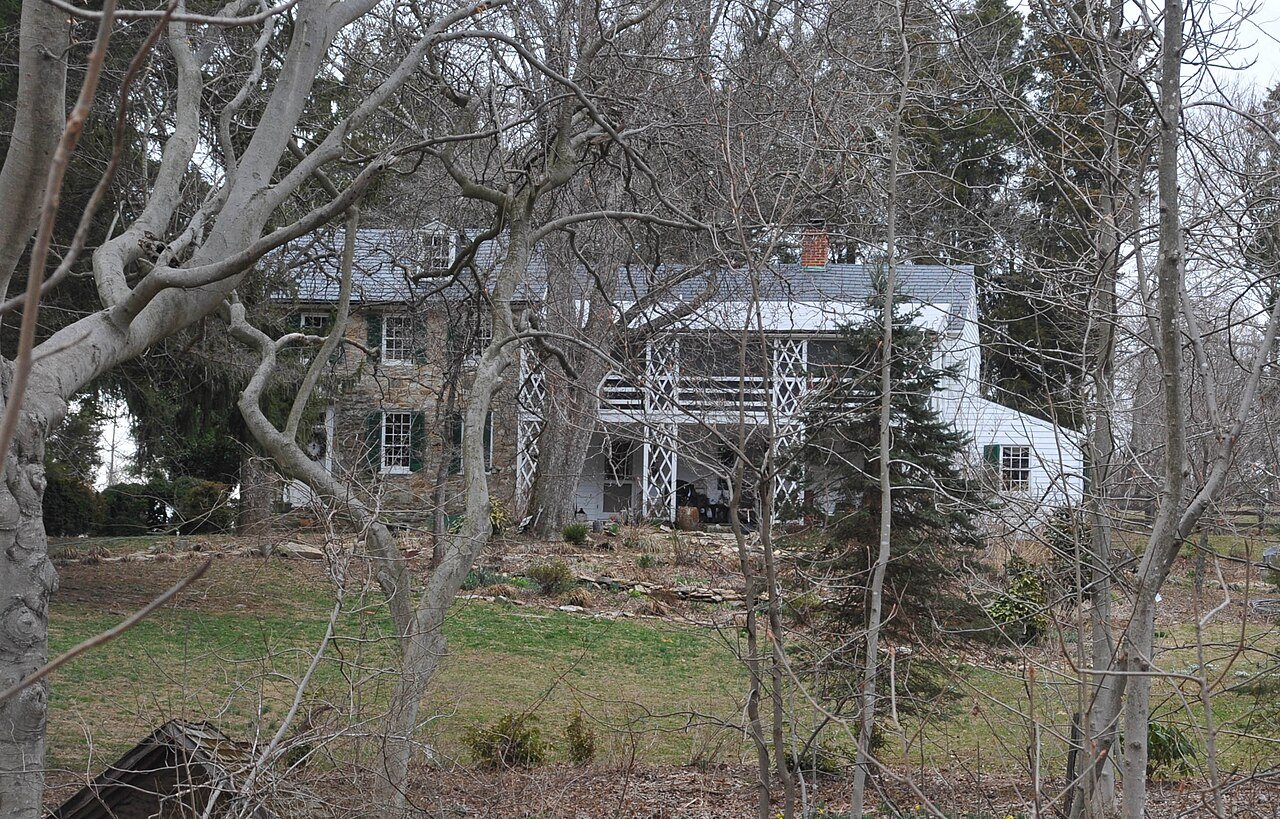
165 years in pictures
Census counts: 2,851 in 2000, 3,998 in 2020. The archive holds 3 old photos and papers going back to 2016 and 7 maps from 1893 on.
- 1861Pleasant Hills is settled
Each edition grades its towns against each other only.

A town of 3,836, settled in 1861.
Pleasant Hills's standout: natural-hazard risk is low. Overall it grades A, 68th of 259 graded towns in Maryland. The median household earns $166K and residents are healthier than 87% of U.S. towns on CDC estimates. Pleasant Hills’ trail density is 2.2 miles per square mile, above both Maryland’s towns (0.6) and U.S. towns (0.4). Only 5 of the 261 Maryland towns we compare have a higher share of households owning their home than Pleasant Hills. Pleasant Hills has 4 places on the National Register.
Where Pleasant Hills beats most towns.
3,379 counted in 2010 and 3,998 in 2020.
U.S. Census 2010 & 2020 counts
Each subject compared with towns across the country (schools within Maryland), ordered by how far Pleasant Hills is from typical.
How TownRatings grades towns →
Census counts: 2,851 in 2000, 3,998 in 2020. The archive holds 3 old photos and papers going back to 2016 and 7 maps from 1893 on.
Museums, parks, gardens and other places to visit around Pleasant Hills. Close and well known come first.
Big draw19 mi Stadium & arenaM&T Bank Stadium
19 mi Stadium & arenaOriole Park at Camden Yards
18 mi MuseumNS Savannah
18 mi National MonumentFort McHenry National Monument and Historic Shrine283K visitors a year
18 mi MuseumWalters Art Museum
18 mi Stadium & arenaCFG Bank ArenaM&T Bank Stadium: United States Department of Defense Cherie Cullen, Public domain · Oriole Park at Camden Yards: Keith Allison, CC BY-SA 2.0 · NS Savannah: Elton Lord/Atomic Energy Commission, Public domain · Fort McHenry National Monument and Historic Shrine: ScottyBoy900Q at English Wikipedia, CC BY-SA 3.0 · Walters Art Museum: Dylan k, CC BY-SA 3.0 · CFG Bank Arena: Don Woods, CC BY-SA 3.0
Pleasant Hills is unincorporated, so Harford County and regional agencies provide most services.
EPA SDWIS (Oct 9, 2026) · HIFLD + EIA-861 2025 · Census 2020 ZCTAs · NCES 2024–25 · registration: vote.gov, updated Mar 11, 2026.
Ordered by what stands out in Pleasant Hills.
Pleasant Hills draws workers from Bel Air South and beyond, has less food insecurity than most of Maryland and has household incomes well above the Maryland norm.
9.6 miles of trail in 2 parks and preserves. The biggest park or preserve is Reckord Road Park, at 20 acres.
| Biggest places to walk | Trails | Acres |
|---|---|---|
| 1. Gunpowder Falls State Park Jerusalem Mill Area | 8.4 mi | 427 |
| 2. Reckord Road Park | — | 20 |
Trails & parks © OpenStreetMap contributors · Conserved land: USGS PAD-US
2,845 jobs are based in Pleasant Hills, 1.6 for every working resident, so most of the people who work here commute in. The average commute takes 40 minutes, against 31.1 across Maryland.
Most working residents leave Pleasant Hills for work: only 5% work in town. At $166,000, Pleasant Hills’ median household income is where Maryland’s towns sit at $113,000 and U.S. towns at $80,000. The average trip to work in Pleasant Hills is 40 minutes.
| Pleasant Hills | Maryland towns | U.S. towns | |
|---|---|---|---|
| Median household income | $166,000 | $113,000 | $80,000 |
| Average trip to work | 40 minutes | 32 minutes | 25 minutes |
| Work from home | 23% | 18% | 11% |
| Below the poverty line | 2.1% | 7% | 9.6% |
Census LEHD 2023 · ACS
Its widest gap with Maryland is food insecurity: 7% of its 3,175 adults worry about having enough food, against 15.4% statewide. Against the 1,828 U.S. towns with household incomes like Pleasant Hills’s, it is less healthy than 69%: its national edge comes with its incomes.
29% of adults feel lonely in Pleasant Hills. Pleasant Hills beats the Maryland average on 13 of 32 CDC measures and trails it on 3. 18% of adults get no exercise outside work in Pleasant Hills.
| Pleasant Hills | Maryland towns | U.S. towns | |
|---|---|---|---|
| Feel lonely (CDC PLACES) | 29% | 34% | 33% |
| Frequent mental distress (CDC PLACES) | 13% | 15% | 17% |
| Get no exercise (CDC PLACES) | 18% | 23% | 25% |
| Food insecurity (CDC PLACES) | 7% | 14% | 14% |
| What stands out | Pleasant Hills | MD |
|---|---|---|
| Fewer adults facing food insecurity | 7% | 15.4% |
| Fewer adults facing housing insecurity | 6.6% | 13.5% |
| More adults who have had cancer | 11.1% | 7.6% |
CDC PLACES 2025 · modeled estimates for adults · CMS · HRSA
Expected storm and flood damage is lower than in 92% of U.S. communities. Since 1978, 14 flood insurance claims have been paid out in Pleasant Hills.
FEMA flood insurance claims · FEMA National Risk Index · OpenFEMA
Pleasant Hills has chilly winters and warm summers. July afternoons reach 88° and January nights drop to 25°.
NOAA U.S. Climate Normals, 1991–2020
Zillow Home Value Index · Redfin Data Center
5 within 15 miles of the center of Pleasant Hills
About 3 of every 100 Pleasant Hills residents are enrolled in college, against 7 across Maryland.
Where Pleasant Hills’s working residents go each day. Line width shows the share.
Census LEHD 2023
Census-designated place in Maryland, United States
Pleasant Hills is a census-designated place (CDP) in Harford County, Maryland, United States. The population was 3,379 at the 2010 census, up from 2,851 in 2000. There is no post office with the designation "Pleasant Hills"; most of the residents have either Fallston or Kingsville addresses and consider themselves as belonging to those communities .
From Wikipedia, licensed CC BY-SA 4.0 · facts via Wikidata (CC0)
One town shares a border with Pleasant Hills.
| Town | MD rank | Overall | Cost | Safety | Schools | Health |
|---|---|---|---|---|---|---|
| Pleasant Hills | #68 | A | C | — | B | A |
| Kingsville | #142 | B | C+ | — | C− | A− |
Pleasant Hills and Kingsville report no FBI crime data of their own. Compare Pleasant Hills with a neighbor →
Short answers, built from the data on this page.
By most measures, yes. Pleasant Hills grades A overall, better than 86% of U.S. towns and #68 of 259 in Maryland. It grades A for health and B for schools.
The typical home is worth about $533,000, 25% above the Maryland typical home. Cost of living, which also weighs rents, property taxes and how many households pay 30% or more of their income for housing, grades C.