Owensboro dates to 1797, and 31 of its places are on the National Register
More historic than 72% of U.S. towns · #48 of 142 in Kentucky. What drives it
Most of Owensboro was built recently: 8% of its homes predate 1940 and the median home dates from 1972. 31 places in town are on the National Register, among them five historic districts with 149 buildings between them. Below: 8 old photos and papers, maps from 1885 on, and the census since 1830.
Founding year: Wikidata. First post office: 1806.The full story ↓
History grade
What drives Owensboro’s History grade
On its age, its old homes and the National Register, Owensboro is more historic than 72% of U.S. towns, #48 of 142 in Kentucky. Its age holds the grade up; its share of homes from before 1940 pulls it down.
B+
HistoryA character grade: shown, never part of Owensboro’s overall grade.
Kentucky towns list more on the Register than most of the country (a typical Kentucky town has 29.9 per 10,000 residents, the U.S. 2.4), so Owensboro’s 29.2 sits near the middle of its state (51% of Kentucky towns have fewer) while its 176 historic buildings outnumber those of 92% of U.S. towns.
How sure. Graded on any two of the three inputs instead, the letter would range from B to A−. The pre-1940 share (±1.1 points) is firm at this size. Two sources give 1797.
Founding year: Wikidata (other dates in Quick answers). Homes: Census ACS 2020–24. National Register: National Park Service, May 2026 list; each listing counted once (boundary changes and added documentation belong to their listing), and a historic district counts its contributing buildings. How TownRatings grades history →
What stands out about Owensboro’s past
Read from the archive, the National Register and the record. The page puts what stands out first.
National Park Service, National Register of Historic Places. Photos from Wikimedia Commons, credited on each place’s page.
Places that used to be
Lost post offices and old corners
Owensboro’s post office has been open since 1816. Two other post offices opened and closed inside today’s town.
Yellow Banks
1806–1816
Owensboro
1816–today
Seven Hills
1901–1905
18001910today
Hamlets and corners on the map
Brook Hill EstatesHunters RidgeRose HillTwin Lakes
US Post Offices dataset (Blevins & Helbock, CC0). Places and cemeteries from the USGS Geographic Names Information System (2021).
Every building
Owensboro, building by building, 1885–1910
Fire insurance maps drew every building, what it was made of and what it was used for, so insurers could price the risk of fire. Pick a year, then a sheet.
Evidence of Native American settlement in the area dates back 12,000 years. Following a series of failed uprisings with British support, however, the last Shawnee were forced to vacate the area before the end of the 18th century.
The first European descendant to settle in Owensboro was frontiersman William Smeathers or Smothers in 1797, for whom the riverfront park is named. The settlement was originally known as "Yellow Banks" from the color of the land beside the Ohio River. In 1817, Yellow Banks was formally established under the name Owensborough, named after Col. Abraham Owen. In 1893, the spelling of the name was shortened to its current Owensboro.
Passages that mention Owensboro, cut from the printed page as they were published.
History of Daviess County, Kentucky, together with sketches of its cities, villages, and townships, educational religious, civil military, and political history, portraits of prominent persons, biographies of representative citizens, and an outline histor1883 · page 503Read the page →
Read the text
Owensboro; Mary E., residing in Owensboro, and Martin IL, subject of this sketch, who was the tliird son and child. He attended the private schools of Owensboro until sixteeen when he began to learn the trade of upholsterer; worked in Owensboro eighteen months; then went to Louisville, K3^; remained there four and a half years then returned to Owensboro and worked at his trade, and October, 1881, accepted his present position with Phillips Bros.
Text read by machine from the scan; it may contain errors.
History of Daviess County, Kentucky, together with sketches of its cities, villages, and townships, educational religious, civil military, and political history, portraits of prominent persons, biographies of representative citizens, and an outline histor1883 · page 482Read the page →
Read the text
out of the war. In 1865 he was employed by the Lexington & Big Sandy Railroad Co. (Eastern Division) as master mechanic to build its shops and remodel the road. After this he returned to Ironton, after which he removed in the summer of 1869 to Owensboro, Ky. He was employed as master mechanic of .the Owensboro & Russellville (now Owensboro & Nashville) Railroad, and on the 31 st day of December, 1870, ran the flrst engine (the Jo Daveiss) oat of this city. He subsequently built ^nd fitted up the company's
Text read by machine from the scan; it may contain errors.
History of Daviess County Kentucky1883 · page 329Read the page →
Read the text
The seal of the city of Owensboro was adopted April 18, 1866, and bears upon it the words, ‘‘ The City of Owensboro Seal,” and the figure of a tobacco leaf.
Text read by machine from the scan; it may contain errors.
History of Daviess County Kentucky1883 · page 821Read the page →
Read the text
patented to John Mays, lying on the Ohio River, in i this county, tothe highest bidder. It was purchased by Philip Triplett, at 25 cents per acre. In the afternoon of the same day he sold at the door of the court-house in Owensboro the same representative’s interest in 3,000 acres, patented to John Mays and D. Ross, and also said representative’s interest in the town of Owensboro.
Text read by machine from the scan; it may contain errors.
Scans and text from the Internet Archive. Books published in 1930 or earlier, which are in the public domain.
Timeline
Owensboro, 1797 to 1952
Woven from the archive, old maps, post office records, the National Register and the people born here.
Nothing in the archives for these yearsWeddings on Main Street, storms, parades, school pictures, the old store. If it’s in your family album, it belongs here.
In 1797, according to Wikidata. Owensboro’s post office opened in 1806, and the census of 1830 counted 229 people here.
How does Owensboro rank for history?
Owensboro is more historic than 72% of U.S. towns, #48 of 142 in Kentucky. The History grade combines the town’s founding era, the share of homes built before 1940 and its National Register listings. It’s a character grade, so it isn’t part of the overall grade. How it works.
What is on the National Register in Owensboro?
31 listings: 25 buildings, among them the Trinity Episcopal Church (listed 1972, the first), 5 historic districts with 149 contributing buildings, and 1 object. 176 historic buildings in all.
How old are the homes in Owensboro?
8% of Owensboro’s homes were built before 1940 (Census estimate, ±1.1 points), against a typical 5.9% for a Kentucky town; the median home was built in 1972.
Founding dates: Wikidata, Wikipedia, the U.S. post office records of Blevins & Helbock (CC0) and the Census. Homes by year built: Census ACS 2020–24. National Register of Historic Places: National Park Service (list of May 22, 2026). Old photos, postcards and papers: Wikimedia Commons, the Library of Congress and other public archives, credited on each item’s page. Maps: U.S. Geological Survey historical topographic maps (via Esri) and Sanborn fire-insurance maps (Library of Congress). History text and census tables: Wikipedia (CC BY-SA 4.0). Places that used to be: USGS Geographic Names Information System (2021).
From Wikimedia Commons (8), Wikidata (4), the National Register of Historic Places (31), Wikipedia, U.S. Geological Survey historical maps, U.S. Census counts (via Wikipedia), the US Post Offices dataset (Blevins & Helbock), the USGS Geographic Names Information System, Sanborn fire insurance maps (Library of Congress) and old county and town histories (Internet Archive). Archive images are copied here with their credits and licenses, shown on each photo’s page. Refreshed monthly.


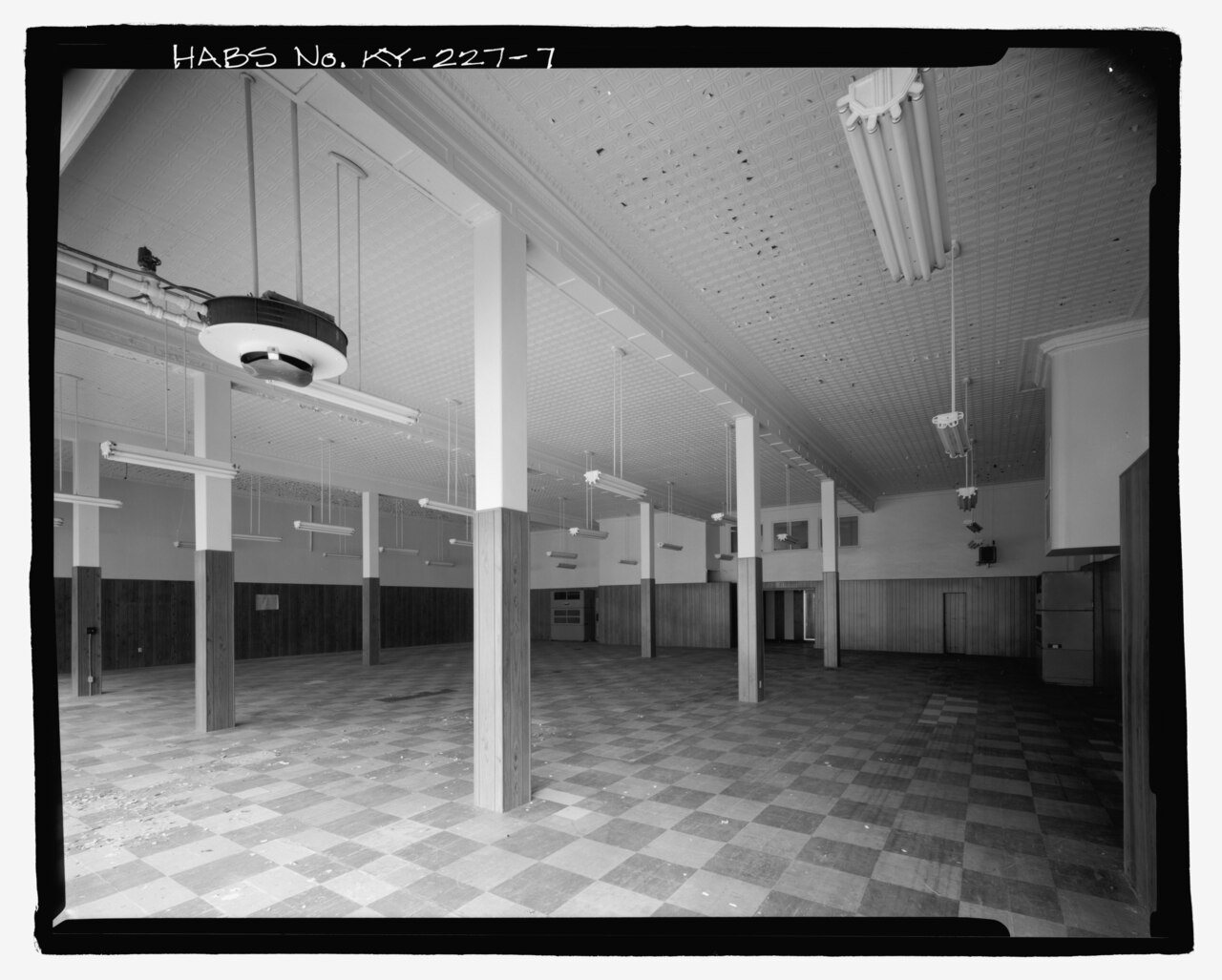


 1902
 1933
 1933
 1933
 1933


