Smithville-SandersIN
A town of 3,299.
Is Smithville-Sanders a good place to live?
Smithville-Sanders is a solid, middle-of-the-road choice. It grades B overall, 263rd of 585 graded towns in Indiana, with no subject far below average. Its best mark is schools: its schools rank ahead of 84% of Indiana towns. It also does better than most on health: residents are healthier than 76% of U.S. towns on CDC estimates. A typical home there costs about $259K, 4 years of the Bloomington metro’s $66K median household income. Most errands need a car: it is less walkable than 93% of U.S. towns. Only 70 of Indiana’s 1,096 towns score lower on cost of living.
What makes Smithville-Sanders stand out
Where Smithville-Sanders beats most towns.
98% of working residents leave Smithville-Sanders for work
Where Smithville-Sanders’s working residents go each day. Line width shows the share.
Census LEHD 2023
How Smithville-Sanders grades
Each subject compared with towns across the country (schools within Indiana), ordered by how far Smithville-Sanders is from typical.
How TownRatings grades towns →
Moving to Smithville-Sanders: who provides what
Smithville-Sanders is unincorporated, so Monroe County and regional agencies provide most services.
EPA SDWIS (Oct 9, 2026) · HIFLD + EIA-861 2025 · Census 2020 ZCTAs · NCES 2024–25 · registration: vote.gov, updated Nov 18, 2024.
The data
Ordered by what stands out in Smithville-Sanders.
Smithville-Sanders has less food insecurity than most of Indiana and sends most of its workers to Bloomington and beyond.
Smithville-Sanders has set aside 5.1% of its land for conservation
6.4 miles of trail. The density of trails for Smithville-Sanders comes to 0.6 miles per square mile, above Indiana’s towns (0.2) and close to U.S. towns (0.4).
| Smithville-Sanders | Indiana towns | U.S. towns | |
|---|---|---|---|
| Miles of trail per square mile | 0.6 miles per square mile | 0.2 | 0.4 |
| Conserved land | 5.1% | 1.9% | 4.3% |
Trails & parks © OpenStreetMap contributors · Conserved land: USGS PAD-US
A smaller share of adults in Smithville-Sanders sleep under 7 hours than in the typical Indiana or U.S. town
Its widest gap with Indiana is food insecurity: 8.5% of its 2,710 adults worry about having enough food, against 14.7% statewide.
Among adults in Smithville-Sanders, 13% smoke cigarettes, where Indiana’s towns sit at 17% and U.S. towns at 14%. Nearly a fifth of Smithville-Sanders adults get no exercise outside work. The town beats the Indiana average on 14 of 32 CDC measures and trails it on 1.
| Smithville-Sanders | Indiana towns | U.S. towns | |
|---|---|---|---|
| Sleep under 7 hours (CDC PLACES) | 30% | 37% | 36% |
| Get no exercise (CDC PLACES) | 19% | 26% | 25% |
| Smoke cigarettes (CDC PLACES) | 13% | 17% | 14% |
| Frequent physical distress (CDC PLACES) | 12% | 15% | 14% |
| What stands out | Smithville-Sanders | IN |
|---|---|---|
| Fewer adults facing food insecurity | 8.5% | 14.7% |
| Fewer uninsured adults | 5.4% | 8.9% |
| More adults who have had cancer | 9.7% | 8.3% |
CDC PLACES 2025 · modeled estimates for adults · CMS · HRSA
About two in five of Smithville-Sanders’ working residents commute to Bloomington
Smithville-Sanders has 272 jobs for its 1,357 working residents: even if every job went to a resident, most would still commute out.
Half of commuters travel less than 9 miles. The share of working residents in Smithville-Sanders who work locally: 1.8%. The top destinations are Bloomington (42%), Indianapolis (10%) and Perry Township (6%). Smithville-Sanders’ average trip to work comes in at 22 minutes.
| Smithville-Sanders | Indiana towns | U.S. towns | |
|---|---|---|---|
| Working residents who work in town | 1.8% | 11% | 8% |
| Below the poverty line | 5.6% | 10% | 9.6% |
| Average trip to work | 22 minutes | 24 minutes | 25 minutes |
Where working residents work
Census LEHD 2023 · ACS
Young adults are less common in Smithville-Sanders than in Indiana
Adults 18 to 34 are 13% of residents (23% statewide); adults 35 to 64 are 46% of residents (37% statewide). 38% of adults 25 and older hold a bachelor’s degree or more in Smithville-Sanders. Smithville-Sanders’ midpoint age stands at 40.9 years.
| Smithville-Sanders | Indiana towns | U.S. towns | |
|---|---|---|---|
| Bachelor’s degree or more, 25+ | 38% | 22% | 29% |
| Median age | 40.9 years | 39.4 years | 40.5 years |
| Aged 65 or older | 17% | 18% | 18% |
Ages · share of residents
Education · adults 25 and older
Women and men · all residents
Somewhere between 38% and 61% women
The Census survey reached too few of Smithville-Sanders’ residents to say more: its margin here is ±11.4 points. Across Indiana, 50.4% of residents are women.
| Smithville-Sanders | IN | U.S. | |
|---|---|---|---|
| Under 10 | 8.3% | 12.4% | 11.6% |
| 10 to 17 | 15.1% | 10.9% | 10.3% |
| 18 to 24 | 5.8% | 9.6% | 9.1% |
| 25 to 34 | 7.3% | 13.1% | 13.7% |
| 35 to 44 | 17.1% | 12.7% | 13.2% |
| 45 to 54 | 11.6% | 12% | 12.2% |
| 55 to 64 | 17.7% | 12.5% | 12.7% |
| 65 to 74 | 13.9% | 10.1% | 10.2% |
| 75 and older | 3.1% | 6.7% | 7% |
| No diploma | 6.1% | 9.6% | 10.4% |
| High school | 28.8% | 32.5% | 26% |
| Some college | 18.9% | 19.3% | 19.1% |
| Associate’s | 7.8% | 9.1% | 8.8% |
| Bachelor’s | 27.3% | 18.7% | 21.6% |
| Graduate | 11.1% | 10.8% | 14.1% |
U.S. Census Bureau · ACS 2020-2024 5-year estimates · in a town of 3,300, single groups can be off by several points
Expect four seasons and pleasant summers in Smithville-Sanders
The range runs from 21° on a January night to 85° on a July afternoon, with about 18 inches of snow a winter.
Typical low → high °F
NOAA U.S. Climate Normals, 1991–2020
Low risk in Smithville-Sanders, with inland flooding at the top
Paid flood insurance claims in Smithville-Sanders since 2002: 2. Expected storm and flood damage is lower than in nearly two thirds of U.S. communities. Of the losses FEMA expects locally, 66% come from inland flooding and 11% from tornadoes.
FEMA flood insurance claims · FEMA National Risk Index · OpenFEMA
A home in Smithville-Sanders sells for about $210K at the median
On the market in Smithville-Sanders: a median 49 days to sell. In Smithville-Sanders, the typical sale closed at 96.7% of the list price. Smithville-Sanders’ median rent is $1,123 a month.
Census ACS, 2020–24 · Zillow Home Value Index · Redfin Data Center
Memorial Stadium and 7 more within 40 miles
Museums, parks, gardens and other places to visit around Smithville-Sanders. Close and well known come first.
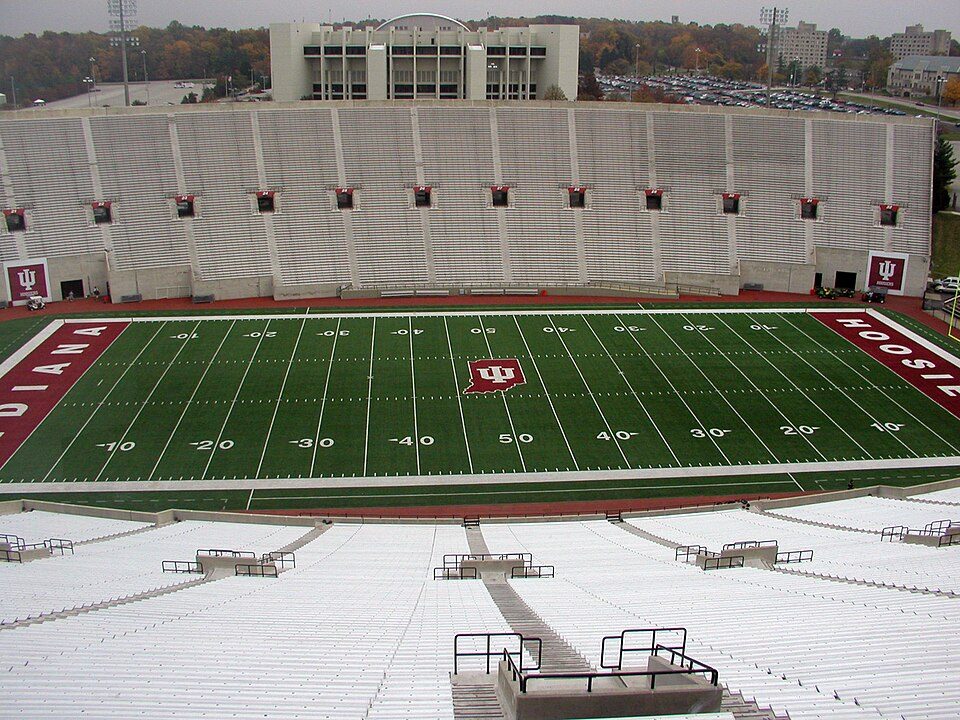 8 mi Stadium & arenaMemorial Stadium
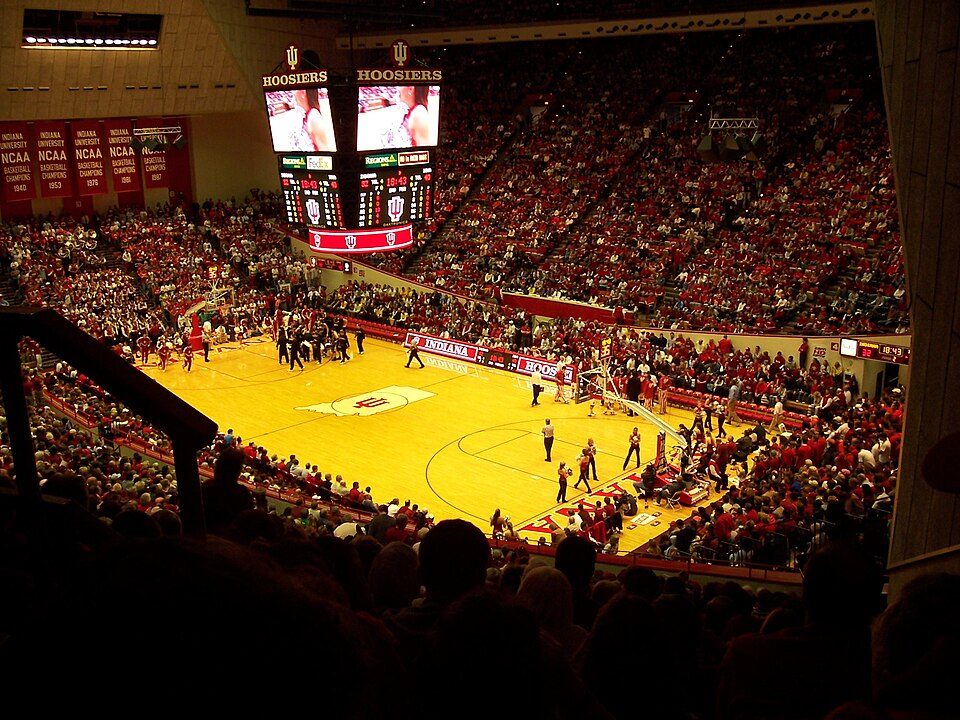 8 mi Stadium & arenaSimon Skjodt Assembly Hall
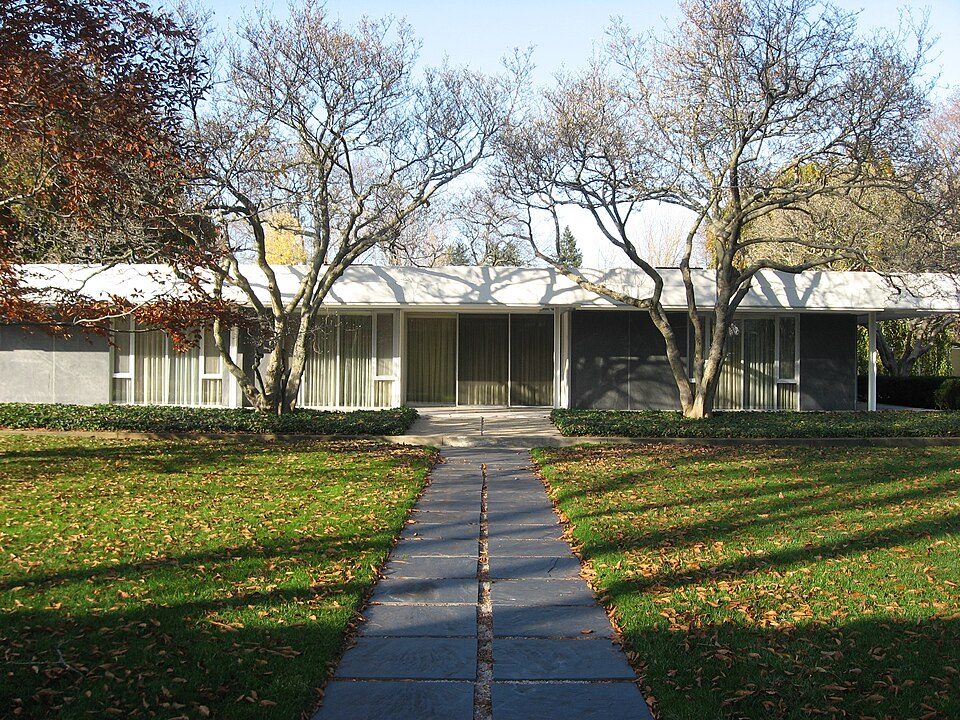 34 mi MuseumMiller House and Garden
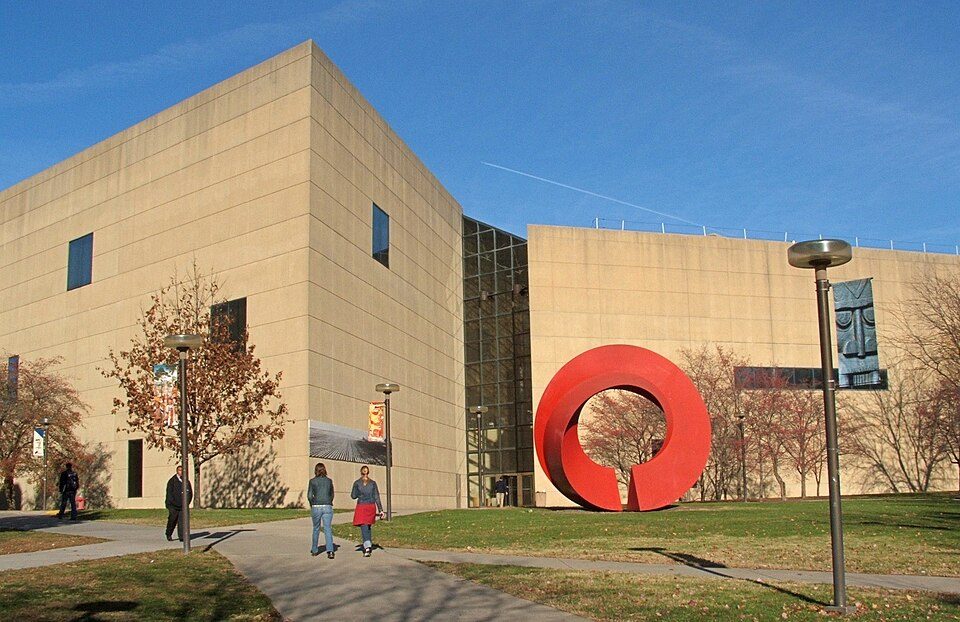 8 mi MuseumEskenazi Museum of Art
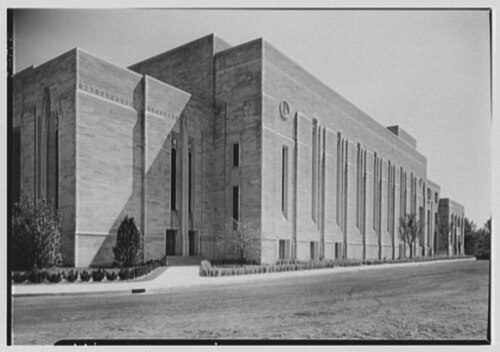 8 mi TheatreIndiana University Auditorium33 mi City parkMill Race Park
Photo credits
Memorial Stadium: Durin at English Wikipedia, CC BY-SA 3.0 · Simon Skjodt Assembly Hall: Sean Benham from Chicago, CC BY 2.0 · Miller House and Garden: Nyttend, Public domain · Eskenazi Museum of Art: Kzollman (Kevin J.S. Zollman)., CC BY-SA 3.0 · Indiana University Auditorium: Gottscho-Schleisner Collection, Public domain


Everything we know about Smithville-Sanders
Colleges nearby
1 within 15 miles of the center of Smithville-Sanders
About 5 of every 100 Smithville-Sanders residents are enrolled in college, about the same as Indiana.
About Smithville-Sanders
Census-designated place in Indiana, United States
Smithville-Sanders is a census-designated place (CDP) encompassing the communities of Smithville and Sanders in Monroe County, Indiana, United States. Its population was 3,323 as of the 2020 census.
From Wikipedia, licensed CC BY-SA 4.0 · facts via Wikidata (CC0)
- Area
- 11 sq mi
- Elevation
- 715 ft
Questions about Smithville-Sanders
Short answers, built from the data on this page.
Is Smithville-Sanders, IN a good place to live?
By most measures, yes. Smithville-Sanders grades B overall, better than 65% of U.S. towns and #263 of 585 in Indiana. It grades A− for health and A− for schools. Walkability is its weak spot, with a D.
Is Smithville-Sanders, IN expensive?
The typical home is worth about $259,000, 1% above the Indiana typical home. Cost of living, which also weighs rents, property taxes and how many households pay 30% or more of their income for housing, grades C+.