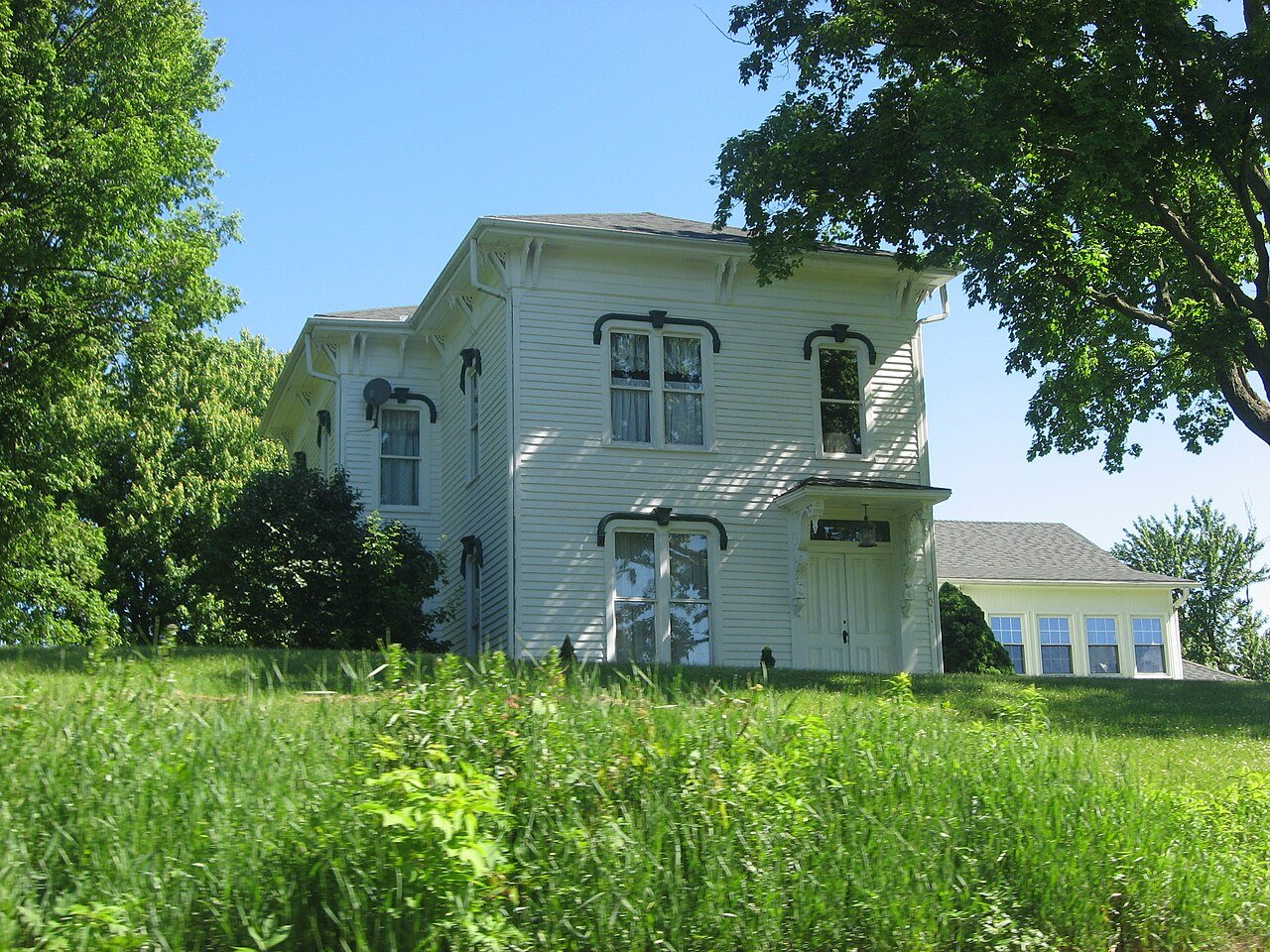
 Weller House · Photo: Nyttend · Public domain
Measured against area pay, Pine Township costs less to live in than 72% of U.S. towns
Home prices around Pine Township have risen about 55% over the past 5 years.
Census 2020–24 home values, rents, tax bills and cost burden, measured against the median household income of the Chicago-Naperville-Elgin, IL-IN metro area ($91K). How TownRatings grades cost of living
The grade compares costs with what households across the Chicago metro earn ($91K, Census 2020–24). The typical home costs 3.6 years of metro income, and 21% of renters pay 30% or more of income for housing.
In dollars
- $1,230a month for a two-bedroom, utilities includedHUD Fair Market Rent, 2026
- 104prices across the Chicago metro, where the U.S. is 100 (housing 112)BEA Regional Price Parities, 2024
In paychecks the grade
- 3.6 yrsof area income buys the typical home; the typical U.S. town: 3.3$91K, Chicago-area income
- 12%of area income goes to the median rent; the typical U.S. town: 18%Census 2020–24
- 23%of owners do; the typical U.S. town: 20%Census 2020–24
What stands out about housing in Pine Township
What’s behind Pine Township’s grade
Measured against what households in the area earn, Pine Township is more affordable than 72% of U.S. towns. Home prices pull the grade down most; rent holds it up.
Home prices up 55% in 5 years
The federal house price index for the ZIP codes around Pine Township rose 55% over the past 5 years, about the same as across Indiana. Last year prices rose 8.9%. Carrying the Census median home value forward with that index puts the typical Pine Township home at roughly $404,000 today.
Carrying the Census median forward with the index puts a typical home at about $404K.
Federal Housing Finance Agency House Price Index (annual) for the ZIP codes around Pine Township, weighted by land area. It tracks repeat sales of the same homes, so it shows how prices changed, not what homes cost.
A year’s rent takes 12% of area income
The calculator starts from the area income the grade uses. Switch to Pine Township’s own median, or type yours.
That’s $44K short of a typical Pine Township home.
A two-bedroom rents for about $1,230 a month here, $1,150 less than owning.
An estimate, not a loan offer: payments of up to 28% of income, a 30-year fixed loan, Pine Township’s typical property tax (0.78% of value a year, from the Census) and insurance of about 0.35%. Mortgage insurance, HOA fees and other debts aren’t included.
A two-bedroom rents for about $1,230
Renters already here pay a median of $879, so moving in tends to cost more than staying put.
Fair Market Rent a month, utilities included
U.S. Department of Housing and Urban Development, Fair Market Rents by ZIP code (Gary, IN HUD Metro FMR Area): the 40th-percentile rent plus utilities for a standard unit. Median rent and renters: U.S. Census Bureau, American Community Survey.
Property tax runs above the Indiana norm
The median bill is $2,582 (Indiana: $1,614), 0.78% of a home’s value a year, against 0.74% statewide.
Census American Community Survey 2020–24: the median real-estate tax bill homeowners report, and that bill ÷ the median home value. Bills include town, school and county taxes. The Census reports bills over $10,000 only as “$10,000+”.
The rest of a budget near Pine Township
Only figures published free for the whole country, each labeled with the area it covers: the Chicago-Naperville-Elgin, IL-IN metro area, or Indiana. Groceries follow the goods price level; nobody publishes them town by town.
| Cost | Here | Compared with | Area | Source |
|---|---|---|---|---|
| Prices overall U.S. = 100 | 104 | IN 93 | metro | BEA, 2024 |
| Goods (groceries, clothing, cars…) U.S. = 100 | 107 | IN 96 | metro | BEA, 2024 |
| Utilities U.S. = 100 | 84 | IN 86 | metro | BEA, 2024 |
| Other services U.S. = 100 | 100 | IN 99 | metro | BEA, 2024 |
Price levels: U.S. Bureau of Economic Analysis, Regional Price Parities 2024 (metro area and state). Electricity: U.S. Energy Information Administration, Electric Power Monthly, table 5.6.A.
Pine Township vs. its neighbors
Zillow publishes no value for Pine Township. Beverly Shores and Jackson Township and Westchester Township and Coolspring Township have no Zillow value, so they are in the table only.
Cost next door · one source per column
| Town | Cost | Typical home Zillow, latest | Median value Census 2020–24 | Tax rate bill ÷ value | 2-bed rent HUD 2026 |
|---|---|---|---|---|---|
| Pine Township | B+ | — | $331K | 0.78% | $1,230 |
| Westchester Township | B | — | $266K | 0.88% | $1,410 |
| Jackson Township | B+ | — | $415K | 0.71% | $1,390 |
| Beverly Shores | – | — | $607K | 0.92% | $1,210 |
| Coolspring Township | B+ | — | $199K | 0.72% | $1,110 |
“—” under Zillow: Zillow publishes no value for that town, so it’s left blank rather than mixed with Census figures. “—” under Cost: not graded (too little Census data, or under 1,000 residents).
Questions about the cost of living in Pine Township
Is Pine Township expensive to live in?
Measured against what households in the area earn, Pine Township costs less than 72% of U.S. towns: a B+ for cost of living. The typical home costs 3.6 years of the median household income of the Chicago-Naperville-Elgin, IL-IN metro area ($91K).
How much is rent in Pine Township?
HUD puts a two-bedroom at about $1,230 a month with utilities, the going rate for someone moving in. Renters already here pay a median of $879 (Census 2020–24).
What are property taxes in Pine Township?
The median bill is $2,582 a year, 0.78% of the median home value (Indiana: $1,614, 0.74%), from the Census 2020–24.
Neighbors talk housing
What Pine Township buyers, sellers and renters are saying.
Home values: Zillow Home Value Index (ZHVI), Zillow Research. Sales, days on market and supply: Redfin Data Center. Income, ownership, taxes and rent: U.S. Census Bureau, American Community Survey. Price trend: Federal Housing Finance Agency House Price Index. Fair Market Rents: U.S. Department of Housing and Urban Development. The calculator is an estimate, not a loan offer. Regional price levels: BEA; electricity: EIA. How TownRatings grades cost of living.