Founding year: the first Petersburg post office (Blevins & Helbock, CC0).The full story ↓
History grade
What drives Petersburg’s History grade
On its age, its old homes and the National Register, Petersburg is more historic than 86% of U.S. towns. All 3 inputs are above most U.S. towns; its share of homes from before 1940 ranks highest and its National Register listings lowest.
A
HistoryA character grade: shown, never part of Petersburg’s overall grade.
Indiana towns list more on the Register than most of the country (a typical Indiana town has 7.9 per 10,000 residents, the U.S. 2.4), so Petersburg’s 4.1 sits near the middle of its state (53% of Indiana towns have fewer) while its 1 listings outnumber those of 51% of U.S. towns.
How sure. Graded on any two of the three inputs instead, the letter would range from B+ to A. The pre-1940 share is a Census survey estimate (±8.2 points). The founding year is the first post office, not a stated founding date.
Founding year: the first post office (other dates in Quick answers). Homes: Census ACS 2020–24. National Register: National Park Service, May 2026 list; each listing counted once (boundary changes and added documentation belong to their listing), and a historic district counts its contributing buildings. How TownRatings grades history →
What stands out about Petersburg’s past
Read from the archive, the National Register and the record. The page puts what stands out first.
Petersburg was laid out in 1817. The city was named for Peter Brenton, an original owner of the town site. A post office has been in operation at Petersburg since 1823. In 1925, Petersburg was spared being the next victim of the deadly Tri-State Tornado as the tornado dissipated a few miles southwest of the city before it could reach Petersburg and unleash the wrath it had delivered to many other towns in Missouri, Illinois, and in Indiana itself.
On the evening of June 2, 1990, a violent F4 tornado impacted the city, killing multiple people and causing major damage to the community.
Passages that mention Petersburg, cut from the printed page as they were published.
Military history of the Third Division, Ninth Corps, Army of the Potomac1913Read the page →
Read the text
Before adjournment a resolution was passed to have the eighth reunion held at Harrisburg two years hence, but owing to delays incident to the erection of the monument at Petersburg, it was thought advisable to postpone the next reunion until the time should be fixed for the unveiling of the monument. When, however, the time came for the unveiling of the monument at Petersburg, and the Survivors appeared on the historic and sanguinary field of the Siege of Petersburg, the fatigue incident to the ceremonies was so great that the Survivors had to abandon holding the re-
Text read by machine from the scan; it may contain errors.
The history of Petersburg, N.J.1913 · page 109Read the page →
Read the text
The postoffice at Petersburg, according to data received fr^m the Postoffice Department at Washington, D. C, was established on February 8, 1849. Previous to that time, Tuckahoe was the postoffice tor this vicinity, and for the accommodation of the patrons hereaboucs the Petersburg mail was forwarded to the store of Stephen Young, at the Lower Bridge, by the stage which ran from Cape May via Seaville, Lower Bridge,
Text read by machine from the scan; it may contain errors.
Military history of the Third Division, Ninth Corps, Army of the Potomac1913 · page 12Read the page →
Read the text
14 Third Division, Ninth Corps, circle around the city of Petersburg, reaching from the Appomattox River on the right to the South Side Railroad, which ran from Petersburg to Lynchburg, on the left, — a distance probably of 12 miles. These fortifications were occupied by the Army of the Potomac. Opposed to them was an equally strong line of defense occupied by the Confederate Army of Northern Virginia.
Text read by machine from the scan; it may contain errors.
History of St. Petersburg, historical and biographical1924 · page 72Read the page →
Read the text
i a i shortly afterwards it was put on the Tampa run. Early in 1907, the company made arrangements with the Seaboard Air Line Railroad whereby St. Petersburg would be included among the cities served by that road, so that tickets could be purchased direct and freight could be billed through to St. Petersburg from any point on railroads allied with the Seaboard, connections being made at Tampa, by the company’s boat. During the next year it was found that the Favorite could not be operated
Text read by machine from the scan; it may contain errors.
Scans and text from the Internet Archive. Books published in 1930 or earlier, which are in the public domain.
Petersburg’s post office has been open since 1823.
Hamlets and corners on the map
West Petersburg
2cemeteries and burying grounds inside Petersburg
Old TownWalnut Hill
US Post Offices dataset (Blevins & Helbock, CC0). Places and cemeteries from the USGS Geographic Names Information System (2021).
Questions about Petersburg’s history
What year was Petersburg founded?
The Petersburg post office opened in 1823, the earliest record of the town by name (U.S. post office records).
How does Petersburg rank for history?
Petersburg is more historic than 86% of U.S. towns. The History grade combines the town’s founding era, the share of homes built before 1940 and its National Register listings. It’s a character grade, so it isn’t part of the overall grade. How it works.
What is on the National Register in Petersburg?
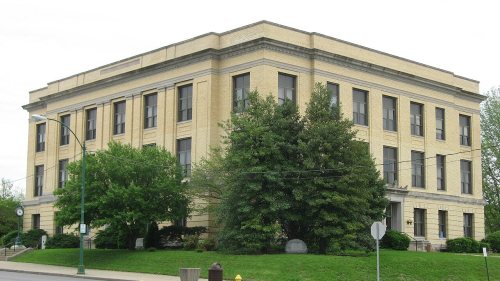
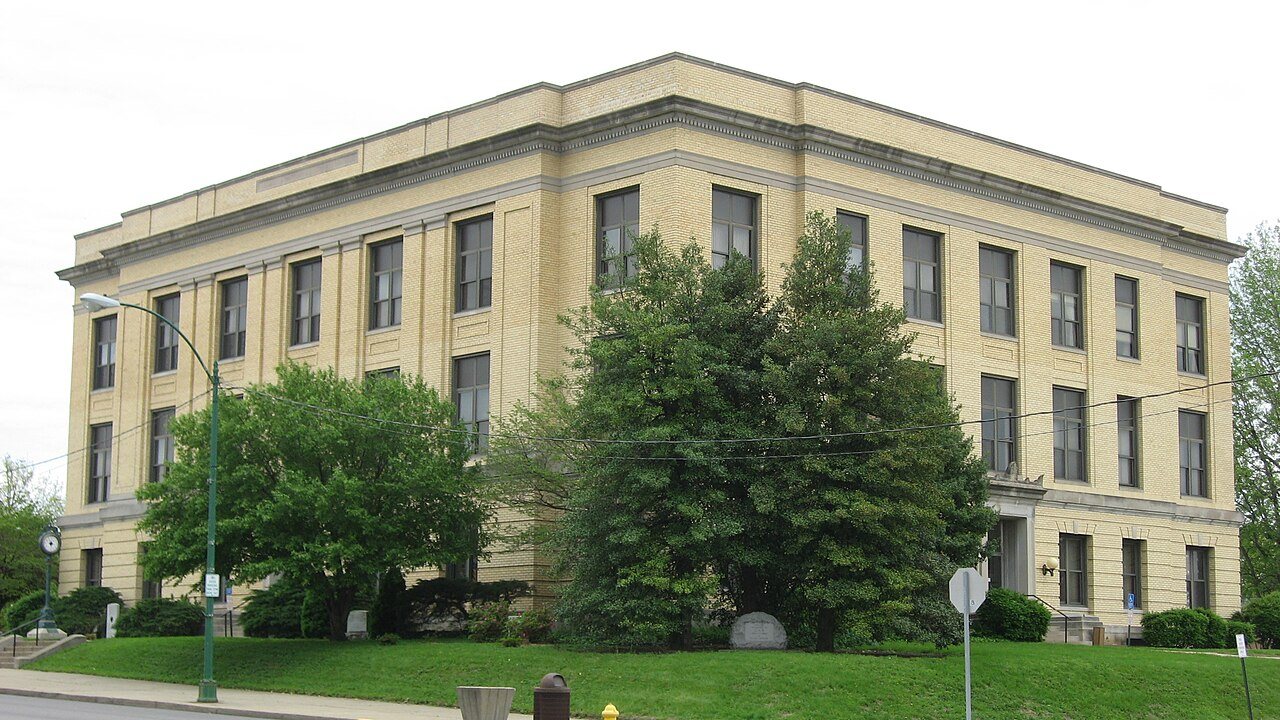
One place: the Pike County Courthouse (listed 2008).
How old are the homes in Petersburg?
38% of Petersburg’s homes were built before 1940 (Census estimate, ±8.2 points), against a typical 14% for an Indiana town; the median home was built in 1955.
Founding dates: Wikidata, Wikipedia, the U.S. post office records of Blevins & Helbock (CC0) and the Census. Homes by year built: Census ACS 2020–24. National Register of Historic Places: National Park Service (list of May 22, 2026). Old photos, postcards and papers: Wikimedia Commons, the Library of Congress and other public archives, credited on each item’s page. Maps: U.S. Geological Survey historical topographic maps (via Esri) and Sanborn fire-insurance maps (Library of Congress). History text and census tables: Wikipedia (CC BY-SA 4.0). Places that used to be: USGS Geographic Names Information System (2021).
From Wikimedia Commons (4), the National Register of Historic Places (1), Wikipedia, Wikidata and Wikipedia for famous people, U.S. Geological Survey historical maps, U.S. Census counts (via Wikipedia), the US Post Offices dataset (Blevins & Helbock), the USGS Geographic Names Information System and old county and town histories (Internet Archive). Archive images are copied here with their credits and licenses, shown on each photo’s page. Refreshed monthly.


 2011
 2007
 2007
 2007