Lowell dates to 1834, and 5 of its places are on the National Register
More historic than 70% of U.S. towns · #290 of 593 in Indiana. What drives it
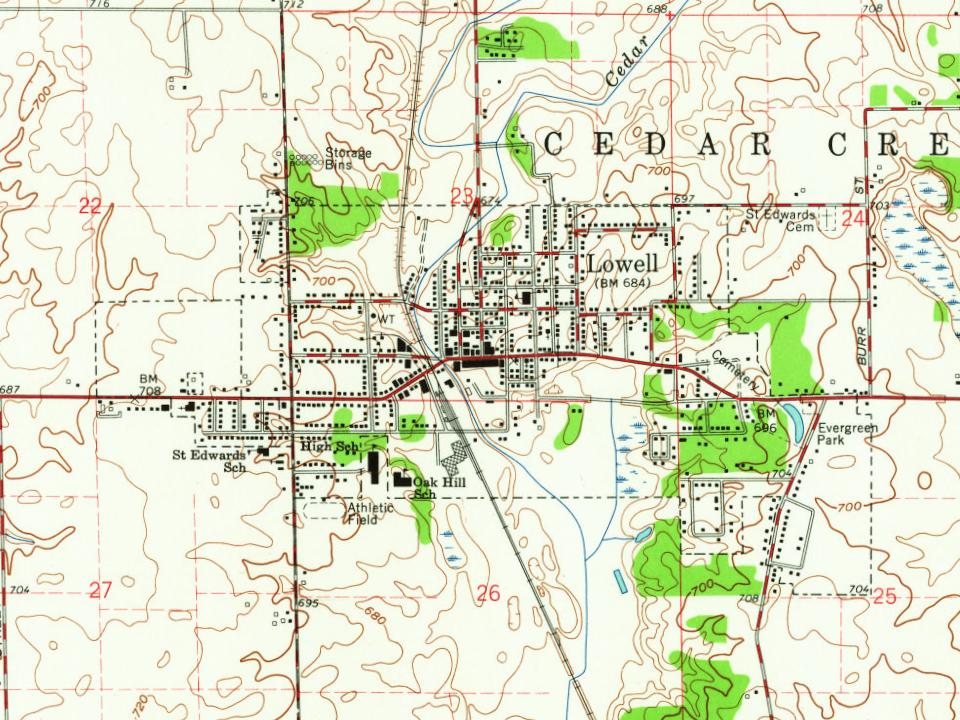
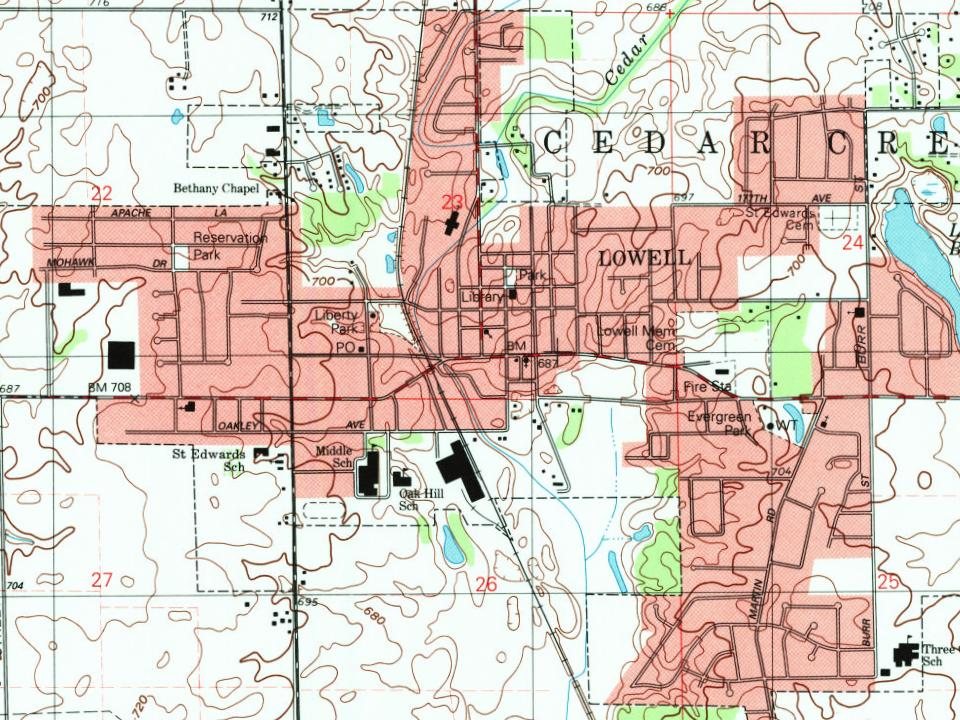
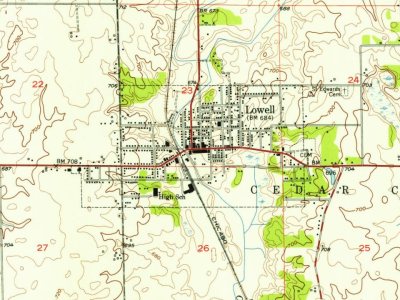
Most of Lowell was built recently: 6% of its homes predate 1940 and the median home dates from 1990. 5 places in town are on the National Register, among them a historic district with 28 buildings. Below: maps from 1953 on and the census since 1880.
On its age, its old homes and the National Register, Lowell is more historic than 70% of U.S. towns, #290 of 593 in Indiana. Its National Register listings hold the grade up; its share of homes from before 1940 pulls it down.
B+
HistoryA character grade: shown, never part of Lowell’s overall grade.
Indiana towns list more on the Register than most of the country (a typical Indiana town has 7.9 per 10,000 residents, the U.S. 2.4), so Lowell’s 29.8 sits above most of its state (70% of Indiana towns have fewer) while its 33 historic buildings outnumber those of 82% of U.S. towns.
How sure. Graded on any two of the three inputs instead, the letter would range from B− to A−. The pre-1940 share is a Census survey estimate (±3.5 points). Two sources give 1834.
Founding year: Wikidata (other dates in Quick answers). Homes: Census ACS 2020–24. National Register: National Park Service, May 2026 list; each listing counted once (boundary changes and added documentation belong to their listing), and a historic district counts its contributing buildings. How TownRatings grades history →
What stands out about Lowell’s past
Read from the archive, the National Register and the record. The page puts what stands out first.
Lowell was platted in 1853. It was named after Lowell, Massachusetts. On June 27, 1868, Lowell was officially incorporated as a town.
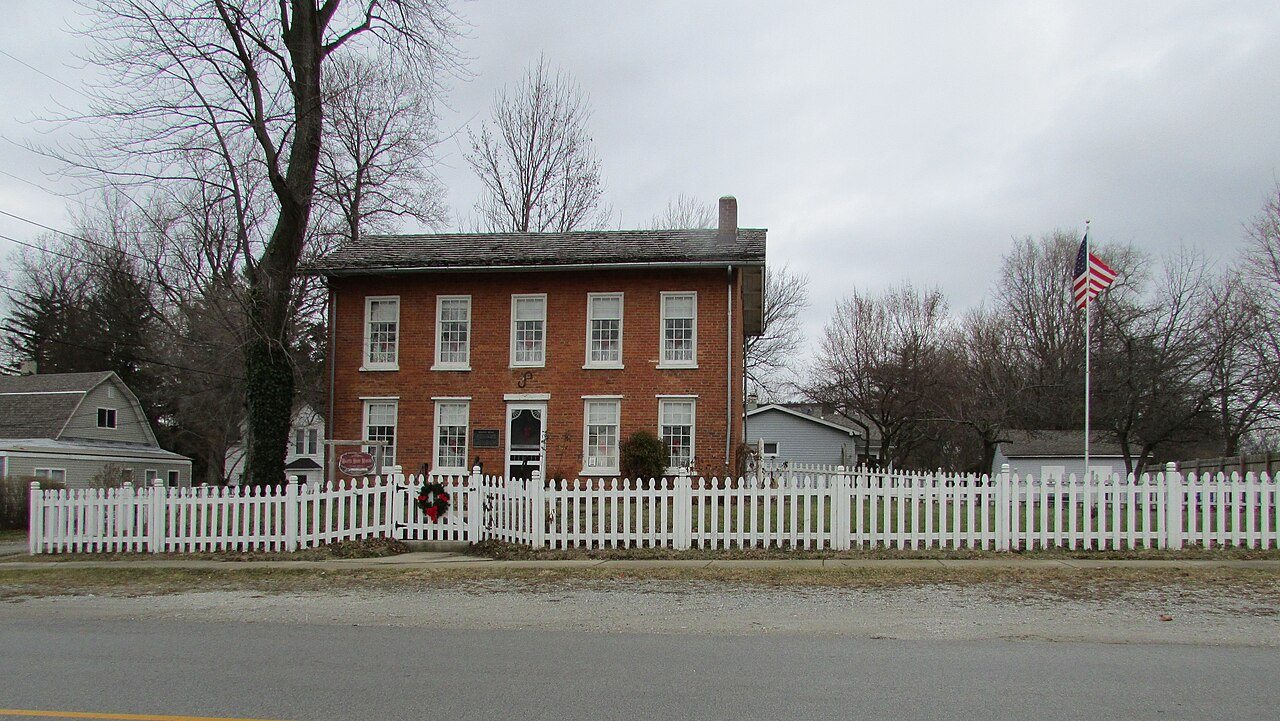
The James Brannon House, Melvin A. Halsted House, Lowell Commercial Historic District, Charles E. Nichols House, and J. Claude Rumsey House are listed in the National Register of Historic Places.
In the cornerstone at City Hall will be found: Charter and ordinances of Lowell, 1883; Lowell city documents, 1859-90; municipal register of Lowell, 1890, water commissioners' report, 1S73; tenth decennial celebration of the incorporation of the city of Lowell, 1886: manual of the General Court, 1890; Lowell directory, 1890; report of trustees of Lowell cemetery; contributions of the Old Residents' Historical Association, volumes i, 2 and 3; a document entitled "Half a Century of an Old-Time IMassachusetts Savings Bank ;" statistics of
Text read by machine from the scan; it may contain errors.
Contributions of the old residents' historical association, Lowell, Mass.1873 · page 329Read the page →
Read the text
Lowell. This he successfully accomplished, and if navigation should ever be opened to Lowell he will have the satisfaction of being able to say that he carried the first coal, without breaking bulk, from the Philadelphia and Reading Coal Company's wharves in Newburyport to its final destination in the city of Lowell. This coal was received at Lowell by General Butler. The trip was in some respects a remarkable one. The first formidable
Text read by machine from the scan; it may contain errors.
Contributions of the old residents' historical association, Lowell, Mass.1873 · page 101Read the page →
Read the text
which were successively incorporated (for which mills were to be built), for the construction of wheel-pits and laying the foundation walls of their buildings. Of these the Hamilton was incorporated in 1825 ; the Appleton and the Lowell in 1828 ; the Tremont, Suffolk and the Middlesex in 1830, and the Lawrence in 1831. From 1835 to 1838, in company with his brother, Elbridge Livingston and Sidney Spaulding, of Lowell, he was employed on a contract for the construc-
Text read by machine from the scan; it may contain errors.
86 IIJSTORY OF LOWl'l.L shij) with Otis Allen of Lowell. He brought the P.nston and Lowell Railroad to a Ihiish and won the right to charter and hnild the Lowell and r,awrence and the Salem and Lowell railroads, and hecanie president uf the lirst and a director in the last named railroad, scr\-ing both luitd his death. He was the master spirit in the construction of both roads and their building was a distinct personal victury. He was also a director of the Lowell Mutual l^re Insurance Com]. any; trustee of
Text read by machine from the scan; it may contain errors.
Scans and text from the Internet Archive. Books published in 1930 or earlier, which are in the public domain.
In 1834, according to Wikidata. Lowell’s post office opened in 1864, and the census of 1880 counted 458 people here.
How does Lowell rank for history?
Lowell is more historic than 70% of U.S. towns, #290 of 593 in Indiana. The History grade combines the town’s founding era, the share of homes built before 1940 and its National Register listings. It’s a character grade, so it isn’t part of the overall grade. How it works.
What is on the National Register in Lowell?
5 listings: 4 buildings, among them the Melvin A. Halsted House (listed 1978, the first), and 1 historic district, the Lowell Commercial Historic District, with 28 contributing buildings. 33 historic buildings in all.
How old are the homes in Lowell?
6% of Lowell’s homes were built before 1940 (Census estimate, ±3.5 points), against a typical 14% for an Indiana town; the median home was built in 1990.
Founding dates: Wikidata, Wikipedia, the U.S. post office records of Blevins & Helbock (CC0) and the Census. Homes by year built: Census ACS 2020–24. National Register of Historic Places: National Park Service (list of May 22, 2026). Old photos, postcards and papers: Wikimedia Commons, the Library of Congress and other public archives, credited on each item’s page. Maps: U.S. Geological Survey historical topographic maps (via Esri) and Sanborn fire-insurance maps (Library of Congress). History text and census tables: Wikipedia (CC BY-SA 4.0). Places that used to be: USGS Geographic Names Information System (2021).
From Wikimedia Commons (6), the National Register of Historic Places (5), Wikipedia, Wikidata and Wikipedia for famous people, U.S. Geological Survey historical maps, U.S. Census counts (via Wikipedia), the US Post Offices dataset (Blevins & Helbock), the USGS Geographic Names Information System and old county and town histories (Internet Archive). Archive images are copied here with their credits and licenses, shown on each photo’s page. Refreshed monthly.






 2007
 2006
 2006
 2006
 2006
 2006