Huntington’s post office opened in 1834, and 39% of its homes were built before 1940
More historic than 98% of U.S. towns · #24 of 593 in Indiana. What drives it
15 places in town are on the National Register, among them seven historic districts with 1,309 buildings between them. Below: 8 old photos and papers, maps from 1883 on, and the census since 1850.
Founding year: the first Huntington post office (Blevins & Helbock, CC0).The full story ↓
History grade
What drives Huntington’s History grade
On its age, its old homes and the National Register, Huntington is more historic than 98% of U.S. towns, #24 of 593 in Indiana. All 3 inputs are above most U.S. towns; its National Register listings ranks highest and its age lowest.
A+
HistoryA character grade: shown, never part of Huntington’s overall grade.
Indiana towns list more on the Register than most of the country (a typical Indiana town has 7.9 per 10,000 residents, the U.S. 2.4), so Huntington’s 773 sits above most of its state (97% of Indiana towns have fewer) while its 1,316 historic buildings outnumber those of 99% of U.S. towns.
How sure. Graded on any two of the three inputs instead, the letter would range from A to A+. The pre-1940 share is a Census survey estimate (±3.6 points). The founding year is the first post office, not a stated founding date.
Founding year: the first post office (other dates in Quick answers). Homes: Census ACS 2020–24. National Register: National Park Service, May 2026 list; each listing counted once (boundary changes and added documentation belong to their listing), and a historic district counts its contributing buildings. How TownRatings grades history →
What stands out about Huntington’s past
Read from the archive, the National Register and the record. The page puts what stands out first.
National Park Service, National Register of Historic Places. Photos from Wikimedia Commons, credited on each place’s page.
Every building
Huntington, building by building, 1883–1929
Fire insurance maps drew every building, what it was made of and what it was used for, so insurers could price the risk of fire. Pick a year, then a sheet.
Huntington was named by Captain Elias Murray, a member of the legislature. The name Huntington is derived from Samuel Huntington, a judge, politician, and patriot in the American Revolution. Samuel Huntington is also known for being the third governor of Connecticut and the seventh president of the Continental Congress. Being a delegate to the Second Continental Congress, Huntington took part in voting for and signing the Declaration of Independence and the Articles of Confederation.
The county of Huntington was formally organized on December 2, 1834. The city of Huntington was first established by a group of pioneers, most notably Captain Elias Murray. By 1849, Huntington contained 150 houses and a population of 700.
Passages that mention Huntington, cut from the printed page as they were published.
Old times in Huntington. An historical address1876Read the page →
Read the text
[Applause.] The Town of Huntington was first settled in 1653 — 223 years ago. The settlers were Englishmen. The Pioneers, who formed the settlement, consisted originally of Eleven families, who found their way across the Sound from Sandwich, Massachusetts, coming through the Connecticut Valley. They were soon joined by others of the New Haven Colony.
Text read by machine from the scan; it may contain errors.
Old times in Huntington. An historical address1876Read the page →
Read the text
Thos. Wicks, inhabitants of Huntington, to New York, and caused them to be imprisoned without trial, for having attended a meeting of delegates of the several Towns for the purpose of devising a method to procure a redress of grievances against his arbitrary rule. They were afterwards released, and the Town of Huntington, at Town Meeting, voted them a sum of money, to pay their expenses and damages, as they had suffered in the Town’s behalf. These were the first
Text read by machine from the scan; it may contain errors.
Scans and text from the Internet Archive. Books published in 1930 or earlier, which are in the public domain.
Timeline
Huntington, 1834 to 1993
Woven from the archive, old maps, post office records, the National Register and the people born here.
The Huntington post office opened in 1834, the earliest record of the town by name (U.S. post office records).
How does Huntington rank for history?
Huntington is more historic than 98% of U.S. towns, #24 of 593 in Indiana. The History grade combines the town’s founding era, the share of homes built before 1940 and its National Register listings. It’s a character grade, so it isn’t part of the overall grade. How it works.
What is on the National Register in Huntington?
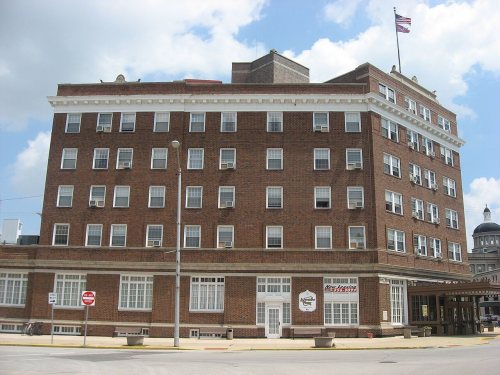
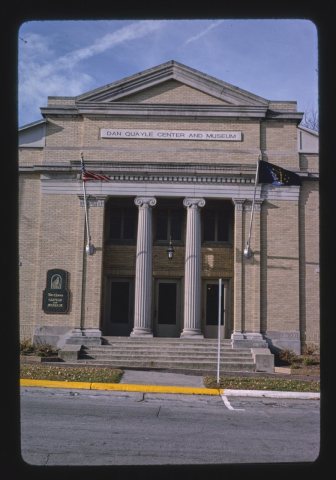
15 listings: 7 buildings, among them the Taylor-Zent House (listed 1982, the first), 7 historic districts with 1,309 contributing buildings, and 1 site. 1,316 historic buildings in all.
How old are the homes in Huntington?
39% of Huntington’s homes were built before 1940 (Census estimate, ±3.6 points), against a typical 14% for an Indiana town; the median home was built in 1954.
Founding dates: Wikidata, Wikipedia, the U.S. post office records of Blevins & Helbock (CC0) and the Census. Homes by year built: Census ACS 2020–24. National Register of Historic Places: National Park Service (list of May 22, 2026). Old photos, postcards and papers: Wikimedia Commons, the Library of Congress and other public archives, credited on each item’s page. Maps: U.S. Geological Survey historical topographic maps (via Esri) and Sanborn fire-insurance maps (Library of Congress). History text and census tables: Wikipedia (CC BY-SA 4.0). Places that used to be: USGS Geographic Names Information System (2021).
From Wikimedia Commons (17), the Library of Congress (1), the National Register of Historic Places (15), Wikipedia, Wikidata and Wikipedia for famous people, U.S. Geological Survey historical maps, U.S. Census counts (via Wikipedia), the US Post Offices dataset (Blevins & Helbock), the USGS Geographic Names Information System, Sanborn fire insurance maps (Library of Congress) and old county and town histories (Internet Archive). Archive images are copied here with their credits and licenses, shown on each photo’s page. Refreshed monthly.




 1879
 1879
 1993
 1993
 2016
 2015
 2012
 2012
 2012
 2012
 2012
 2008
 2008
 2004


