Covington’s post office opened in 1827, and 28% of its homes were built before 1940
More historic than 95% of U.S. towns · #68 of 593 in Indiana. What drives it
6 places in town are on the National Register, among them two historic districts with 132 buildings between them. Below: 1 old photo or paper, maps from 1887 on, and the census since 1850.
Founding year: the first Covington post office (Blevins & Helbock, CC0).The full story ↓
History grade
What drives Covington’s History grade
On its age, its old homes and the National Register, Covington is more historic than 95% of U.S. towns, #68 of 593 in Indiana. All 3 inputs are above most U.S. towns; its National Register listings ranks highest and its age lowest.
A
HistoryA character grade: shown, never part of Covington’s overall grade.
Indiana towns list more on the Register than most of the country (a typical Indiana town has 7.9 per 10,000 residents, the U.S. 2.4), so Covington’s 446 sits above most of its state (95% of Indiana towns have fewer) while its 137 historic buildings outnumber those of 91% of U.S. towns.
How sure. Graded on any two of the three inputs instead, the letter would still be A. The pre-1940 share is a Census survey estimate (±7.9 points). The founding year is the first post office, not a stated founding date.
Founding year: the first post office (other dates in Quick answers). Homes: Census ACS 2020–24. National Register: National Park Service, May 2026 list; each listing counted once (boundary changes and added documentation belong to their listing), and a historic district counts its contributing buildings. How TownRatings grades history →
What stands out about Covington’s past
Read from the archive, the National Register and the record. The page puts what stands out first.
National Park Service, National Register of Historic Places. Photos from Wikimedia Commons, credited on each place’s page.
Every building
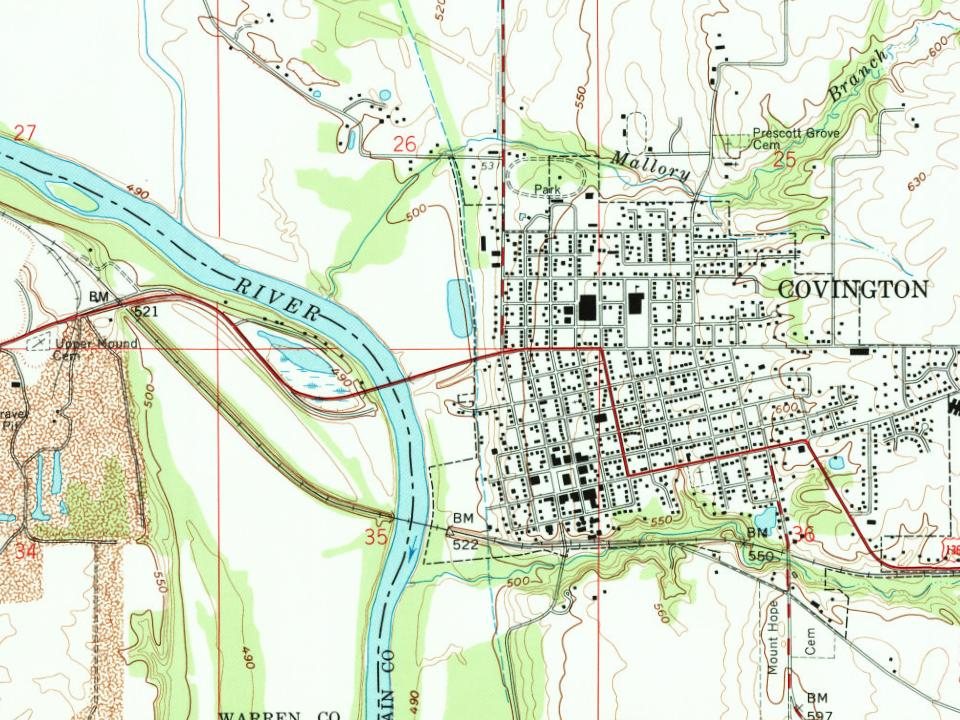
Covington, building by building, 1887–1910
Fire insurance maps drew every building, what it was made of and what it was used for, so insurers could price the risk of fire. Pick a year, then a sheet.
Fountain County was formed on April 1, 1826. Later that year, the county seat was established at Covington, and a two-story frame courthouse was built in 1827. The location of the county seat was a point of contention for some years, as Covington was not centrally located in the county. In 1831 an act was passed that called for the relocation of the county seat, but after further discussion it was decided that it should remain where it was. Eventually the coming of the railroads helped to alleviate the geographical concern. A brick courthouse was completed in 1833.
Passages that mention Covington, cut from the printed page as they were published.
Character sketches of the Rt. Rev. C. P. Maes1917 · page 26Read the page →
Read the text
nine o'clock, Archbishop Elder officiating, while Bishop Maes pontificated at the Mass which followed. At no previous church function in the City of Covington had there been so distinguished and numerous an assemblage of Church divines, a fact which bore witness to the esteem and appreciation in which the American Hierarchy held
Text read by machine from the scan; it may contain errors.
Character sketches of the Rt. Rev. C. P. Maes1917 · page 65Read the page →
Read the text
"On the 29th day of July, 1903, it was fifty years since Pius IX, of glorious memory, raised the City of Covington to the dignity of an Episcopal See. "Forty-five years had elapsed since Pius VII, at the wise suggestion of the patriotic Archbishop Carroll, had selected Bardstown as the first diocese of the West. Erect-
Text read by machine from the scan; it may contain errors.
Semi-centennial at Covington, Ind. June 9th, 18821882Read the page →
Read the text
easy to show that temporal prosperity will motshau this most beautiful spot. Wich somewhat of old Jerenuieh’s faith, | prophecy that quite shortly “ie shall buyyields for money, and subscribe evidences and seal then, vad take witnesses ta the’ town of Covington .—-(Jer., 32:44.) “Whit bhen? shall we sitidly down and say The ight tits Come, 1b is no tonser day?
Text read by machine from the scan; it may contain errors.
Scans and text from the Internet Archive. Books published in 1930 or earlier, which are in the public domain.
Timeline
Covington, 1827 to 1958
Woven from the archive, old maps, post office records, the National Register and the people born here.
The Covington post office opened in 1827, the earliest record of the town by name (U.S. post office records).
How does Covington rank for history?
Covington is more historic than 95% of U.S. towns, #68 of 593 in Indiana. The History grade combines the town’s founding era, the share of homes built before 1940 and its National Register listings. It’s a character grade, so it isn’t part of the overall grade. How it works.
What is on the National Register in Covington?
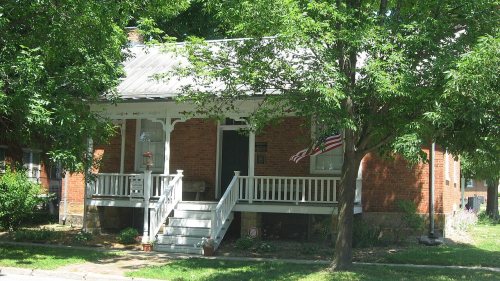
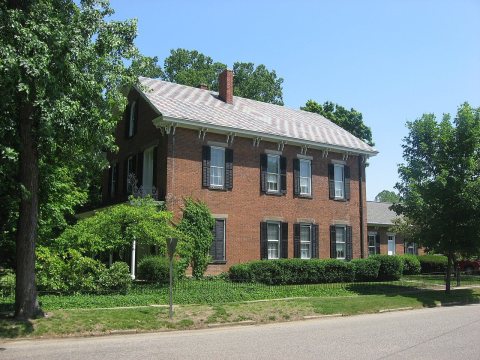
6 listings: 4 buildings, among them the William C. B. Sewell House (listed 1984, the first), and 2 historic districts, the Covington Courthouse Square Historic District and the Covington Residential Historic District, with 132 contributing buildings. 137 historic buildings in all.
How old are the homes in Covington?
28% of Covington’s homes were built before 1940 (Census estimate, ±7.9 points), against a typical 14% for an Indiana town; the median home was built in 1960.
Founding dates: Wikidata, Wikipedia, the U.S. post office records of Blevins & Helbock (CC0) and the Census. Homes by year built: Census ACS 2020–24. National Register of Historic Places: National Park Service (list of May 22, 2026). Old photos, postcards and papers: Wikimedia Commons, the Library of Congress and other public archives, credited on each item’s page. Maps: U.S. Geological Survey historical topographic maps (via Esri) and Sanborn fire-insurance maps (Library of Congress). History text and census tables: Wikipedia (CC BY-SA 4.0). Places that used to be: USGS Geographic Names Information System (2021).
From Wikimedia Commons (9), Wikidata (1), the National Register of Historic Places (6), Wikipedia, Wikidata and Wikipedia for famous people, U.S. Geological Survey historical maps, U.S. Census counts (via Wikipedia), the US Post Offices dataset (Blevins & Helbock), the USGS Geographic Names Information System, Sanborn fire insurance maps (Library of Congress) and old county and town histories (Internet Archive). Archive images are copied here with their credits and licenses, shown on each photo’s page. Refreshed monthly.




 Date?
 2020
 2020
 2015
 2012
 2012
 2012
 2012
 2012