Cedar Grove, originally known as Rochester, was platted in 1837 by John Ward. Ward built a large gristmill there. It was incorporated as a town in 1907.
The Cedar Grove Bridge was listed on the National Register of Historic Places in 2014.
to their new quarters on the hill and at the same time the saw-mill department was abandoned. This firm has furnished, as contractors, fine wood work for many public and private buildings, including the depots for the Big Four Railroad at Brookville, Cedar Grove and New Trenton, to take the place of the ones washed away by the floods of 1913; the school building, Methodist parsonage, the Sisters' school and many fine residences at Brookville; the fire station at Muncie, etc The John Ferris & Son's planing-mill is situated in the northeast part
Text read by machine from the scan; it may contain errors.
Scans and text from the Internet Archive. Books published in 1930 or earlier, which are in the public domain.
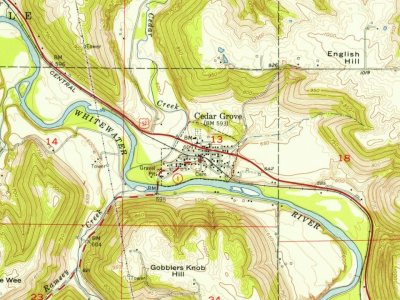
Founding dates: Wikidata, Wikipedia, the U.S. post office records of Blevins & Helbock (CC0) and the Census. Homes by year built: Census ACS 2020–24. National Register of Historic Places: National Park Service (list of May 22, 2026). Old photos, postcards and papers: Wikimedia Commons, the Library of Congress and other public archives, credited on each item’s page. Maps: U.S. Geological Survey historical topographic maps (via Esri) and Sanborn fire-insurance maps (Library of Congress). History text and census tables: Wikipedia (CC BY-SA 4.0). Places that used to be: USGS Geographic Names Information System (2021). How TownRatings grades history →
From Wikimedia Commons (2), the Library of Congress (1), Wikipedia, U.S. Geological Survey historical maps, U.S. Census counts (via Wikipedia), the US Post Offices dataset (Blevins & Helbock), the USGS Geographic Names Information System and old county and town histories (Internet Archive). Archive images are copied here with their credits and licenses, shown on each photo’s page. Refreshed monthly.

 Date?
 2016
 2015


