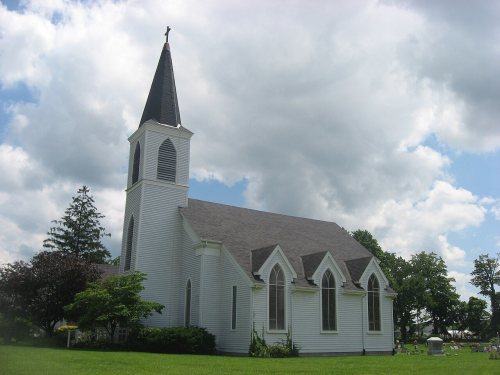
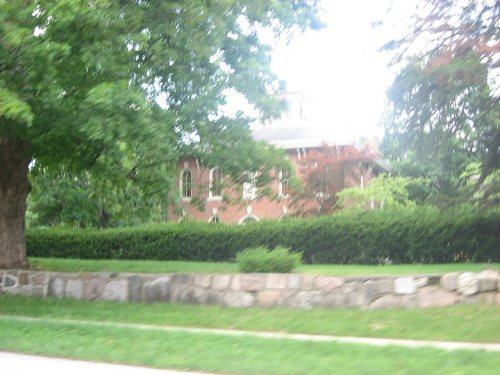
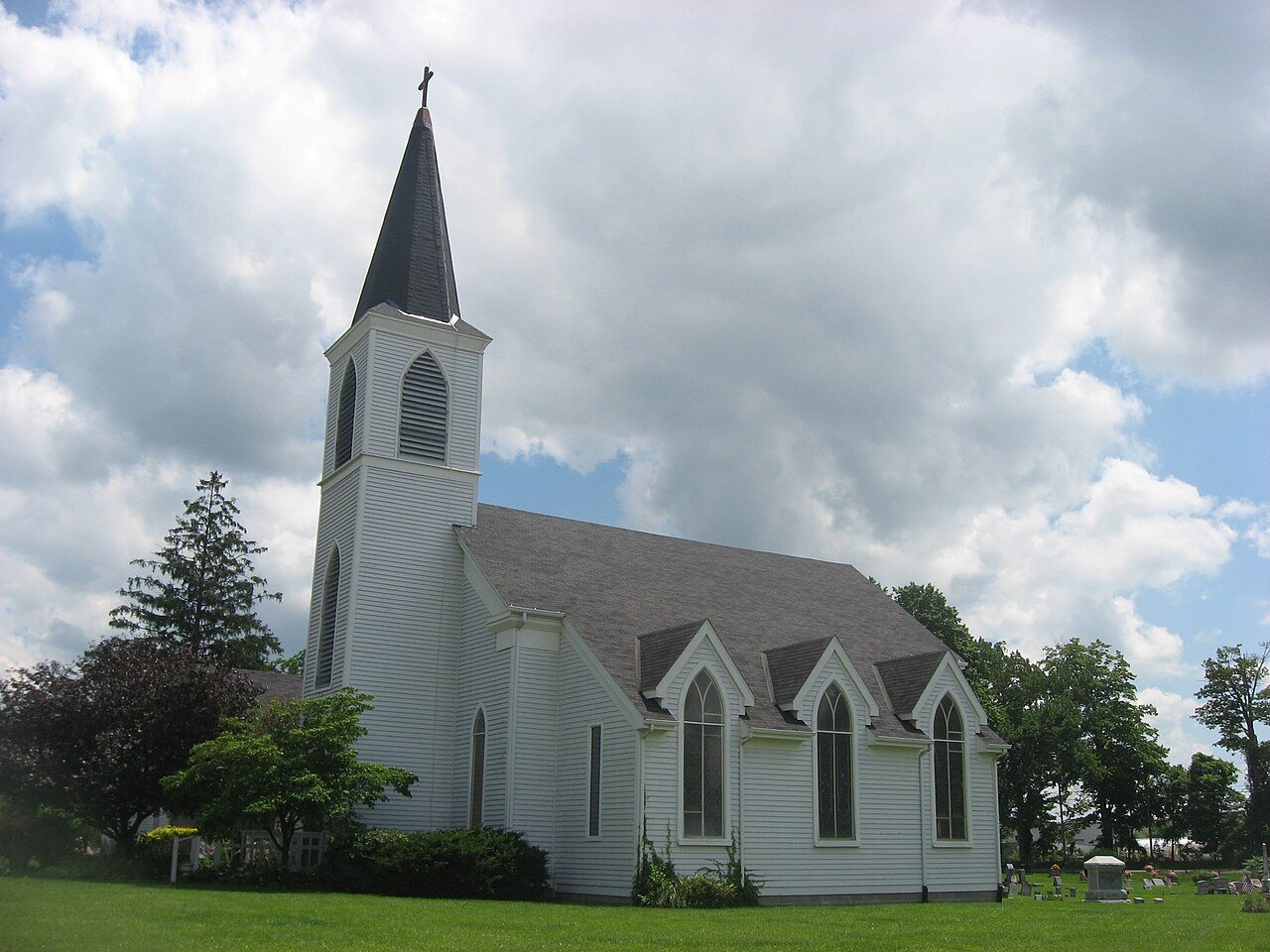
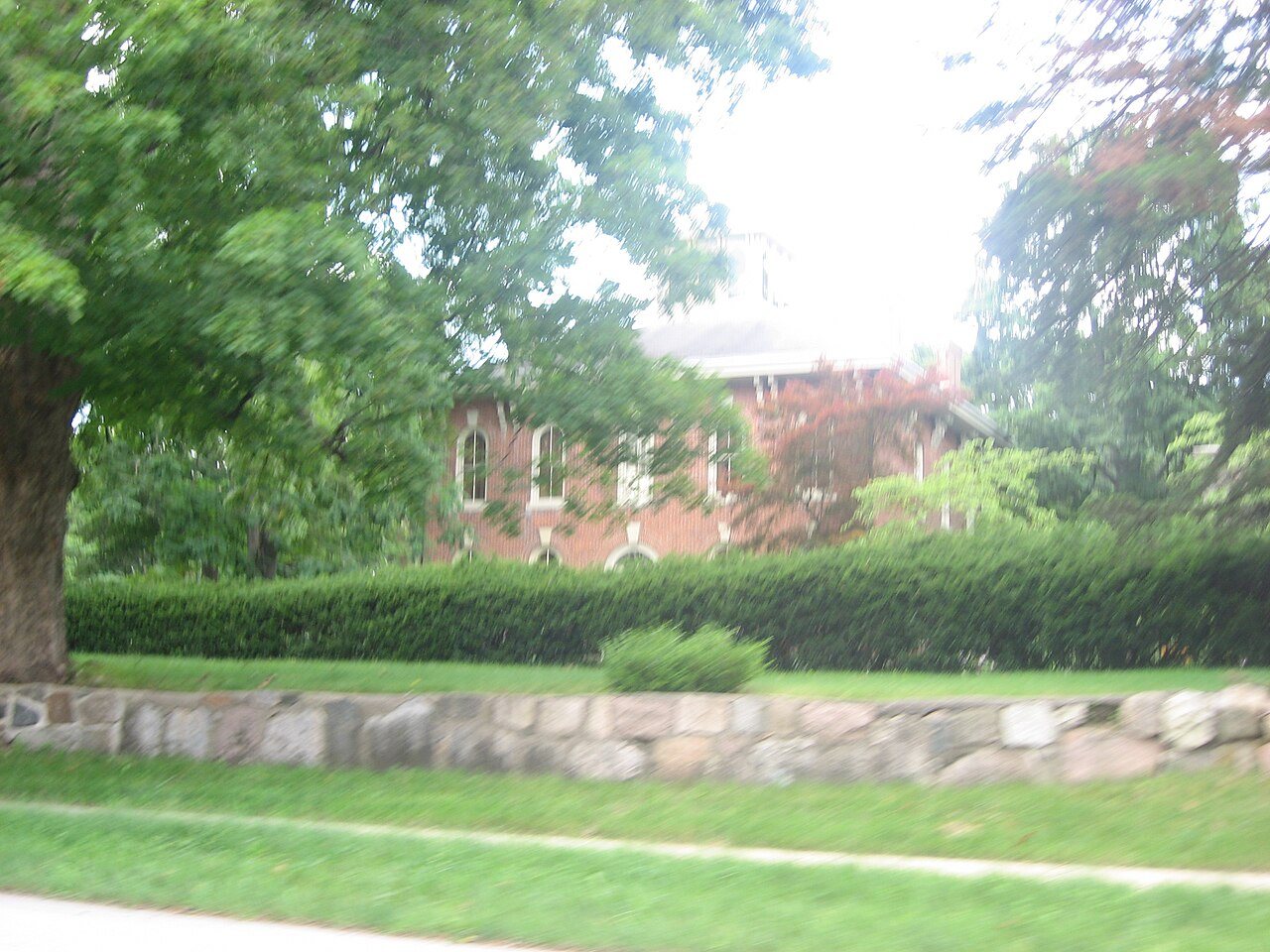
Its Register listings are the St. John of the Cross Episcopal Church, Rectory and Cemetery, the Bristol-Washington Township School and the Solomon Fowler Mansion. Below: old-book passages.
On its age, its old homes and the National Register, Bristol is more historic than 78% of U.S. towns. All 3 inputs are above most U.S. towns; its age ranks highest and its share of homes from before 1940 lowest.
A−
HistoryA character grade: shown, never part of Bristol’s overall grade.
Indiana towns list more on the Register than most of the country (a typical Indiana town has 7.9 per 10,000 residents, the U.S. 2.4), so Bristol’s 18.8 sits above most of its state (67% of Indiana towns have fewer) while its 4 historic buildings outnumber those of 68% of U.S. towns.
How sure. Graded on any two of the three inputs instead, the letter would range from B+ to A−. The pre-1940 share is a Census survey estimate (±5.3 points). The founding year is the first post office, not a stated founding date.
Founding year: the first post office (other dates in Quick answers). Homes: Census ACS 2020–24. National Register: National Park Service, May 2026 list; each listing counted once (boundary changes and added documentation belong to their listing), and a historic district counts its contributing buildings. How TownRatings grades history →
What stands out about Bristol’s past
Read from the archive, the National Register and the record. The page puts what stands out first.
Bristol was platted about 1835, making it one of the oldest towns in Elkhart County. It was named after the city of Bristol, in England.
The Bristol-Washington Township School, Solomon Fowler Mansion, and St. John of the Cross Episcopal Church, Rectory and Cemetery are listed on the National Register of Historic Places.
the s.ilo of the glebe in Dale Parish, which had been purcliascd !>>' Bristol before its division, and that Bristol shculd be paid its proportion of the proceeds of the sale ; that the church ornaments of velvet, fringed with gold, and such plate as has the name of Bristol tlicreon. now in the possession of the Parish oi' Dale, to hv returned to the Parish of Bristol. Accordingly, in 1747, the Assembly passed an act directing the sale
Text read by machine from the scan; it may contain errors.
The meeting house question in tha mother town of Bristol, after more than six years of earnest discussion, was settled. It was a question of whether to build one meeting house for the whole to'<7n or divide the to>7n into three parishes and that a meeting house should be erect -id in each. This was about 1772. The three parish-
Text read by machine from the scan; it may contain errors.
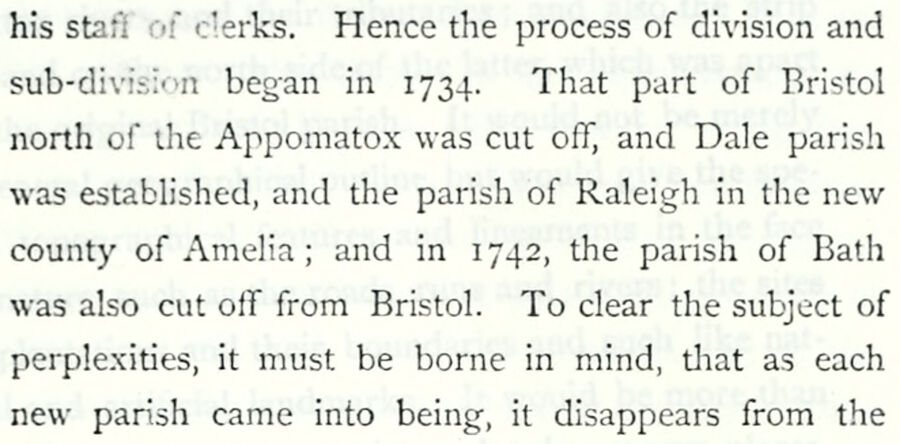
his staff of clerks. Hence the process of division and sub-division began in 1734. That part of Bristol north of the Appomatox was cut off, and Dale parish was established, and the parish of Raleigh in the new county of Amelia ; and in 1742, the parish of Bath was also cut off from Bristol. To clear the subject of perplexities, it must be borne in mind, diat as each new parish came into being, it disappears from the
Text read by machine from the scan; it may contain errors.
Memoirs historical and topographical of Bristol and it's neighbourhood1821 · page 278Read the page →
Read the text
the author of the Saxon Chronicle (I) uses the word Brygstowe, he means it precisely in the sense in which we at this day should use the word Bridge-town. If this etymology be admitted, it must be enquired in what sense Bristol was called Bridge-town. It. may mean the town of bridges ; for there must have been several, small and made of wood, over the Frome in the earliest times : or it may have been so called from a bridge over the Avon. It is true we have no historical proof of such a bridge in the Roman or Saxon age ; yet it is not improbable that the
Text read by machine from the scan; it may contain errors.
Scans and text from the Internet Archive. Books published in 1930 or earlier, which are in the public domain.
National Park Service, National Register of Historic Places. Photos from Wikimedia Commons, credited on each place’s page.
Questions about Bristol’s history
What year was Bristol founded?
The Bristol post office opened in 1835, the earliest record of the town by name (U.S. post office records).
How does Bristol rank for history?
Bristol is more historic than 78% of U.S. towns. The History grade combines the town’s founding era, the share of homes built before 1940 and its National Register listings. It’s a character grade, so it isn’t part of the overall grade. How it works.
What is on the National Register in Bristol?
Three places: the St. John of the Cross Episcopal Church, Rectory and Cemetery (listed 1980), the Bristol-Washington Township School (1991) and the Solomon Fowler Mansion (2003).
How old are the homes in Bristol?
14% of Bristol’s homes were built before 1940 (Census estimate, ±5.3 points), against a typical 14% for an Indiana town; the median home was built in 1974.
Founding dates: Wikidata, Wikipedia, the U.S. post office records of Blevins & Helbock (CC0) and the Census. Homes by year built: Census ACS 2020–24. National Register of Historic Places: National Park Service (list of May 22, 2026). Old photos, postcards and papers: Wikimedia Commons, the Library of Congress and other public archives, credited on each item’s page. Maps: U.S. Geological Survey historical topographic maps (via Esri) and Sanborn fire-insurance maps (Library of Congress). History text and census tables: Wikipedia (CC BY-SA 4.0). Places that used to be: USGS Geographic Names Information System (2021).
From Wikimedia Commons (2), the National Register of Historic Places (3), Wikipedia, the US Post Offices dataset (Blevins & Helbock), the USGS Geographic Names Information System and old county and town histories (Internet Archive). Archive images are copied here with their credits and licenses, shown on each photo’s page. Refreshed monthly.




 2013
 2013