Avon’s post office opened in 1870, and 1 of its places is on the National Register
More historic than 30% of U.S. towns · #484 of 593 in Indiana. What drives it
Most of Avon was built recently: 0.8% of its homes predate 1940 and the median home dates from 2005. 1 place in town is on the National Register, among them a historic district with 8 buildings. Below: maps from 1953 on and the census since 2000.
The Avon post office opened in 1870, the earliest record of the town by name. Two smaller post offices, Hampton (1833) and Smootsdell (1868), opened inside today’s town and later closed.
First census: 6,248 in 20002020 census: 21,474156 years
How historic is Avon?
C
More historic than 30% of U.S. towns, on its age, its old homes and the National Register.
Founding year: the first Avon post office (Blevins & Helbock, CC0).The full story ↓
History grade
What drives Avon’s History grade
On its age, its old homes and the National Register, Avon is more historic than 30% of U.S. towns, #484 of 593 in Indiana. Its National Register listings hold the grade up; its share of homes from before 1940 pulls it down.
C
HistoryA character grade: shown, never part of Avon’s overall grade.
Indiana towns list more on the Register than most of the country (a typical Indiana town has 7.9 per 10,000 residents, the U.S. 2.4), so Avon’s 3.4 sits near the middle of its state (51% of Indiana towns have fewer) while its 8 historic buildings outnumber those of 74% of U.S. towns.
How sure. Graded on any two of the three inputs instead, the letter would range from D to B−. The pre-1940 share (±0.8 points) is firm at this size. The founding year is the first post office, not a stated founding date.
Founding year: the first post office (other dates in Quick answers). Homes: Census ACS 2020–24. National Register: National Park Service, May 2026 list; each listing counted once (boundary changes and added documentation belong to their listing), and a historic district counts its contributing buildings. How TownRatings grades history →
What stands out about Avon’s past
Read from the archive, the National Register and the record. The page puts what stands out first.
The first settlement at Avon was made around 1830. The first post office at Avon opened as "Smootsdell", in 1868. It was renamed "Avon" in 1870, and remained in operation until it was discontinued in 1902. The present name comes from the River Avon in England.
Passages that mention Avon, cut from the printed page as they were published.
History of Hendricks County, Indiana1885 · page 734Read the page →
Read the text
Shiloh and Wesley and Barlett’s chapels — ana two Regular | Baptist — Abner’s Creek and Salem. The Indianapolis &St. Louis Railroad passes nearly through the center of the township, and the only postoffice in it is at the village of Avon, a station on this rail¬ road. FIR8T ELECTION.
Text read by machine from the scan; it may contain errors.
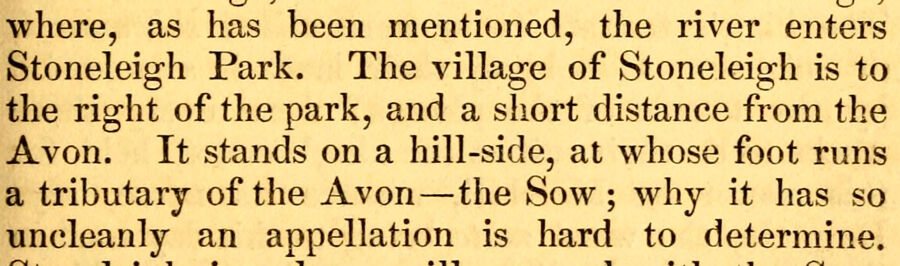
where, as has been mentioned, the river enters Stoneleigh Park. The village of Stoneleigh is to the right of the park, and a sliort distance from the Avon. It stands on a hill-side, at whose foot runs a tributary of the Avon — the Sow; why it has so uncleanly an appellation is hard to determine.
Text read by machine from the scan; it may contain errors.
History of Hendricks County, Indiana, her people, industries and institutions1914 · page 102Read the page →
Read the text
veyed, the man who, with a blue pencil, marked the stakes, made fun of the name of our postoffice, and said, "I'll name the town." Artistically he pencilled "New Philadelphia" on a stake and drove it down. When the road was completed the company drove another stake, with "Avon" painted on it. The people liked the name and petitioned to have the postoffice name changed to Avon. This was done and Smootsdell was laid away beside Hampton and White Lick. In May, 1871, Mr. Smoot sold all his property, building, lot and goods to Mr. Bartley and moved to Kansas. A little later the Barker broth-
Text read by machine from the scan; it may contain errors.
edifices) in the town ; but there are several old half-timber houses, and some of them are very curious. There are two bridges over the Carron and the Swilgate brooks that here join the Avon ; and half a mile beyond the Long-bridge already mentioned, there is an iron bridge of a single arch of 170 feet span over the Severn ; it was constructed by Telford, and completed in 1826.
Text read by machine from the scan; it may contain errors.
Scans and text from the Internet Archive. Books published in 1930 or earlier, which are in the public domain.
Timeline
Avon, 1833 to 1997
Woven from the archive, old maps, post office records, the National Register and the people born here.
The Avon post office opened in 1870, the earliest record of the town by name (U.S. post office records).
How does Avon rank for history?
Avon is more historic than 30% of U.S. towns, #484 of 593 in Indiana. The History grade combines the town’s founding era, the share of homes built before 1940 and its National Register listings. It’s a character grade, so it isn’t part of the overall grade. How it works.
What is on the National Register in Avon?
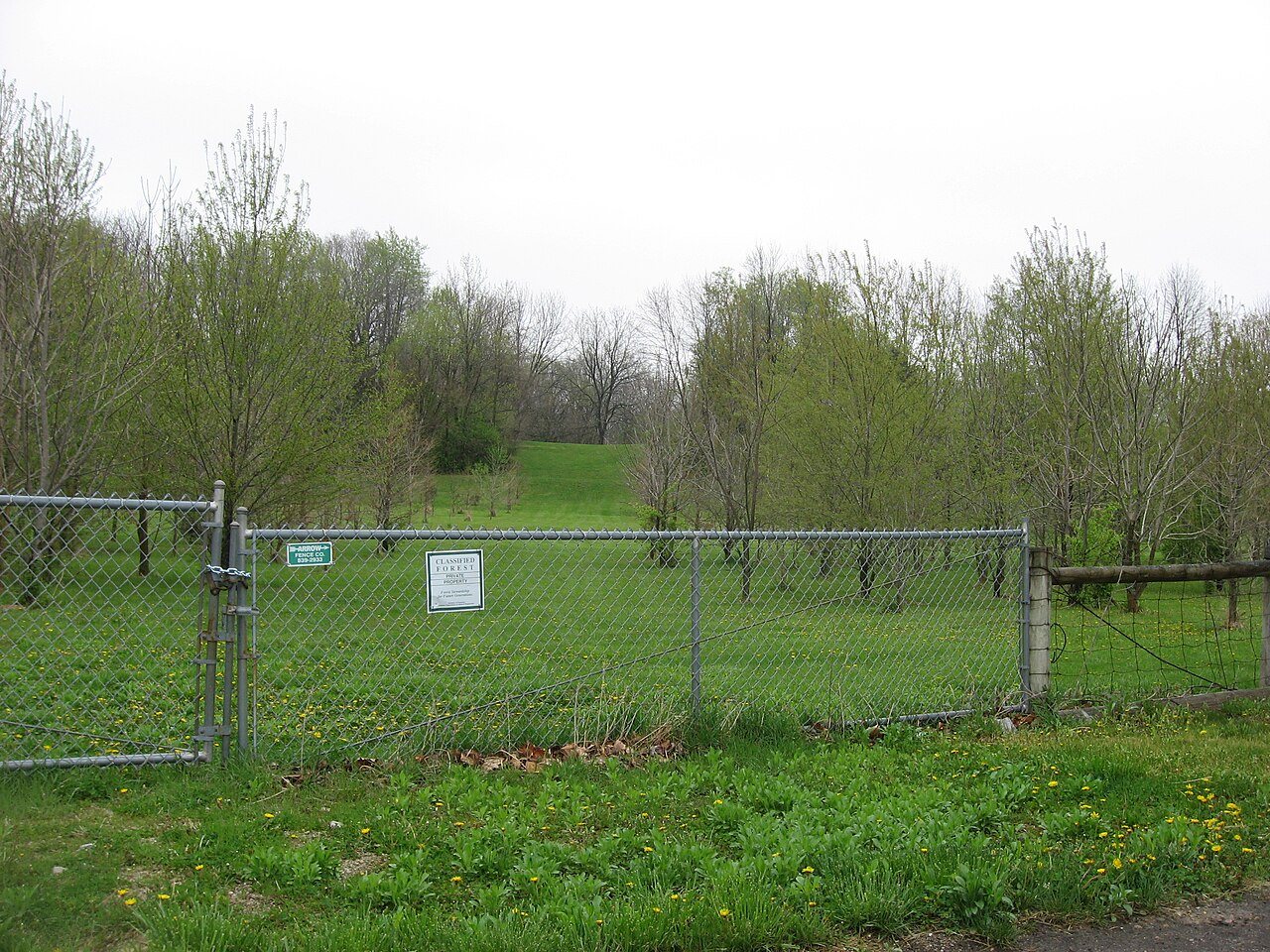
One place: the A.A. Parsons Farmstead (listed 2014).
How old are the homes in Avon?
0.8% of Avon’s homes were built before 1940 (Census estimate), against a typical 14% for an Indiana town; the median home was built in 2005.
Founding dates: Wikidata, Wikipedia, the U.S. post office records of Blevins & Helbock (CC0) and the Census. Homes by year built: Census ACS 2020–24. National Register of Historic Places: National Park Service (list of May 22, 2026). Old photos, postcards and papers: Wikimedia Commons, the Library of Congress and other public archives, credited on each item’s page. Maps: U.S. Geological Survey historical topographic maps (via Esri) and Sanborn fire-insurance maps (Library of Congress). History text and census tables: Wikipedia (CC BY-SA 4.0). Places that used to be: USGS Geographic Names Information System (2021).
From Wikimedia Commons (3), the National Register of Historic Places (1), Wikipedia, Wikidata and Wikipedia for famous people, U.S. Geological Survey historical maps, U.S. Census counts (via Wikipedia), the US Post Offices dataset (Blevins & Helbock), the USGS Geographic Names Information System and old county and town histories (Internet Archive). Archive images are copied here with their credits and licenses, shown on each photo’s page. Refreshed monthly.



 2020
 2020
 2020