The Atlanta post office opened in 1886, the earliest record of the town by name. Another post office, Shielville (1845), opened inside today’s town and later closed.
First census: 1,000 in 19002020 census: 712140 years
Founding year: the first Atlanta post office (Blevins & Helbock, CC0).The full story ↓
What stands out about Atlanta’s past
Read from the archive, the National Register and the record. The page puts what stands out first.
Atlanta had its start through the merger of the three neighboring towns of Spargerville, Shielville, and Buena Vista. The earliest part of what is now Atlanta was laid out in 1834; the town has been called Atlanta since 1885 and was incorporated in 1900. The town most likely was named after Atlanta, Georgia.
Roads Hotel was listed on the National Register of Historic Places in 1987.
is too small, as everybody knows, but, admitting them to be correct, many thousands of people live just outside and in territory contiguous to the corporate limits in all directions, and these people live in Atlanta, register from Atlanta, do business in Atlanta, Atlanta's street cars run in front of their doors, and they are a part of Atlanta for all purposes as fully and completely as if they lived in the city limits, except for the purpose of paying taxes to the city government. Take the territory in any direction, out
Text read by machine from the scan; it may contain errors.
The difficulties of maintaining the existence of this university began about this time to give the authorities of the institution considerable anxiety and trouble. It was at length decided to ask the city of Atlanta to come to the pecuniary assistance of the university, and on June 3, 1872, a vote was taken on the proposition to donate to the institution $50,000 in twenty year bonds of the city of Atlanta, on condition that all young men of Atlanta, who desired to be educated therein, should receive their education
Text read by machine from the scan; it may contain errors.
Before the war Mr. Peters was aligned with tlie Whig party, and vigorously opposed the secession movement. During the war he remained in Atlanta, attending to the business incident to his railroad interests, until the battle of July 22, 1S64, when, with his family and the assets of the Georgia Railroad Bank, he went to Augusta. He remained in Augusta until after the surrender at Appomattox, and returned to Atlanta on the first train after the completion of the Georgia Railroad. During the reconstruction period he took a prominent part in advocating the return of the State to the Union, and in
Text read by machine from the scan; it may contain errors.
Scans and text from the Internet Archive. Books published in 1930 or earlier, which are in the public domain.
Timeline
Atlanta, 1845 to 1961
Woven from the archive, old maps, post office records, the National Register and the people born here.
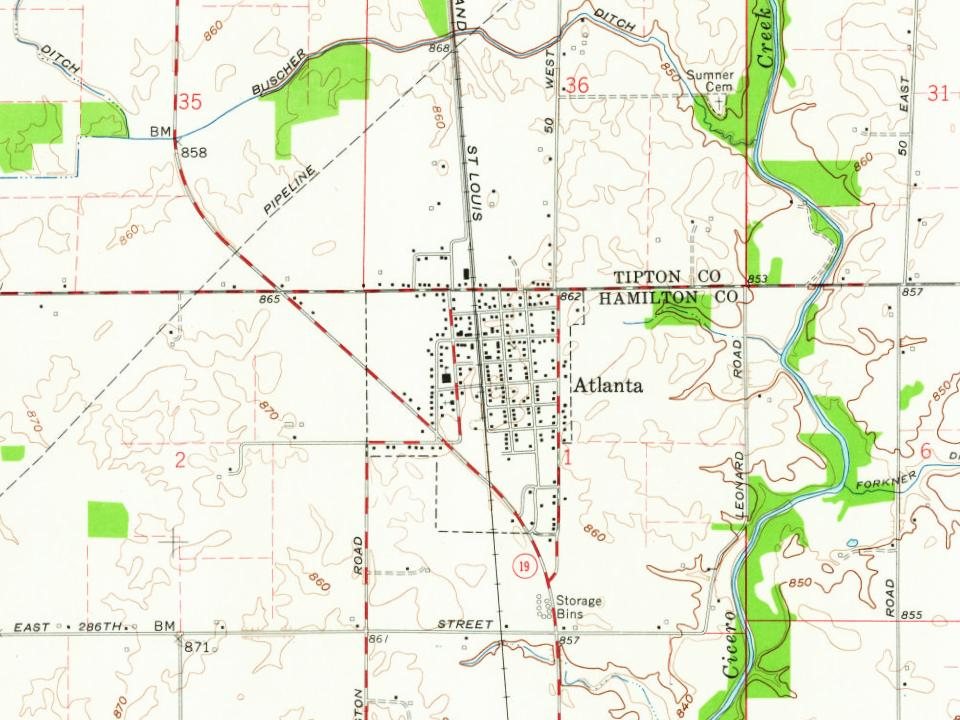
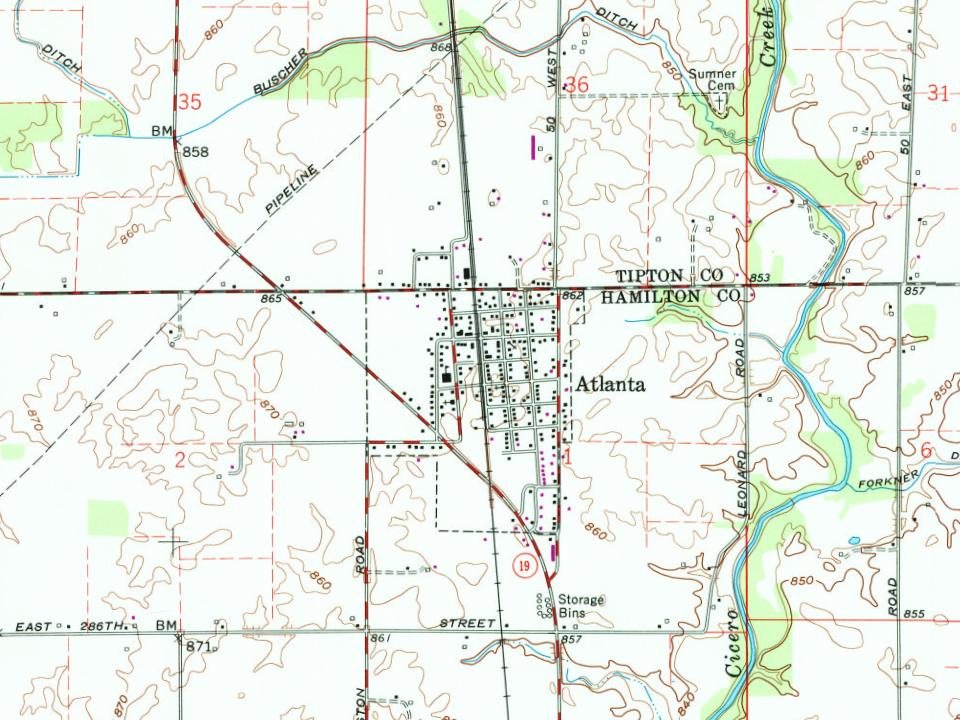
Founding dates: Wikidata, Wikipedia, the U.S. post office records of Blevins & Helbock (CC0) and the Census. Homes by year built: Census ACS 2020–24. National Register of Historic Places: National Park Service (list of May 22, 2026). Old photos, postcards and papers: Wikimedia Commons, the Library of Congress and other public archives, credited on each item’s page. Maps: U.S. Geological Survey historical topographic maps (via Esri) and Sanborn fire-insurance maps (Library of Congress). History text and census tables: Wikipedia (CC BY-SA 4.0). Places that used to be: USGS Geographic Names Information System (2021). How TownRatings grades history →
From Wikimedia Commons (4), the National Register of Historic Places (1), Wikipedia, U.S. Geological Survey historical maps, U.S. Census counts (via Wikipedia), the US Post Offices dataset (Blevins & Helbock), the USGS Geographic Names Information System and old county and town histories (Internet Archive). Archive images are copied here with their credits and licenses, shown on each photo’s page. Refreshed monthly.


 2020
 2020
 2020
 2006