Streator dates to 1861, and 32% of its homes were built before 1940
More historic than 76% of U.S. towns · #213 of 768 in Illinois. What drives it
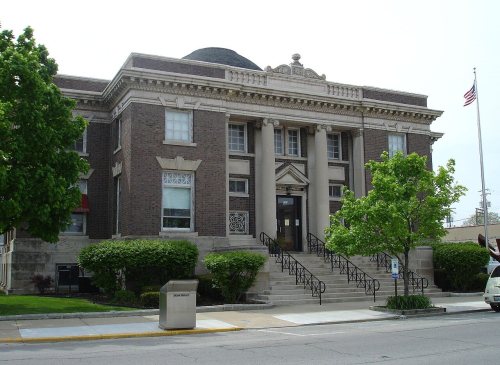
Its Register listings are the Silas Williams House, the Ruffin Drew Fletcher House and the Streator Public Library. Below: 11 old photos and papers, maps from 1925 on, and the census since 1870.
Founding year: Wikidata. First post office: 1867.The full story ↓
History grade
What drives Streator’s History grade
On its age, its old homes and the National Register, Streator is more historic than 76% of U.S. towns, #213 of 768 in Illinois. Its share of homes from before 1940 holds the grade up; its age pulls it down.
A−
HistoryA character grade: shown, never part of Streator’s overall grade.
Few Illinois towns list much on the Register (a typical Illinois town has 0.5 per 10,000 residents, the U.S. 2.4), so Streator’s 4.1 sits above most of its state (73% of Illinois towns have fewer) while its 5 historic buildings outnumber those of 70% of U.S. towns.
How sure. Graded on any two of the three inputs instead, the letter would range from B to A. The pre-1940 share is a Census survey estimate (±3.8 points). Two sources give 1861.
Founding year: Wikidata (other dates in Quick answers). Homes: Census ACS 2020–24. National Register: National Park Service, May 2026 list; each listing counted once (boundary changes and added documentation belong to their listing), and a historic district counts its contributing buildings. How TownRatings grades history →
What stands out about Streator’s past
Read from the archive, the National Register and the record. The page puts what stands out first.
Although settlements had occasionally existed in the area, they were not permanent. In 1824, surveyors for the Illinois and Michigan Canal which would extend from Chicago's Bridgeport neighborhood to the Illinois River, a tributary of the Mississippi River, arrived in this area of the Vermilion River, followed by homesteaders by the 1830s. In 1861, miner John O'Neill established a trading post called "Hardscrabble" (ironically an early name for the Bridgeport neighborhood), supposedly because he watched loaded animals struggle up the river's banks. Another name for the new settlement was "Unionville".
Passages that mention Streator, cut from the printed page as they were published.
The story of Streator. Being an account of the growth of its institutions civic, social and industrial, with special reference to its manufacturing and business interests1912 · page 52Read the page →
Read the text
B. Ryon, Mr. Walter Reeves and three or four other members of the Streator Improvement Association, now known as the Streator Commercial Club, and the result of this meeting is the presence of the Crawford Locomotive Sc Car Works in the city of Streator today. Mr. Crawford finds a place in this memorial to Streator because he
Text read by machine from the scan; it may contain errors.
The story of Streator. Being an account of the growth of its institutions civic, social and industrial, with special reference to its manufacturing and business interests1912 · page 122Read the page →
Read the text
and occupied. There are many inquiries, and no doubt it will be only a short time until this the purchaser. It is that policy pursued for over forty years that has made Streator a town of home owners. Under it forty-two additions to Streator have been laid out by Mr. Plumb and over 2,500 lots sold, not one of which has been the cause of dispute between buyer and
Text read by machine from the scan; it may contain errors.
History of LaSalle County, Illinois1877 · page 214Read the page →
Read the text
Treasurer as entirely free from debt, without an outstanding order, and with $28,000 in the treasury, Several lines of railroad have been built within the last ten years, all centering in Streator: the road from Streator to Winona, now extended to Lacon ; the Paducah, running southeast from Streator; the Chicago, Pekin & Southwestern; and the Fox River road, now leased and operated by the Chicago,
Text read by machine from the scan; it may contain errors.
Scans and text from the Internet Archive. Books published in 1930 or earlier, which are in the public domain.
Timeline
Streator, 1861 to 1960
Woven from the archive, old maps, post office records, the National Register and the people born here.
Nothing in the archives for these yearsWeddings on Main Street, storms, parades, school pictures, the old store. If it’s in your family album, it belongs here.
In 1861, according to Wikidata. Streator’s post office opened in 1867, and the census of 1870 counted 1,486 people here.
How does Streator rank for history?
Streator is more historic than 76% of U.S. towns, #213 of 768 in Illinois. The History grade combines the town’s founding era, the share of homes built before 1940 and its National Register listings. It’s a character grade, so it isn’t part of the overall grade. How it works.
What is on the National Register in Streator?
Three places: the Silas Williams House (listed 1976), the Ruffin Drew Fletcher House (1991) and the Streator Public Library (1996).
How old are the homes in Streator?
32% of Streator’s homes were built before 1940 (Census estimate, ±3.8 points), against a typical 11% for an Illinois town; the median home was built in 1954.
Founding dates: Wikidata, Wikipedia, the U.S. post office records of Blevins & Helbock (CC0) and the Census. Homes by year built: Census ACS 2020–24. National Register of Historic Places: National Park Service (list of May 22, 2026). Old photos, postcards and papers: Wikimedia Commons, the Library of Congress and other public archives, credited on each item’s page. Maps: U.S. Geological Survey historical topographic maps (via Esri) and Sanborn fire-insurance maps (Library of Congress). History text and census tables: Wikipedia (CC BY-SA 4.0). Places that used to be: USGS Geographic Names Information System (2021).
From Wikimedia Commons (2), the Library of Congress (9), the National Register of Historic Places (3), Wikipedia, Wikidata and Wikipedia for famous people, U.S. Geological Survey historical maps, U.S. Census counts (via Wikipedia), the US Post Offices dataset (Blevins & Helbock), the USGS Geographic Names Information System and old county and town histories (Internet Archive). Archive images are copied here with their credits and licenses, shown on each photo’s page. Refreshed monthly.




 1901
 1901
 1901
 1901
 1910
 1943
 1943


