Princeton’s post office opened in 1833, and 22% of its homes were built before 1940
More historic than 93% of U.S. towns · #48 of 768 in Illinois. What drives it
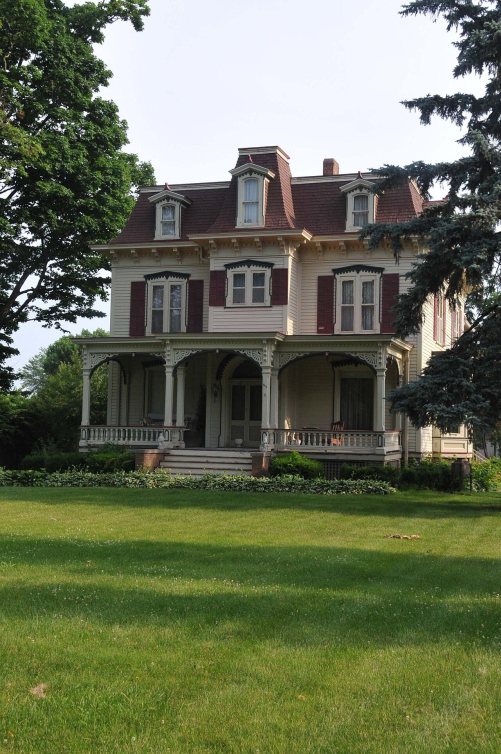
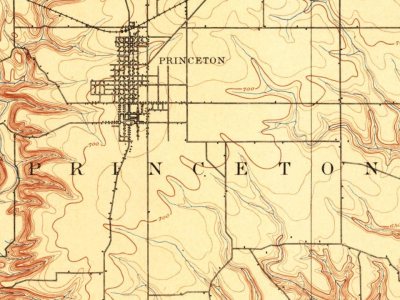
8 places in town are on the National Register, among them the Owen Lovejoy Homestead, a National Historic Landmark, and three historic districts with 90 buildings between them. Below: 10 old photos and papers, maps from 1885 on, and the census since 1860.
Founding year: the first Princeton post office (Blevins & Helbock, CC0).The full story ↓
History grade
What drives Princeton’s History grade
On its age, its old homes and the National Register, Princeton is more historic than 93% of U.S. towns, #48 of 768 in Illinois. All 3 inputs are above most U.S. towns; its National Register listings ranks highest and its share of homes from before 1940 lowest.
A
HistoryA character grade: shown, never part of Princeton’s overall grade.
Few Illinois towns list much on the Register (a typical Illinois town has 0.5 per 10,000 residents, the U.S. 2.4), so Princeton’s 120 sits above most of its state (94% of Illinois towns have fewer) while its 96 historic buildings outnumber those of 89% of U.S. towns.
How sure. Graded on any two of the three inputs instead, the letter would range from A− to A. The pre-1940 share is a Census survey estimate (±4.0 points). The founding year is the first post office, not a stated founding date.
Founding year: the first post office (other dates in Quick answers). Homes: Census ACS 2020–24. National Register: National Park Service, May 2026 list; each listing counted once (boundary changes and added documentation belong to their listing), and a historic district counts its contributing buildings. How TownRatings grades history →
What stands out about Princeton’s past
Read from the archive, the National Register and the record. The page puts what stands out first.
Bureau County was a New England settlement. The founders of Princeton consisted entirely of settlers from New England. These people were "Yankees," descended from the English Puritans who settled New England in the 1600s. They were part of a wave of New England farmers who headed west into what was then the wilds of the Northwest Territory during the early 1800s. Most of them arrived as a result of the completion of the Erie Canal. When they arrived in what is now Bureau County there was nothing but a virgin forest and wild prairie; the New Englanders laid out farms, constructed roads, erected government buildings and established post routes. They brought with them many of their Yankee New England values, such as a passion for education, fueling the establishment of many schools, as well as staunch support for abolitionism. They were mostly members of the Congregationalist Church, thoug…
Passages that mention Princeton, cut from the printed page as they were published.
History of Bureau County, Illinois1885 · page 709Read the page →
Read the text
laboring men of Princeton, in the hearts of those who feel the aches of toil and the stern realities of an existence sustained by daily labor. The working men of Princeton have long been the unswerving friends of Justus Stevens, and a prouder epitaph a rich man cannot have.
Text read by machine from the scan; it may contain errors.
The voters and tax-payers of Bureau county, Illinois1877 · page 120Read the page →
Read the text
Greenfield was the name proposed for the new town, as that was the name of the post-office for the settlement, but some thought Princeton more appropriate, as the town site was much like Old Princeton in New Jersey, being high and sightly.
Text read by machine from the scan; it may contain errors.
Scans and text from the Internet Archive. Books published in 1930 or earlier, which are in the public domain.
Timeline
Princeton, 1833 to 1997
Woven from the archive, old maps, post office records, the National Register and the people born here.
Nothing in the archives for these yearsWeddings on Main Street, storms, parades, school pictures, the old store. If it’s in your family album, it belongs here.
Fire insurance maps drew every building, what it was made of and what it was used for, so insurers could price the risk of fire. Pick a year, then a sheet.
The Princeton post office opened in 1833, the earliest record of the town by name (U.S. post office records).
How does Princeton rank for history?
Princeton is more historic than 93% of U.S. towns, #48 of 768 in Illinois. The History grade combines the town’s founding era, the share of homes built before 1940 and its National Register listings. It’s a character grade, so it isn’t part of the overall grade. How it works.
What is on the National Register in Princeton?
8 listings: 5 buildings, among them the Owen Lovejoy Homestead (a National Historic Landmark since 1997), and 3 historic districts, the Princeton North Main Street Historic District, the Princeton South Main Street-Courthouse Square Historic District and the Oakland Cemetery Historic District, with 90 contributing buildings. 96 historic buildings in all.
How old are the homes in Princeton?
22% of Princeton’s homes were built before 1940 (Census estimate, ±4.0 points), against a typical 11% for an Illinois town; the median home was built in 1964.
Founding dates: Wikidata, Wikipedia, the U.S. post office records of Blevins & Helbock (CC0) and the Census. Homes by year built: Census ACS 2020–24. National Register of Historic Places: National Park Service (list of May 22, 2026). Old photos, postcards and papers: Wikimedia Commons, the Library of Congress and other public archives, credited on each item’s page. Maps: U.S. Geological Survey historical topographic maps (via Esri) and Sanborn fire-insurance maps (Library of Congress). History text and census tables: Wikipedia (CC BY-SA 4.0). Places that used to be: USGS Geographic Names Information System (2021).
From Wikimedia Commons (2), the Library of Congress (8), Wikidata (3), the National Register of Historic Places (8), Wikipedia, Wikidata and Wikipedia for famous people, U.S. Geological Survey historical maps, U.S. Census counts (via Wikipedia), the US Post Offices dataset (Blevins & Helbock), the USGS Geographic Names Information System, Sanborn fire insurance maps (Library of Congress) and old county and town histories (Internet Archive). Archive images are copied here with their credits and licenses, shown on each photo’s page. Refreshed monthly.


 ★ Landmark





 1908
 1909
 1912
 1912
 1913
 1913
 1913
