Moline was first counted by the census in 1840, and 29% of its homes were built before 1940
More historic than 94% of U.S. towns · #37 of 768 in Illinois. What drives it
5 places in town are on the National Register, among them a historic district with 100 buildings. Below: 18 old photos and papers, maps from 1886 on, and the census since 1840.
On its age, its old homes and the National Register, Moline is more historic than 94% of U.S. towns, #37 of 768 in Illinois. All 3 inputs are above most U.S. towns; its National Register listings ranks highest and its age lowest.
A
HistoryA character grade: shown, never part of Moline’s overall grade.
Few Illinois towns list much on the Register (a typical Illinois town has 0.5 per 10,000 residents, the U.S. 2.4), so Moline’s 24.6 sits above most of its state (88% of Illinois towns have fewer) while its 104 historic buildings outnumber those of 90% of U.S. towns.
How sure. Graded on any two of the three inputs instead, the letter would still be A. The pre-1940 share (±2.2 points) is firm at this size.
Founding year: the first census (other dates in Quick answers). Homes: Census ACS 2020–24. National Register: National Park Service, May 2026 list; each listing counted once (boundary changes and added documentation belong to their listing), and a historic district counts its contributing buildings. How TownRatings grades history →
What stands out about Moline’s past
Read from the archive, the National Register and the record. The page puts what stands out first.
Nothing in the archives for these yearsWeddings on Main Street, storms, parades, school pictures, the old store. If it’s in your family album, it belongs here.
In 1837, David B. Sears and a group of associates built a 600-foot (180 m) stone-and-brush dam across Sylvan Slough, thereby connecting the southern bank of the Mississippi River to what is today called Arsenal Island. The dam not only served as an access road between the island's settlements and the mainland, but it provided water power for a mill which Sears built to saw wood, grind corn, and card wool. The water power generated by the dam attracted many industrialists. Over the next seven years, a number of factories sprouted up along the shoreline. A factory town was platted in 1843 on the Illinois shore under the working name of "Rock Island Mills". The name did not stick. When Charles Atkinson, one of the major landowners in the area, was offered the choice of naming the town Moline ("City of Mills", from the French moulin, as suggested by a local surveyor P.H. Olgilvie) or Hesper…
The first Catholic priest to officiate at Moline was Father Allemann, of Rock Island, in 1857. He held services at different ])laces outside of his regular jjarish, at Moline, Hampton, and other points. In 1858 the church was built in Moline.
Text read by machine from the scan; it may contain errors.
March 14, 1879. Adopted by the board of super^^sors, that the Town of Moline be subdivided. The incorporated City of ^loline be organized as the Town of Moline; the remaining territory of iloline Township to be hereafter known as the Town of South Moline.
Text read by machine from the scan; it may contain errors.
Scans and text from the Internet Archive. Books published in 1930 or earlier, which are in the public domain.
Timeline
Moline, 1840 to 1969
Woven from the archive, old maps, post office records, the National Register and the people born here.
Every edition of the U.S. Geological Survey’s map of Moline. Tap a year, or press play to watch the town change.
1949Davenport sheet · 1:24,000
U.S. Geological Survey historical topographic maps (public domain), via Esri’s collection of the scans. The red ring marks the center of Moline.
Every building
Moline, building by building, 1886–1912
Fire insurance maps drew every building, what it was made of and what it was used for, so insurers could price the risk of fire. Pick a year, then a sheet.
The Moline post office opened in 1840, the earliest record of the town by name (U.S. post office records). Wikidata gives 1848.
How does Moline rank for history?
Moline is more historic than 94% of U.S. towns, #37 of 768 in Illinois. The History grade combines the town’s founding era, the share of homes built before 1940 and its National Register listings. It’s a character grade, so it isn’t part of the overall grade. How it works.
What is on the National Register in Moline?
5 listings: 4 buildings, among them the LeClaire Hotel (listed 1994, the first), and 1 historic district, the Moline Downtown Commercial Historic District, with 100 contributing buildings. 104 historic buildings in all.
How old are the homes in Moline?
29% of Moline’s homes were built before 1940 (Census estimate, ±2.2 points), against a typical 11% for an Illinois town; the median home was built in 1956.
Founding dates: Wikidata, Wikipedia, the U.S. post office records of Blevins & Helbock (CC0) and the Census. Homes by year built: Census ACS 2020–24. National Register of Historic Places: National Park Service (list of May 22, 2026). Old photos, postcards and papers: Wikimedia Commons, the Library of Congress and other public archives, credited on each item’s page. Maps: U.S. Geological Survey historical topographic maps (via Esri) and Sanborn fire-insurance maps (Library of Congress). History text and census tables: Wikipedia (CC BY-SA 4.0). Places that used to be: USGS Geographic Names Information System (2021).
From Wikimedia Commons (10), the Library of Congress (8), the National Register of Historic Places (5), Wikipedia, Wikidata and Wikipedia for famous people, U.S. Geological Survey historical maps, U.S. Census counts (via Wikipedia), the US Post Offices dataset (Blevins & Helbock), the USGS Geographic Names Information System, Sanborn fire insurance maps (Library of Congress) and old county and town histories (Internet Archive). Archive images are copied here with their credits and licenses, shown on each photo’s page. Refreshed monthly.

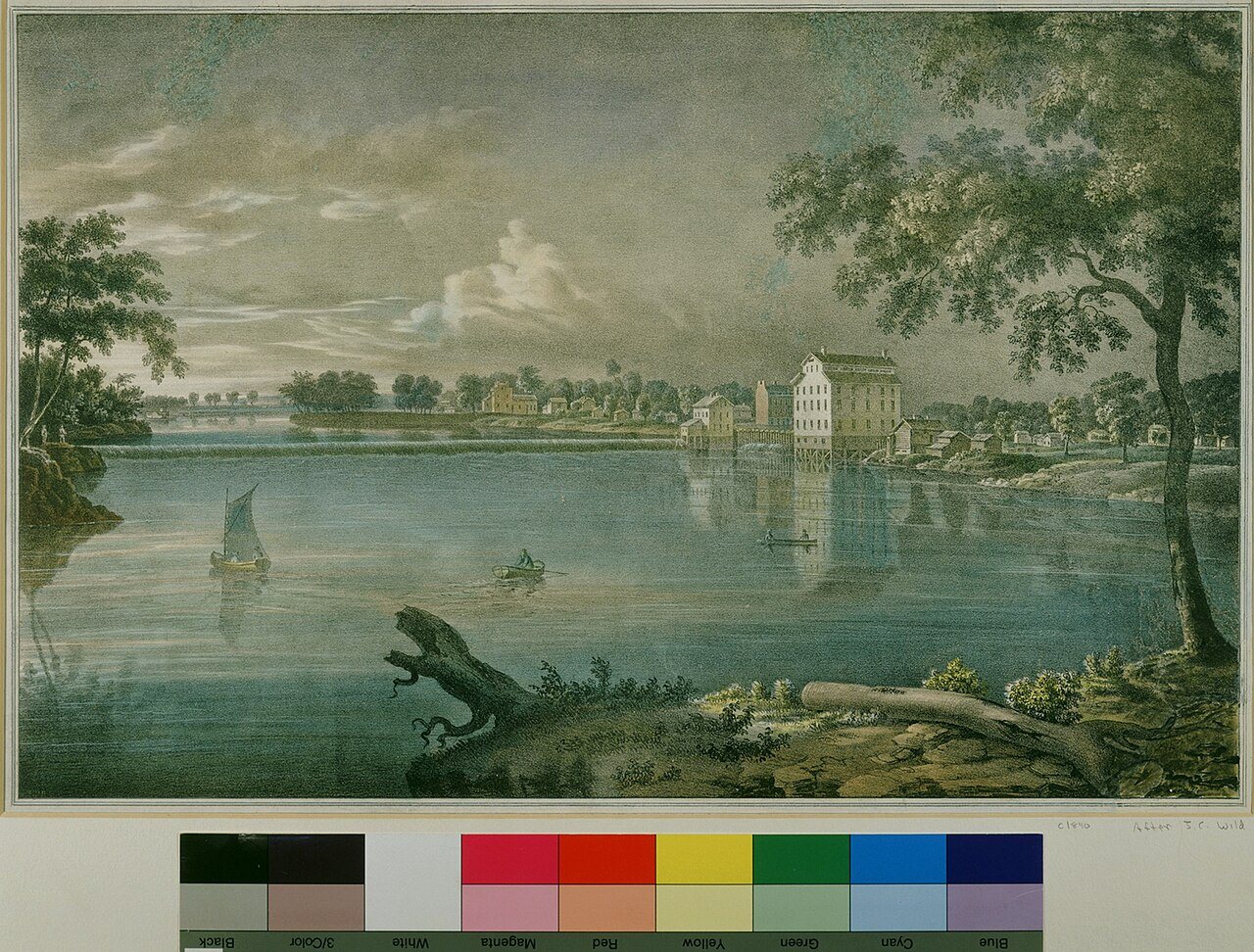


 c. 1840
 c. 1842
 1844
 1860
 1860
 1869
 1873
 1874
 1889
 1906
 1907
 1907
 1911
 1911
 1919
 1919
 1919
 1919
![The first Catholic priest to officiate at Moline was Father Allemann, of Rock Island, in 1857. He held services at different ])laces outside of his regular jjarish, at Moline, Hampton, and other points. In 1858 the church was built in Moline.](https://images.townratings.com/story/4434/bk-6d0a2a8399a4b317-l.jpg)


