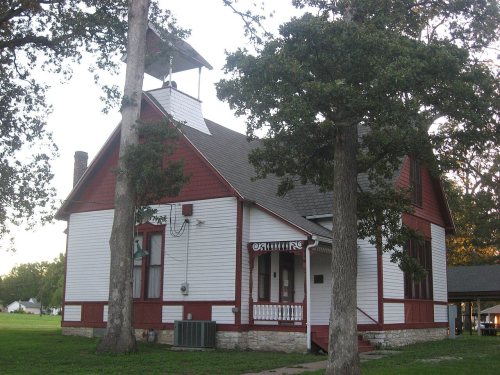
Founding year: the first Marissa post office (Blevins & Helbock, CC0).The full story ↓
History grade
What drives Marissa’s History grade
On its age, its old homes and the National Register, Marissa is more historic than 90% of U.S. towns. All 3 inputs are above most U.S. towns; its share of homes from before 1940 ranks highest and its National Register listings lowest.
A
HistoryA character grade: shown, never part of Marissa’s overall grade.
Few Illinois towns list much on the Register (a typical Illinois town has 0.5 per 10,000 residents, the U.S. 2.4), so Marissa’s 8.1 sits above most of its state (81% of Illinois towns have fewer) while its 1 listings outnumber those of 51% of U.S. towns.
How sure. Graded on any two of the three inputs instead, the letter would range from A− to A. The pre-1940 share is a Census survey estimate (±8.2 points). The founding year is the first post office, not a stated founding date.
Founding year: the first post office (other dates in Quick answers). Homes: Census ACS 2020–24. National Register: National Park Service, May 2026 list; each listing counted once (boundary changes and added documentation belong to their listing), and a historic district counts its contributing buildings. How TownRatings grades history →
What stands out about Marissa’s past
Read from the archive, the National Register and the record. The page puts what stands out first.
Before 1700, the Marissa area was inhabited by various Native American tribes. Among them were Kaskaskias, Peorias, Cahokias, Iroquois, and Michiganies. However, the most prevalent in the immediate area were probably the Tamaroas. It is known that just south of Marissa Cemetery, on a hill at 321 Doza Creek Road, a settlement existed as many artifacts have been recovered over the years. Also, there are still the remains of a trail that was used by the tribes as they traveled east and west. Evidence of this can still be seen just north of the dwelling at 132 Doza Creek Road. The three feet deep trench running through the woods was worn by foot and horse traffic, some pulling two pole skids carrying possessions. During the early 1700s, settlers first made their appearance in the region. French hunters and trappers ventured into the area in quest of its plentiful game. One of the first was…
Passages that mention Marissa, cut from the printed page as they were published.
History of St. Clair County, Illinois. With illustrations ... and biographical sketches of some of its prominent men and pioneers1881 · page 267Read the page →
Read the text
and did much to advance the interests of his own community. He was an earnest Christian, charitable to a fault, and it could be said of him that he had no enemy among men. He was postmaster of Marissa for twenty-five years, and township treasurer for an equal length of time. He was engaged for a number of years in the mercantile busiitess in the old town of Marissa, but upon the building of the railroad through his farm, he laid out the present town of Marissa, and through his energy and liberality did much to
Text read by machine from the scan; it may contain errors.
Centennial, McKendree college, with St. Clair County history1928Read the page →
Read the text
MARISSA The original town of Marissa was laid out by James Stewart in December, 1867. It soon became a village with a few dwellings, a general store, a blacksmith shop, and a mill which could turn out a hundred barrels of flour a day. In 1870 when the railroad, known as the "Cairo Short Line" ran through, it left the village a little to one side. Of course since the railroad would not come to the town, the town had
Text read by machine from the scan; it may contain errors.
History of St. Clair County, Illinois. With illustrations ... and biographical sketches of some of its prominent men and pioneers1881 · page 179Read the page →
Read the text
sion, Robert Wilson and Hugh Nairn, with thirty members of the congregation, entered the United Presbyterian Church as an organized body, thus forming the present United Presbyterian congregation of Marissa. In the summer of 1871 this congregation commenced the erection of a house of worship in the new town of Marissa. The building was finished and ready for occupancy Jan.
Text read by machine from the scan; it may contain errors.
Centennial, McKendree college, with St. Clair County history1928Read the page →
Read the text
tion. After the organization of the Jones Company, he withdrew from active mine labor, and has devoted his time to the management of the company and to other business. He is the owner of the Jones Filling Station in Marissa ; is a director in the Marissa Building £s? Loan Association; and one of the stockholders in the Marissa State Bank.
Text read by machine from the scan; it may contain errors.
Scans and text from the Internet Archive. Books published in 1930 or earlier, which are in the public domain.
The Marissa post office opened in 1846, the earliest record of the town by name (U.S. post office records).
How does Marissa rank for history?
Marissa is more historic than 90% of U.S. towns. The History grade combines the town’s founding era, the share of homes built before 1940 and its National Register listings. It’s a character grade, so it isn’t part of the overall grade. How it works.
What is on the National Register in Marissa?
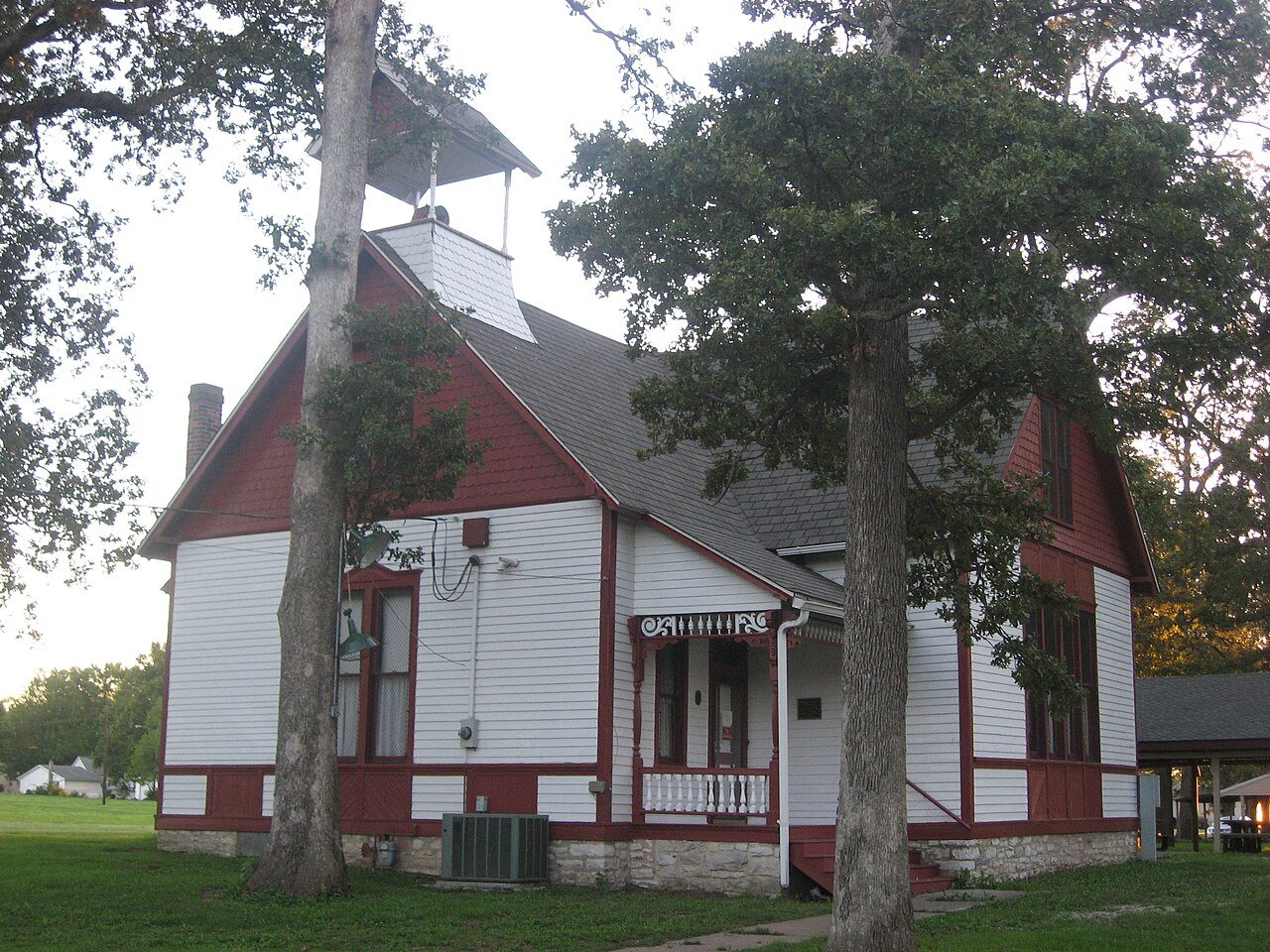
One place: the Marissa Academy (listed 1994).
How old are the homes in Marissa?
34% of Marissa’s homes were built before 1940 (Census estimate, ±8.2 points), against a typical 11% for an Illinois town; the median home was built in 1958.
Founding dates: Wikidata, Wikipedia, the U.S. post office records of Blevins & Helbock (CC0) and the Census. Homes by year built: Census ACS 2020–24. National Register of Historic Places: National Park Service (list of May 22, 2026). Old photos, postcards and papers: Wikimedia Commons, the Library of Congress and other public archives, credited on each item’s page. Maps: U.S. Geological Survey historical topographic maps (via Esri) and Sanborn fire-insurance maps (Library of Congress). History text and census tables: Wikipedia (CC BY-SA 4.0). Places that used to be: USGS Geographic Names Information System (2021).
From Wikimedia Commons (1), Wikidata (1), the National Register of Historic Places (1), Wikipedia, Wikidata and Wikipedia for famous people, the US Post Offices dataset (Blevins & Helbock), the USGS Geographic Names Information System and old county and town histories (Internet Archive). Archive images are copied here with their credits and licenses, shown on each photo’s page. Refreshed monthly.


 2012