Havana’s post office opened in 1829, and 24% of its homes were built before 1940
More historic than 86% of U.S. towns · #113 of 768 in Illinois. What drives it
Its Register listings are the Havana Water Tower and the Havana Public Library. Below: 2 old photos and papers, maps from 1887 on, and the census since 1850.
Founding year: the first Havana post office (Blevins & Helbock, CC0).The full story ↓
History grade
What drives Havana’s History grade
On its age, its old homes and the National Register, Havana is more historic than 86% of U.S. towns, #113 of 768 in Illinois. All 3 inputs are above most U.S. towns; its share of homes from before 1940 ranks highest and its National Register listings lowest.
A
HistoryA character grade: shown, never part of Havana’s overall grade.
Few Illinois towns list much on the Register (a typical Illinois town has 0.5 per 10,000 residents, the U.S. 2.4), so Havana’s 6.7 sits above most of its state (79% of Illinois towns have fewer) while its 2 listings outnumber those of 60% of U.S. towns.
How sure. Graded on any two of the three inputs instead, the letter would still be A−. The pre-1940 share is a Census survey estimate (±7.2 points). The founding year is the first post office, not a stated founding date.
Founding year: the first post office (other dates in Quick answers). Homes: Census ACS 2020–24. National Register: National Park Service, May 2026 list; each listing counted once (boundary changes and added documentation belong to their listing), and a historic district counts its contributing buildings. How TownRatings grades history →
What stands out about Havana’s past
Read from the archive, the National Register and the record. The page puts what stands out first.
Peaked at 4,379 in 1950; 2,963 people lived here in 2020.
17 censuses, 1850–2020.
U.S. Census Bureau decennial counts, from the census table on Havana’s Wikipedia page.
Every building
Havana, building by building, 1887–1914
Fire insurance maps drew every building, what it was made of and what it was used for, so insurers could price the risk of fire. Pick a year, then a sheet.
Havana was a major ancient American settlement two thousand years ago, when the largest verified mound of the Western Hopewell Culture, Rockwell Mound, was built. Local landmarks were mentioned in the journals of French explorers in the late 1600s. A religious medal dating from the early 1700s suggests that there was missionary activity in what is now Havana. When permanent English-speaking residents arrived in 1822, there was a Potawatomi village on the site. A ferry was established to the western bank of the Illinois River to a road that followed the Spoon River. There were War of 1812 bounty lands in western Illinois.
Passages that mention Havana, cut from the printed page as they were published.
Centennial history of Mason County, including a sketch of the early history of Illinois, its physical peculiarities, soils, climate, production, etc.1876 · page 169Read the page →
Read the text
We are handed by Dr. Harpham the original list of the inhabitants of Havana, when a canvass was made in 1S4S, when the people were called on to vote for or against incorporation, which we shall copy in the history of Havana. He also hands us the original draft of the first ordinance passed by the town trustees after incorporation, and a list of the subscribers, and the amount subscribed, and the amount paid by each of the subscribers to the Illinois River Railroad, now the P., P. & J. R. R. Since his residence in Mason
Text read by machine from the scan; it may contain errors.
Centennial history of Mason County, including a sketch of the early history of Illinois, its physical peculiarities, soils, climate, production, etc.1876 · page 38Read the page →
Read the text
"Poll book of an election held at the town of Havana, in Havana precinct, in the county of Tazewell, and State of Illinois, on the 7th day of August, 1837. For County Clerk, John H. Morrison. For Probate Justice of the Peace, Joshua C. Morgan. For County Treasurer, Lewis Pi-ettyman. For Notary Public, Wm.
Text read by machine from the scan; it may contain errors.
Scans and text from the Internet Archive. Books published in 1930 or earlier, which are in the public domain.
Timeline
Havana, 1829 to 1973
Woven from the archive, old maps, post office records, the National Register and the people born here.
Nothing in the archives for these yearsWeddings on Main Street, storms, parades, school pictures, the old store. If it’s in your family album, it belongs here.
Nothing in the archives for these yearsWeddings on Main Street, storms, parades, school pictures, the old store. If it’s in your family album, it belongs here.
The Havana post office opened in 1829, the earliest record of the town by name (U.S. post office records).
How does Havana rank for history?
Havana is more historic than 86% of U.S. towns, #113 of 768 in Illinois. The History grade combines the town’s founding era, the share of homes built before 1940 and its National Register listings. It’s a character grade, so it isn’t part of the overall grade. How it works.
What is on the National Register in Havana?
Two places: the Havana Water Tower (listed 1993) and the Havana Public Library (1994).
How old are the homes in Havana?
24% of Havana’s homes were built before 1940 (Census estimate, ±7.2 points), against a typical 11% for an Illinois town; the median home was built in 1957.
Founding dates: Wikidata, Wikipedia, the U.S. post office records of Blevins & Helbock (CC0) and the Census. Homes by year built: Census ACS 2020–24. National Register of Historic Places: National Park Service (list of May 22, 2026). Old photos, postcards and papers: Wikimedia Commons, the Library of Congress and other public archives, credited on each item’s page. Maps: U.S. Geological Survey historical topographic maps (via Esri) and Sanborn fire-insurance maps (Library of Congress). History text and census tables: Wikipedia (CC BY-SA 4.0). Places that used to be: USGS Geographic Names Information System (2021).
From Wikimedia Commons (18), the National Register of Historic Places (2), Wikipedia, Wikidata and Wikipedia for famous people, U.S. Geological Survey historical maps, U.S. Census counts (via Wikipedia), the US Post Offices dataset (Blevins & Helbock), the USGS Geographic Names Information System, Sanborn fire insurance maps (Library of Congress) and old county and town histories (Internet Archive). Archive images are copied here with their credits and licenses, shown on each photo’s page. Refreshed monthly.


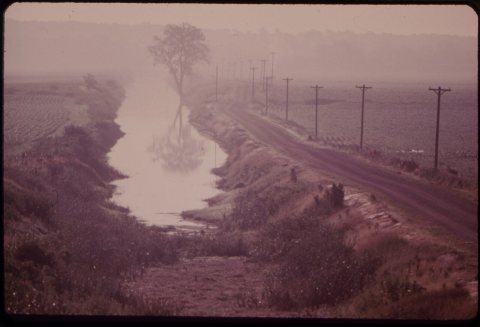
 2020
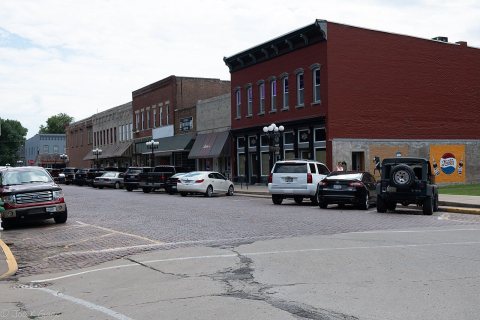 2020
 2020
 2018
 2018
 2018
 2018
 2016
 2016
 2014
 2014
 2014
 2012
 2012
 2010
 2010


