Founding year: Wikidata. First post office: 1871.The full story ↓
History grade
What drives Gibson City’s History grade
On its age, its old homes and the National Register, Gibson City is more historic than 71% of U.S. towns, #257 of 768 in Illinois. Its share of homes from before 1940 holds the grade up; its age pulls it down.
B+
HistoryA character grade: shown, never part of Gibson City’s overall grade.
Few Illinois towns list much on the Register (a typical Illinois town has 0.5 per 10,000 residents, the U.S. 2.4), so Gibson City’s 2.9 sits above most of its state (70% of Illinois towns have fewer) while its 1 listings outnumber those of 51% of U.S. towns.
How sure. Graded on any two of the three inputs instead, the letter would range from C+ to A−. The pre-1940 share is a Census survey estimate (±9.8 points). Two sources give 1869.
Founding year: Wikidata (other dates in Quick answers). Homes: Census ACS 2020–24. National Register: National Park Service, May 2026 list; each listing counted once (boundary changes and added documentation belong to their listing), and a historic district counts its contributing buildings. How TownRatings grades history →
What stands out about Gibson City’s past
Read from the archive, the National Register and the record. The page puts what stands out first.
Fire insurance maps drew every building, what it was made of and what it was used for, so insurers could price the risk of fire. Pick a year, then a sheet.
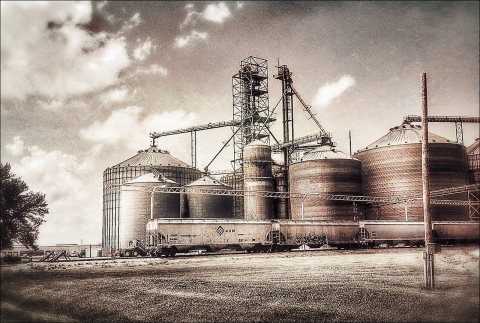
The site of Gibson City was purchased and platted by Jonathan B. Lott in 1869. In 1870, Lott built a home and a post office there, and several stores and a grain elevator were constructed. Lott named the place Gibson after the maiden name of his wife, Margaret Gibson Lott, and City was added later by the post office department. Both the Gilman, Clinton and Springfield Railroad and the Chicago and Paducah Railroad reached the town in 1871, allowing its population to grow. Gibson City was incorporated as a village in 1872, with T. D. Spalding, J. H. Collier, S. J. LeFevre, Bruce McCormick, and W. T. Kerr serving as the first trustees. Spalding acted as the first village president (mayor). A third railroad, the LaFayette, Muncie and Bloomington Railroad, was built through Gibson City in 1874. In the same year, one of the railroads signed a contract that paid Augustana College, located in P…
Passages that mention Gibson City, cut from the printed page as they were published.
History of Ford County, Illinois1908 · page 237Read the page →
Read the text
The original Drummer Grove schoolhouse, which had been moved to Gibson City in 1872, soon became too small to accommodate the rapidly increasing school population of the enterprising young city, and it was found necessary to provide a larger building. The people of Gibson City, therefore, who, by the way, were never known to do anything in a half-way manner, erected, in 1874. a large and substantial brick building, at a cost of eight thousand dollars, with foul" elegant rooms. But so rapid was the increase in population that it became necessary to provide more room. Another schoolhouse was erected in 1882, and
Text read by machine from the scan; it may contain errors.
History of Ford County, Illinois1908 · page 122Read the page →
Read the text
On making application for a postoffice of the same name, the department added the word "city" on account of the similarity of the name Avith Gilson, Illinois; hence the name of the town as platted is Gibson, and the postoffice is Gibson City. The first inhabitants of the town were J. B. Lott and wife. The first commercial business done in the town was commenced by William Moyer, December 1, 1870. He opened a grain office, which business he followed for a number of years. Commencing with a very moderate capital, by atten-
Text read by machine from the scan; it may contain errors.
Scans and text from the Internet Archive. Books published in 1930 or earlier, which are in the public domain.
Timeline
Gibson City, 1869 to 1928
Woven from the archive, old maps, post office records, the National Register and the people born here.
National Park Service, National Register of Historic Places. Photos from Wikimedia Commons, credited on each place’s page.
People over time
Gibson City, census by census
Between 1,260 and 3,498 people in every census since 1880.
15 censuses, 1880–2020.
U.S. Census Bureau decennial counts, from the census table on Gibson City’s Wikipedia page.
Places that used to be
Places now gone and burying grounds
Gibson City’s post office has been open since 1871.
Gone or out of use
Gibson Schoolschool
1cemetery inside Gibson City
Drummer Township
US Post Offices dataset (Blevins & Helbock, CC0). Places and cemeteries from the USGS Geographic Names Information System (2021).
Questions about Gibson City’s history
What year was Gibson City founded?
In 1869, according to Wikidata. Gibson City’s post office opened in 1871, and the census of 1880 counted 1,260 people here.
How does Gibson City rank for history?
Gibson City is more historic than 71% of U.S. towns, #257 of 768 in Illinois. The History grade combines the town’s founding era, the share of homes built before 1940 and its National Register listings. It’s a character grade, so it isn’t part of the overall grade. How it works.
What is on the National Register in Gibson City?
One place: the Alfred Phillips House (listed 1999).
How old are the homes in Gibson City?
34% of Gibson City’s homes were built before 1940 (Census estimate, ±9.8 points), against a typical 11% for an Illinois town; the median home was built in 1956.
Founding dates: Wikidata, Wikipedia, the U.S. post office records of Blevins & Helbock (CC0) and the Census. Homes by year built: Census ACS 2020–24. National Register of Historic Places: National Park Service (list of May 22, 2026). Old photos, postcards and papers: Wikimedia Commons, the Library of Congress and other public archives, credited on each item’s page. Maps: U.S. Geological Survey historical topographic maps (via Esri) and Sanborn fire-insurance maps (Library of Congress). History text and census tables: Wikipedia (CC BY-SA 4.0). Places that used to be: USGS Geographic Names Information System (2021).
From Wikimedia Commons (8), Wikidata (1), the National Register of Historic Places (1), Wikipedia, U.S. Geological Survey historical maps, U.S. Census counts (via Wikipedia), the US Post Offices dataset (Blevins & Helbock), the USGS Geographic Names Information System, Sanborn fire insurance maps (Library of Congress) and old county and town histories (Internet Archive). Archive images are copied here with their credits and licenses, shown on each photo’s page. Refreshed monthly.


 2020
 2015
 2014
 2011
 2011
 2011
 2008
 2006


