Dixon dates to 1828, and 32% of its homes were built before 1940
More historic than 96% of U.S. towns · #29 of 768 in Illinois. What drives it
5 places in town are on the National Register, among them a historic district with 102 buildings. Below: 11 old photos and papers, maps from 1885 on, and the census since 1840.
Founding year: Wikidata. First post office: 1842.The full story ↓
History grade
What drives Dixon’s History grade
On its age, its old homes and the National Register, Dixon is more historic than 96% of U.S. towns, #29 of 768 in Illinois. All 3 inputs are above most U.S. towns; its National Register listings ranks highest and its age lowest.
A+
HistoryA character grade: shown, never part of Dixon’s overall grade.
Few Illinois towns list much on the Register (a typical Illinois town has 0.5 per 10,000 residents, the U.S. 2.4), so Dixon’s 70.4 sits above most of its state (92% of Illinois towns have fewer) while its 105 historic buildings outnumber those of 90% of U.S. towns.
How sure. Graded on any two of the three inputs instead, the letter would range from A to A+. The pre-1940 share is a Census survey estimate (±4.3 points). Two sources give 1828.
Founding year: Wikidata (other dates in Quick answers). Homes: Census ACS 2020–24. National Register: National Park Service, May 2026 list; each listing counted once (boundary changes and added documentation belong to their listing), and a historic district counts its contributing buildings. How TownRatings grades history →
What stands out about Dixon’s past
Read from the archive, the National Register and the record. The page puts what stands out first.
National Park Service, National Register of Historic Places. Photos from Wikimedia Commons, credited on each place’s page.
Every building
Dixon, building by building, 1885–1918
Fire insurance maps drew every building, what it was made of and what it was used for, so insurers could price the risk of fire. Pick a year, then a sheet.
Around 1828, Joseph Ogee, a man of mixed French and Native American descent, established a ferry and a cabin along the banks of the Rock River. In 1829, an employee of Ogee was named postmaster at the newly constructed post office. John Dixon, the eponymous founder, bought Ogee's Ferry in the spring of 1830 and brought his family to his newly purchased establishment on April 11 of that year. Shortly after, the name of the post office was changed to Dixon's Ferry.
On May 4, 1873, the Truesdell Bridge collapsed resulting in the deaths of 46 people. About 150-200 people were on the bridge in order to watch a baptism ceremony in the river below.
The first settlers of Dixon township have received some notice in connection with the early settlement of Dixon's Ferry. Outside of the city of Dixon we find the first settlements embraced in the present township of Dixon began in the fall or winter of 1834. Dr.
Text read by machine from the scan; it may contain errors.
History of Lee County, Illinois1914 · page 449Read the page →
Read the text
In the treatment of the township of Dixon, manifestly, little can be said of the olden day because for most of its history, the township was included within the township of Dixon, and most of the old time history jDcrtained to Dixon and has been told already.
Text read by machine from the scan; it may contain errors.
county of Lee at the town of Dixon ; and have stuck the stake for the place or point at which the public buildings shall be erected on the quarter section composed of the west half of the northwest quarter of the section four, township number twentj'-one, i-ange nine east, of the 4th principal meridian, and tiie east half of the northeast quarter of section number five, same township and rano'e aforesaid. And we further report that the pi'oprietors and owners of lots in the aforesaid town of Dixon liave executed cer-
Text read by machine from the scan; it may contain errors.
History of Lee County, Illinois1914 · page 254Read the page →
Read the text
In 1834 a Government survey was made of the present township of Dixon and shortly thereafter Mr. Dixon entered from the Government and afterwards acquired patents to the lands now comprising the "original town" of Dixon and the "original town" of North Dixon.
Text read by machine from the scan; it may contain errors.
Scans and text from the Internet Archive. Books published in 1930 or earlier, which are in the public domain.
Timeline
Dixon, 1828 to 1998
Woven from the archive, old maps, post office records, the National Register and the people born here.
Nothing in the archives for these yearsWeddings on Main Street, storms, parades, school pictures, the old store. If it’s in your family album, it belongs here.
In 1828, according to Wikidata. Dixon’s post office opened in 1842, and the census of 1840 counted 725 people here.
How does Dixon rank for history?
Dixon is more historic than 96% of U.S. towns, #29 of 768 in Illinois. The History grade combines the town’s founding era, the share of homes built before 1940 and its National Register listings. It’s a character grade, so it isn’t part of the overall grade. How it works.
What is on the National Register in Dixon?
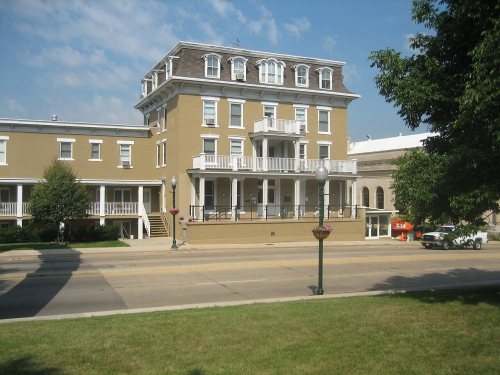
5 listings: 3 buildings, among them the William H. Van Epps House (listed 1982, the first), 1 historic district, the Dixon Downtown Historic District, with 102 contributing buildings, and 1 structure. 105 historic buildings in all.
How old are the homes in Dixon?
32% of Dixon’s homes were built before 1940 (Census estimate, ±4.3 points), against a typical 11% for an Illinois town; the median home was built in 1954.
Founding dates: Wikidata, Wikipedia, the U.S. post office records of Blevins & Helbock (CC0) and the Census. Homes by year built: Census ACS 2020–24. National Register of Historic Places: National Park Service (list of May 22, 2026). Old photos, postcards and papers: Wikimedia Commons, the Library of Congress and other public archives, credited on each item’s page. Maps: U.S. Geological Survey historical topographic maps (via Esri) and Sanborn fire-insurance maps (Library of Congress). History text and census tables: Wikipedia (CC BY-SA 4.0). Places that used to be: USGS Geographic Names Information System (2021).
From Wikimedia Commons (9), the Library of Congress (3), the National Register of Historic Places (5), Wikipedia, Wikidata and Wikipedia for famous people, U.S. Geological Survey historical maps, U.S. Census counts (via Wikipedia), the US Post Offices dataset (Blevins & Helbock), the USGS Geographic Names Information System, Sanborn fire insurance maps (Library of Congress) and old county and town histories (Internet Archive). Archive images are copied here with their credits and licenses, shown on each photo’s page. Refreshed monthly.




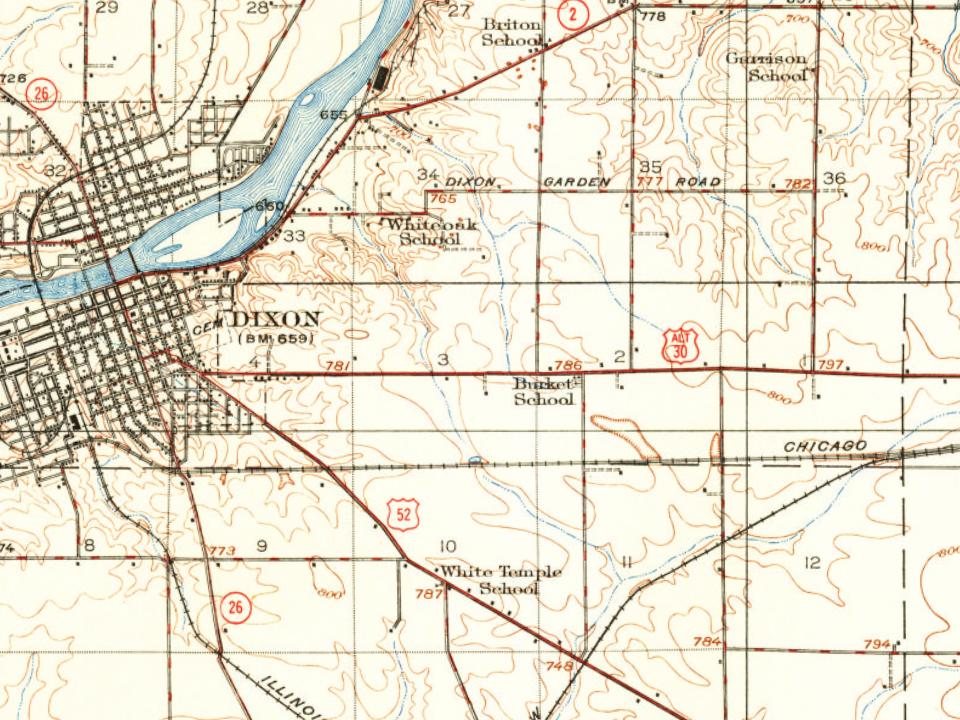




 1898
 1927
 1941
 1950
 1980
 2005

