Channahon’s post office opened in 1838, and 2 of its places are on the National Register
More historic than 59% of U.S. towns · #338 of 768 in Illinois. What drives it
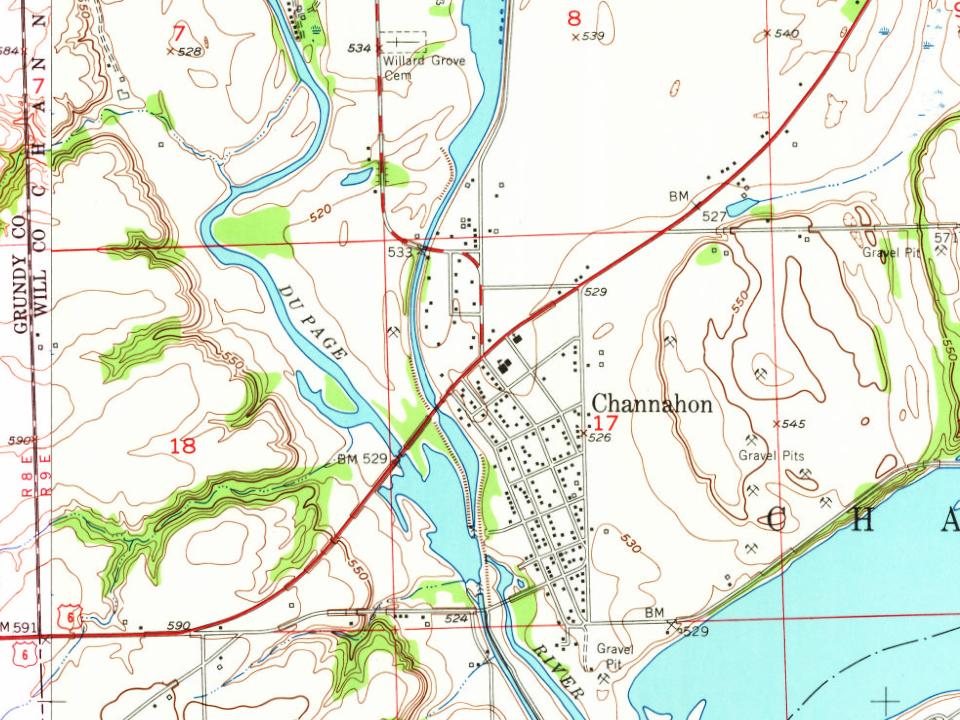
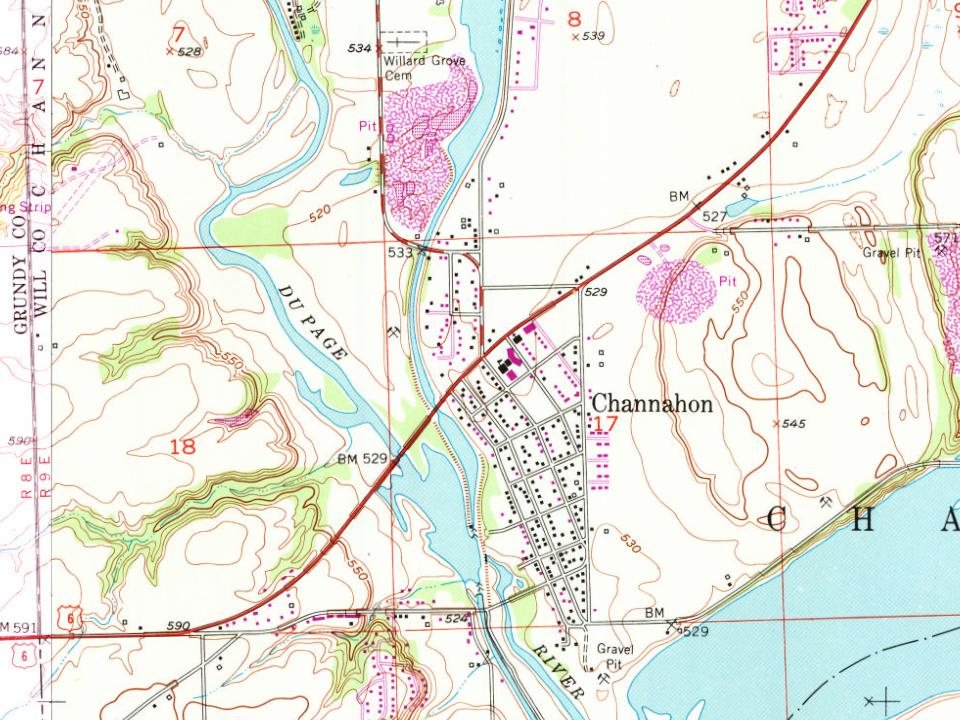
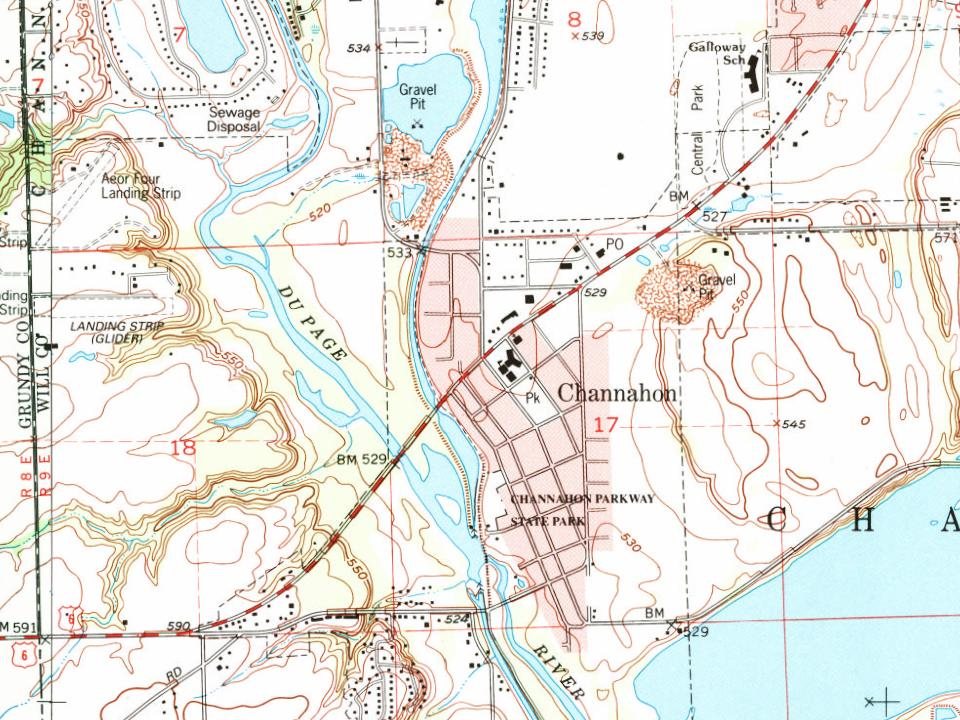
Most of Channahon was built recently: 1% of its homes predate 1940 and the median home dates from 2001. 2 places in town are on the National Register, among them two historic districts with 9 buildings between them. Below: 6 old photos and papers, maps from 1892 on, and the census since 1900.
The Channahon post office opened in 1838, the earliest record of the town by name. Wikidata gives 1961. Another post office, Dresden (1842), opened inside today’s town and later closed.
First census: 261 in 19002020 census: 13,383188 years
How historic is Channahon?
B
More historic than 59% of U.S. towns, on its age, its old homes and the National Register.
Founding year: the first Channahon post office (Blevins & Helbock, CC0). Wikidata: 1961.The full story ↓
History grade
What drives Channahon’s History grade
On its age, its old homes and the National Register, Channahon is more historic than 59% of U.S. towns, #338 of 768 in Illinois. Its National Register listings hold the grade up; its share of homes from before 1940 pulls it down.
B
HistoryA character grade: shown, never part of Channahon’s overall grade.
Few Illinois towns list much on the Register (a typical Illinois town has 0.5 per 10,000 residents, the U.S. 2.4), so Channahon’s 6.5 sits above most of its state (78% of Illinois towns have fewer) while its 9 historic buildings outnumber those of 75% of U.S. towns.
How sure. Graded on any two of the three inputs instead, the letter would range from C+ to A−. The pre-1940 share (±0.9 points) is firm at this size. The founding year is the first post office, not a stated founding date; Wikidata gives 1961.
Founding year: the first post office (other dates in Quick answers). Homes: Census ACS 2020–24. National Register: National Park Service, May 2026 list; each listing counted once (boundary changes and added documentation belong to their listing), and a historic district counts its contributing buildings. How TownRatings grades history →
What stands out about Channahon’s past
Read from the archive, the National Register and the record. The page puts what stands out first.
Archaeological evidence suggests that the land on which the village now stands was inhabited as long as three to four thousand years ago by Mound Builders. When white settlers arrived in the early 1830s, the region was populated by Potawatomi, with whom the early settlers had friendly relations. The settlers began to call the area "Channahon," a Potawatomi phrase translated as "meeting of the waters."
Passages that mention Channahon, cut from the printed page as they were published.
Souvenir of settlement and progress of Will County, Ill. A review of the lives of our presidents, political, military and commercial history of the United States and of the state of Illinois ... Business directory of Joliet ... Comp. specially for the peo1884 · page 386Read the page →
Read the text
labors in 1836. The following winter the old school-house on section 8 was erected. Treat's mill was subsequently built in 1838, and the neighborhood was the centre of settlement until the village of Channahon was laid out and the postoffice moved thereto. Channalwn Village. — This location was platted by Marvin Benjamin, 1845, under the name Duj^age. The proprietor erected a house on the plat, which was used as the hotel of the
Text read by machine from the scan; it may contain errors.
The history of Will County, Illinois, containing a history of the county ... a directory of its real estate owners1878 · page 597Read the page →
Read the text
The village of Channahon is situated on the Illinois & Michigan Canal, and on the Du Page River, a little above its junction with the Des Planes, and has the double advantage of a most excellent water-power, and a cheap freight transportation. It was laid out by Myrvin Benjamin, in 1845, and was called Du Page, after the first post office established in the township. During the building of the Canal, it is said that the Canal Trustees had something to do with the village, in some way or other, and called it " Swifton," after one of their number ; but this story is disputed by some of the old citizens of the place, who
Text read by machine from the scan; it may contain errors.
The history of Will County, Illinois, containing a history of the county ..1878 · page 597Read the page →
Read the text
The village of Channahon is situated on the Illinois & Michigan Canal, and on the Du Page River, a little above its junction with the Des Planes, and has the double advantage of a most excellent water-power, and a cheap freight transportation. It was laid out by Myrvin Benjamin, in 1845, and -was called Du Page, after the first post office established in the township. During the building of the Canal, it is said that the Canal Trustees had something to do with the village, in some way or other, and called it " Swifton," after one of their number ; but this story is disputed by some of the old citizens of the place, who
Text read by machine from the scan; it may contain errors.
The history of Will County, Illinois, containing a history of the county ... a directory of its real estate owners1878 · page 596Read the page →
Read the text
The sandstone quarries of Channahon furnish a very superior quality of building-stone, and were opened originally by Joseph Lewis, long one of the prominent business men of the village of Channahon. Another quarry of a similar character was opened and worked for a time by Patrick Conroy. None of these quarries are now in operation, a fact that seems strange, when we consider the excellent and cheap transportation of freights by way of the Illinois & Michigan Canal. With the apparently inexhaustible supply, the ease with which the stone is reached, it would be natural to suppose that this would be
Text read by machine from the scan; it may contain errors.
Scans and text from the Internet Archive. Books published in 1930 or earlier, which are in the public domain.
By decade
Channahon, decade by decade
2 decades in the archive, from the 1930s to the 1960s. Scroll each row; tap a photo for its story.
Nothing in the archives for these yearsWeddings on Main Street, storms, parades, school pictures, the old store. If it’s in your family album, it belongs here.
The Channahon post office opened in 1838, the earliest record of the town by name (U.S. post office records). Wikidata gives 1961.
How does Channahon rank for history?
Channahon is more historic than 59% of U.S. towns, #338 of 768 in Illinois. The History grade combines the town’s founding era, the share of homes built before 1940 and its National Register listings. It’s a character grade, so it isn’t part of the overall grade. How it works.
What is on the National Register in Channahon?
Two places: the Dresden Island Lock and Dam Historic District (listed 2004) and the Middle Avenue Historic District (2016).
How old are the homes in Channahon?
1% of Channahon’s homes were built before 1940 (Census estimate), against a typical 11% for an Illinois town; the median home was built in 2001.
Founding dates: Wikidata, Wikipedia, the U.S. post office records of Blevins & Helbock (CC0) and the Census. Homes by year built: Census ACS 2020–24. National Register of Historic Places: National Park Service (list of May 22, 2026). Old photos, postcards and papers: Wikimedia Commons, the Library of Congress and other public archives, credited on each item’s page. Maps: U.S. Geological Survey historical topographic maps (via Esri) and Sanborn fire-insurance maps (Library of Congress). History text and census tables: Wikipedia (CC BY-SA 4.0). Places that used to be: USGS Geographic Names Information System (2021).
From Wikimedia Commons (6), the National Register of Historic Places (2), Wikipedia, Wikidata and Wikipedia for famous people, U.S. Geological Survey historical maps, U.S. Census counts (via Wikipedia), the US Post Offices dataset (Blevins & Helbock), the USGS Geographic Names Information System and old county and town histories (Internet Archive). Archive images are copied here with their credits and licenses, shown on each photo’s page. Refreshed monthly.




 1933
 1936
 1968
 1968

