From the 1790s to the 1870s, the area around Cave-in-Rock was plagued by what historians as early as the 1830s referred to as the "Ancient Colony of Horse-Thieves, Counterfeiters and Robbers", and better known today due to Otto Rothert's book early in the 20th century as the "Outlaws of Cave-in-Rock".
In 1790, counterfeiters Philip Alston and John Duff (or John McElduff) used the cave as some type of rendezvous, though details are scarce. Although folklore printed in 19th century histories failed to establish a prior connection between the two men, both had lived in the area of Natchez, Mississippi, at the start of the Revolutionary War.
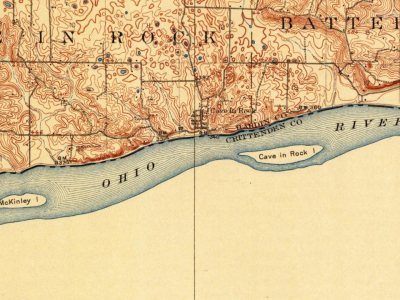
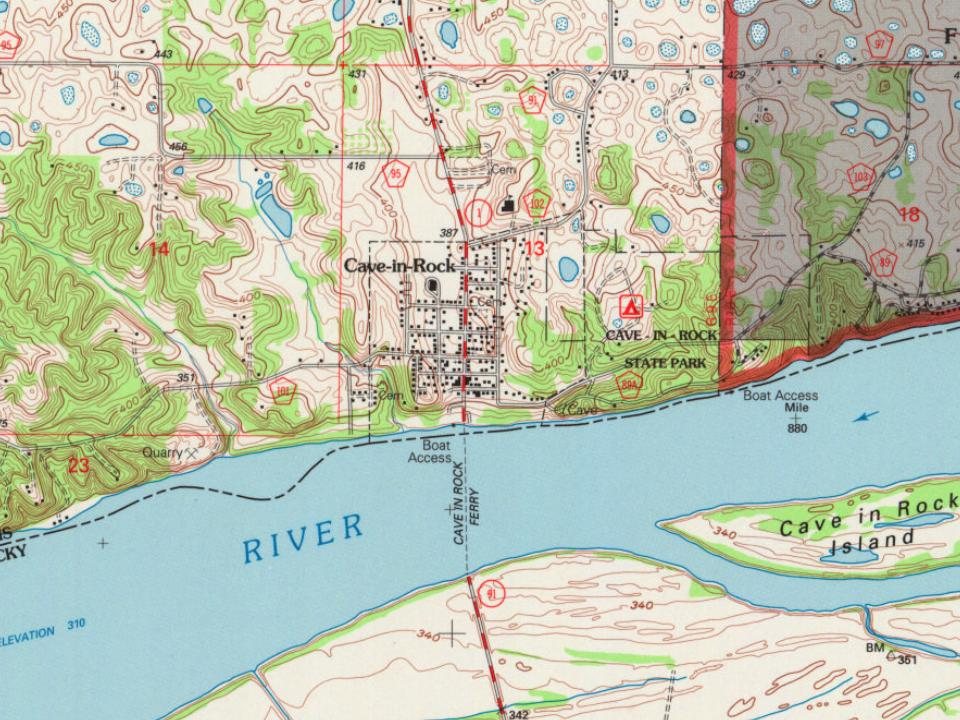
Founding dates: Wikidata, Wikipedia, the U.S. post office records of Blevins & Helbock (CC0) and the Census. Homes by year built: Census ACS 2020–24. National Register of Historic Places: National Park Service (list of May 22, 2026). Old photos, postcards and papers: Wikimedia Commons, the Library of Congress and other public archives, credited on each item’s page. Maps: U.S. Geological Survey historical topographic maps (via Esri) and Sanborn fire-insurance maps (Library of Congress). History text and census tables: Wikipedia (CC BY-SA 4.0). Places that used to be: USGS Geographic Names Information System (2021). How TownRatings grades history →
From the National Register of Historic Places (1), Wikipedia, U.S. Geological Survey historical maps, U.S. Census counts (via Wikipedia), the US Post Offices dataset (Blevins & Helbock) and the USGS Geographic Names Information System. Archive images are copied here with their credits and licenses, shown on each photo’s page. Refreshed monthly.