Sioux City dates to 1854, and 32% of its homes were built before 1940
More historic than 80% of U.S. towns · #50 of 140 in Iowa. What drives it
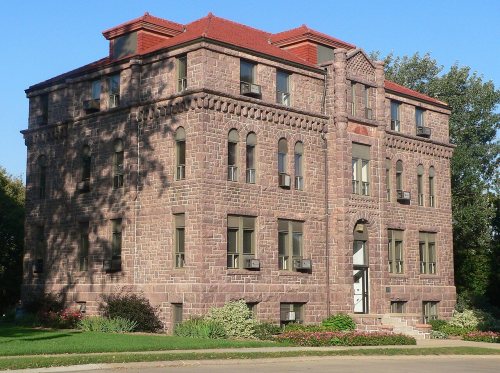
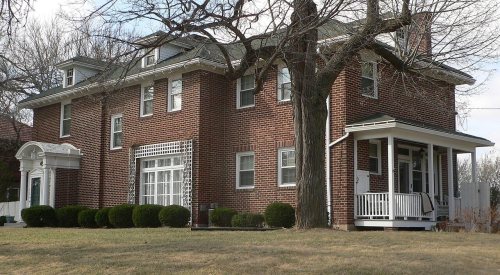
48 places in town are on the National Register, among them 3 National Historic Landmarks and five historic districts with 160 buildings between them. Below: 6 old photos and papers, maps from 1884 on, and the census since 1870.
Founding year: Wikidata; Wikipedia’s history section gives the same year. First post office: 1855.The full story ↓
History grade
What drives Sioux City’s History grade
On its age, its old homes and the National Register, Sioux City is more historic than 80% of U.S. towns, #50 of 140 in Iowa. Its share of homes from before 1940 holds the grade up; its age pulls it down.
A−
HistoryA character grade: shown, never part of Sioux City’s overall grade.
Iowa towns list more on the Register than most of the country (a typical Iowa town has 9.1 per 10,000 residents, the U.S. 2.4), so Sioux City’s 23.9 sits above most of its state (70% of Iowa towns have fewer) while its 206 historic buildings outnumber those of 93% of U.S. towns.
How sure. Graded on any two of the three inputs instead, the letter would range from B to A. The pre-1940 share (±1.6 points) is firm at this size. Two sources give 1854.
Founding year: Wikidata (other dates in Quick answers). Homes: Census ACS 2020–24. National Register: National Park Service, May 2026 list; each listing counted once (boundary changes and added documentation belong to their listing), and a historic district counts its contributing buildings. How TownRatings grades history →
What stands out about Sioux City’s past
Read from the archive, the National Register and the record. The page puts what stands out first.
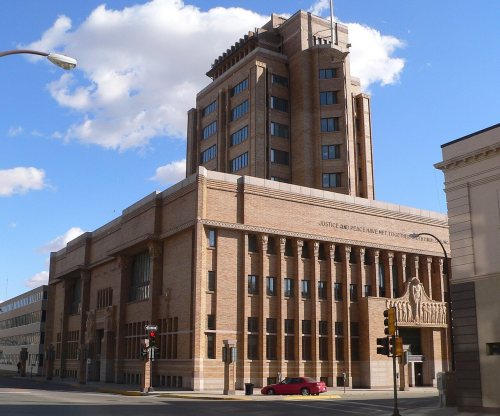
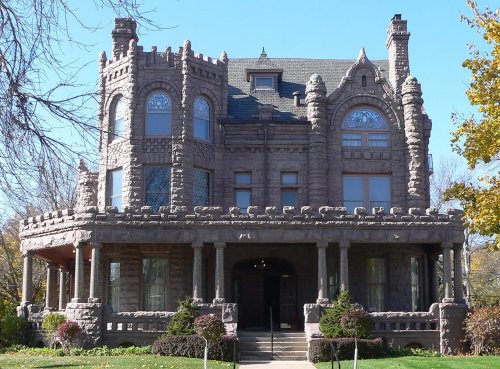
The country’s official list of buildings and places worth saving. 3 are National Historic Landmarks, the highest tier. Boundary changes and added documentation are counted with their listing.
National Park Service, National Register of Historic Places. Photos from Wikimedia Commons, credited on each place’s page.
Places that used to be
Lost post offices, old corners, places now gone and burying grounds
Sioux City’s post office has been open since 1855. Another post office, Leeds, opened and closed inside today’s town.
Sioux City
1855–today
Leeds
1890–1893
18501940today
Hamlets and corners on the map
Evergreen VillageHoliday VillageLeedsMorningsideMount LuciaRegency of Sioux CityRiversideSpringdaleTallview Terrace Mobile Home Park
Gone or out of use
InglesidelocaleLeedslocaleLeeds Post Officepost officeMarian Health Center Number 3 HeliportairportMorningsidelocaleSioux City Army Air BasemilitarySpringdalelocaleTwenty-Seven Flags Golf Courselocale
8cemeteries and burying grounds inside Sioux City
CalvaryChief War Eagle MemorialFloydFloydGraceland ParkLogan ParkMemorial ParkMount Carmel
US Post Offices dataset (Blevins & Helbock, CC0). Places and cemeteries from the USGS Geographic Names Information System (2021).
Iowa is in the tallgrass prairie of the North American Great Plains, historically inhabited by speakers of Siouan languages.
The area of Sioux City was inhabited by Yankton Sioux when it was first reached by Spanish and French furtrappers in the 18th century. The first documented US citizens to record their travels through this area were Meriwether Lewis and William Clark during the summer of 1804. Sergeant Charles Floyd, a member of the Lewis and Clark Expedition, died here on August 20, 1804, the only death during the two and a half-year expedition.
Passages that mention Sioux City, cut from the printed page as they were published.
History of the counties of Woodbury and Plymouth, Iowa, including an extended sketch of Sioux City, their early settlement and progress to the present time1890 · page 744Read the page →
Read the text
Mr. Palmer built and is the chief owner of the Sioux City & Nebraska pontoon bridges, and is president of the Citizens' bank of South Sioux City, and director of the Commercial National bank of Sioux City. He is also extensively interested in several additions to Sioux City and South Sioux City, and is a large land owner in Nebraska, South Dakota and Iowa. In 1890 he grew over 1,700 acres of crops in the last named state.
Text read by machine from the scan; it may contain errors.
History of the counties of Woodbury and Plymouth, Iowa, including an extended sketch of Sioux City, their early settlement and progress to the present time1890 · page 530Read the page →
Read the text
Village of James. — James is a station on the Illinois Central, Omaha and Sioux City & Northern railroads, located on section thirty. It was platted May 26, 1876, by the railroad company. Frederick Prust built the first house on the plat in the summer of 1872.
Text read by machine from the scan; it may contain errors.
Scans and text from the Internet Archive. Books published in 1930 or earlier, which are in the public domain.
Timeline
Sioux City, 1832 to 1960
Woven from the archive, old maps, post office records, the National Register and the people born here.
Nothing in the archives for these yearsWeddings on Main Street, storms, parades, school pictures, the old store. If it’s in your family album, it belongs here.
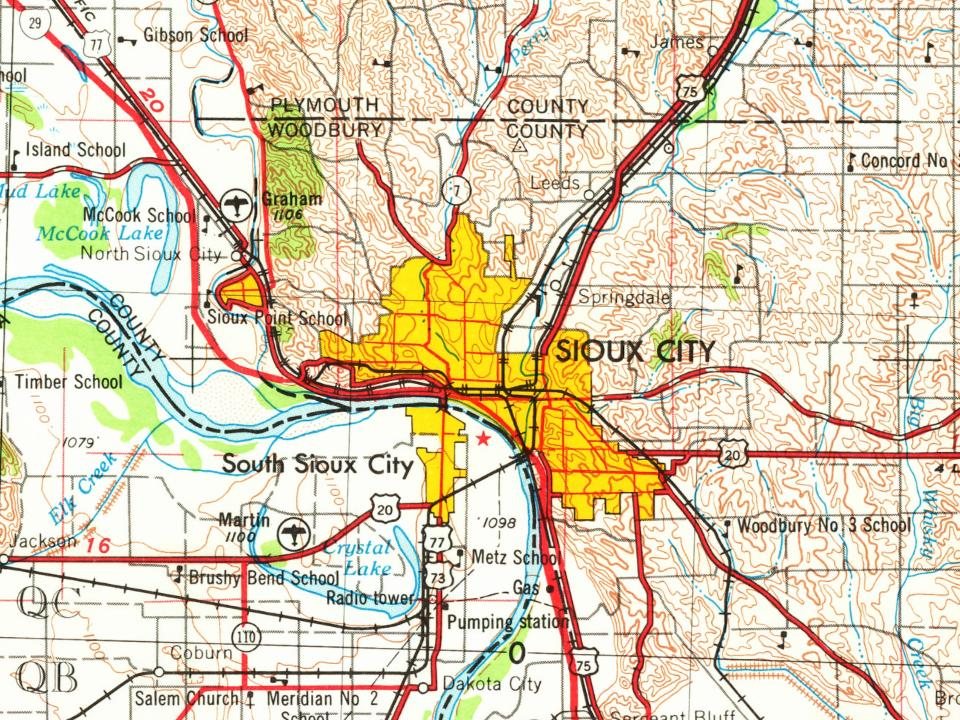
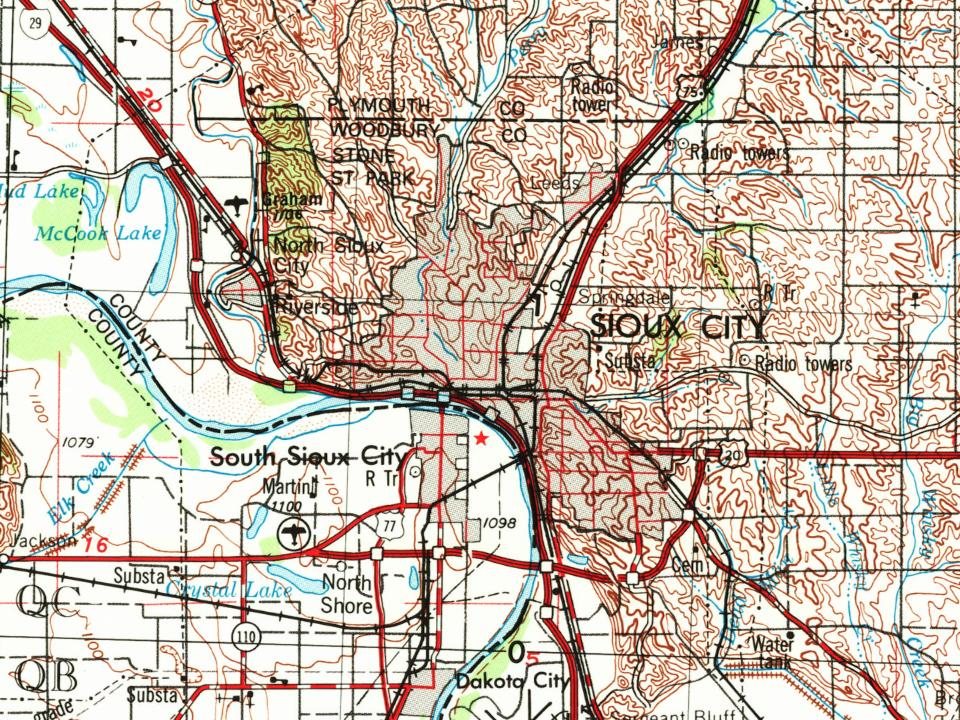
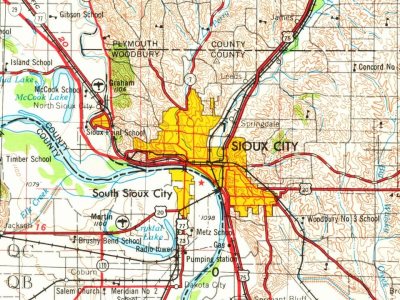
Every edition of the U.S. Geological Survey’s map of Sioux City. Tap a year, or press play to watch the town change.
1955Sioux City sheet · 1:250,000
U.S. Geological Survey historical topographic maps (public domain), via Esri’s collection of the scans. The red ring marks the center of Sioux City.
Every building
Sioux City, building by building, 1884–1902
Fire insurance maps drew every building, what it was made of and what it was used for, so insurers could price the risk of fire. Pick a year, then a sheet.
In 1854, according to Wikidata and Wikipedia’s history of the town. Sioux City’s post office opened in 1855, and the census of 1870 counted 3,401 people here.
How does Sioux City rank for history?
Sioux City is more historic than 80% of U.S. towns, #50 of 140 in Iowa. The History grade combines the town’s founding era, the share of homes built before 1940 and its National Register listings. It’s a character grade, so it isn’t part of the overall grade. How it works.
What is on the National Register in Sioux City?
48 listings, 3 of them National Historic Landmarks: 39 buildings, 5 historic districts with 160 contributing buildings, 1 site, and 4 structures. 206 historic buildings in all.
How old are the homes in Sioux City?
32% of Sioux City’s homes were built before 1940 (Census estimate, ±1.6 points), against a typical 22% for an Iowa town; the median home was built in 1957.
Founding dates: Wikidata, Wikipedia, the U.S. post office records of Blevins & Helbock (CC0) and the Census. Homes by year built: Census ACS 2020–24. National Register of Historic Places: National Park Service (list of May 22, 2026). Old photos, postcards and papers: Wikimedia Commons, the Library of Congress and other public archives, credited on each item’s page. Maps: U.S. Geological Survey historical topographic maps (via Esri) and Sanborn fire-insurance maps (Library of Congress). History text and census tables: Wikipedia (CC BY-SA 4.0). Places that used to be: USGS Geographic Names Information System (2021).
From Wikimedia Commons (6), the National Register of Historic Places (49), Wikipedia, Wikidata and Wikipedia for famous people, U.S. Geological Survey historical maps, U.S. Census counts (via Wikipedia), the US Post Offices dataset (Blevins & Helbock), the USGS Geographic Names Information System, Sanborn fire insurance maps (Library of Congress) and old county and town histories (Internet Archive). Archive images are copied here with their credits and licenses, shown on each photo’s page. Refreshed monthly.


 ★ Landmark
 ★ Landmark
 ★ Landmark







 1873
 1880