Marshalltown dates to 1853, and 30% of its homes were built before 1940
More historic than 79% of U.S. towns · #51 of 140 in Iowa. What drives it
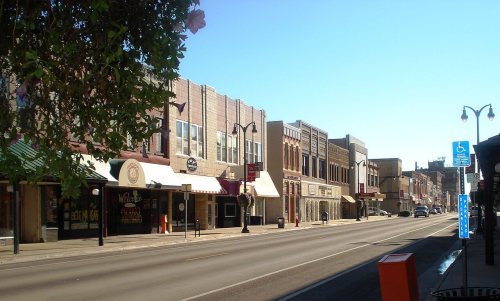
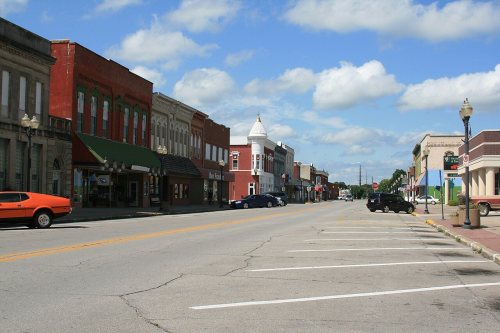
8 places in town are on the National Register, among them two historic districts with 112 buildings between them. Below: 6 old photos and papers, maps from 1884 on, and the census since 1860.
Founding year: Wikidata. First post office: 1854.The full story ↓
History grade
What drives Marshalltown’s History grade
On its age, its old homes and the National Register, Marshalltown is more historic than 79% of U.S. towns, #51 of 140 in Iowa. Its share of homes from before 1940 holds the grade up; its age pulls it down.
A−
HistoryA character grade: shown, never part of Marshalltown’s overall grade.
Iowa towns list more on the Register than most of the country (a typical Iowa town has 9.1 per 10,000 residents, the U.S. 2.4), so Marshalltown’s 42.7 sits above most of its state (73% of Iowa towns have fewer) while its 118 historic buildings outnumber those of 90% of U.S. towns.
How sure. Graded on any two of the three inputs instead, the letter would range from B to A. The pre-1940 share is a Census survey estimate (±3.2 points). Two sources give 1853.
Founding year: Wikidata (other dates in Quick answers). Homes: Census ACS 2020–24. National Register: National Park Service, May 2026 list; each listing counted once (boundary changes and added documentation belong to their listing), and a historic district counts its contributing buildings. How TownRatings grades history →
What stands out about Marshalltown’s past
Read from the archive, the National Register and the record. The page puts what stands out first.
National Park Service, National Register of Historic Places. Photos from Wikimedia Commons, credited on each place’s page.
Every building
Marshalltown, building by building, 1884–1921
Fire insurance maps drew every building, what it was made of and what it was used for, so insurers could price the risk of fire. Pick a year, then a sheet.
Henry Anson was the first European settler in what is now called Marshalltown. In April 1851, Anson found what he described as “the prettiest place in Iowa.” On a high point between the Iowa River and Linn Creek, Anson built a log cabin. A plaque at 112 West Main Street marks the site of the cabin. In 1853 Anson named the town Marshall, after Marshall, Michigan, a former residence of his.
The town became Marshalltown in 1862 because another Marshall already existed in Henry County (In 1880, Marshall's name changed to Wayland). With the help of Potawatomi chief Johnny Green, Anson persuaded early settlers to stay in the area. In the mid-1850s, Anson donated land for a county courthouse. Residents donated money for the building's construction.
Passages that mention Marshalltown, cut from the printed page as they were published.
History of Marshall county, Iowa1867 · page 123Read the page →
Read the text
There is a store owned by Mr. J. C. Smith of Eldora, formerly of Marshalltown, a blacksmith shop, postoffice, etc. Should the railroad ever be built from Eldora to Marshall, Bangor will become an important point, as it is one of the best farming regions of the West. The Methodists and Friends are about equally divided in numbers and influence ; the Sabbath Schools are in a flourishing condition.
Text read by machine from the scan; it may contain errors.
History of Marshall county, Iowa1867 · page 46Read the page →
Read the text
junction was procured from Judge Thompson, restraining the county judge from removing the records from Marietta, this. writ being held in reserve. These proceedings so exasperated the people of Marshalltown, that they filed information against Judge Smith and Justices Turner and Wallahan for dereliction of duty, and they were brought down to Marshalltown for trial before Justice Yeaman. On a writ of habeas corpus
Text read by machine from the scan; it may contain errors.
Scans and text from the Internet Archive. Books published in 1930 or earlier, which are in the public domain.
Timeline
Marshalltown, 1853 to 1980
Woven from the archive, old maps, post office records, the National Register and the people born here.
Nothing in the archives for these yearsWeddings on Main Street, storms, parades, school pictures, the old store. If it’s in your family album, it belongs here.
Nothing in the archives for these yearsWeddings on Main Street, storms, parades, school pictures, the old store. If it’s in your family album, it belongs here.
In 1853, according to Wikidata. Marshalltown’s post office opened in 1854, and the census of 1860 counted 981 people here.
How does Marshalltown rank for history?
Marshalltown is more historic than 79% of U.S. towns, #51 of 140 in Iowa. The History grade combines the town’s founding era, the share of homes built before 1940 and its National Register listings. It’s a character grade, so it isn’t part of the overall grade. How it works.
What is on the National Register in Marshalltown?
8 listings: 6 buildings, among them the Marshall County Courthouse (listed 1972, the first), and 2 historic districts, the Marshalltown Downtown Historic District and the Nevada Downtown Historic District, with 112 contributing buildings. 118 historic buildings in all.
How old are the homes in Marshalltown?
30% of Marshalltown’s homes were built before 1940 (Census estimate, ±3.2 points), against a typical 22% for an Iowa town; the median home was built in 1958.
Founding dates: Wikidata, Wikipedia, the U.S. post office records of Blevins & Helbock (CC0) and the Census. Homes by year built: Census ACS 2020–24. National Register of Historic Places: National Park Service (list of May 22, 2026). Old photos, postcards and papers: Wikimedia Commons, the Library of Congress and other public archives, credited on each item’s page. Maps: U.S. Geological Survey historical topographic maps (via Esri) and Sanborn fire-insurance maps (Library of Congress). History text and census tables: Wikipedia (CC BY-SA 4.0). Places that used to be: USGS Geographic Names Information System (2021).
From Wikimedia Commons (17), Wikidata (1), the National Register of Historic Places (8), Wikipedia, Wikidata and Wikipedia for famous people, U.S. Geological Survey historical maps, U.S. Census counts (via Wikipedia), the US Post Offices dataset (Blevins & Helbock), the USGS Geographic Names Information System, Sanborn fire insurance maps (Library of Congress) and old county and town histories (Internet Archive). Archive images are copied here with their credits and licenses, shown on each photo’s page. Refreshed monthly.




 1907
 1980
 2011
 2011
 2011
 2011
 2011
 2011
 2011
 2010
 2008
 2008
 2007


