Marion dates to 1839, and 13 of its places are on the National Register
More historic than 77% of U.S. towns · #54 of 140 in Iowa. What drives it
Most of Marion was built recently: 8% of its homes predate 1940 and the median home dates from 1994. 13 places in town are on the National Register, among them three historic districts with 99 buildings between them. Below: 3 old photos and papers, maps from 1883 on, and the census since 1860.
Founding year: Wikidata. First post office: 1840.The full story ↓
History grade
What drives Marion’s History grade
On its age, its old homes and the National Register, Marion is more historic than 77% of U.S. towns, #54 of 140 in Iowa. Its National Register listings hold the grade up; its share of homes from before 1940 pulls it down.
A−
HistoryA character grade: shown, never part of Marion’s overall grade.
Iowa towns list more on the Register than most of the country (a typical Iowa town has 9.1 per 10,000 residents, the U.S. 2.4), so Marion’s 26.7 sits above most of its state (71% of Iowa towns have fewer) while its 112 historic buildings outnumber those of 90% of U.S. towns.
How sure. Graded on any two of the three inputs instead, the letter would range from B to A−. The pre-1940 share (±1.8 points) is firm at this size. Two sources give 1839.
Founding year: Wikidata (other dates in Quick answers). Homes: Census ACS 2020–24. National Register: National Park Service, May 2026 list; each listing counted once (boundary changes and added documentation belong to their listing), and a historic district counts its contributing buildings. How TownRatings grades history →
What stands out about Marion’s past
Read from the archive, the National Register and the record. The page puts what stands out first.
The town was named after Francis Marion, a hero of the Revolutionary War. The site was selected in 1839 to be the first county seat of the newly organized Linn County. After years of debate over moving the county seat to Cedar Rapids, it was put to a vote in 1919. The vote was 9,960 in favor of moving the seat and 4,823 not in favor.
The current site of the Indian Creek Country Club was once the home of a sulky horse racing track.
Passages that mention Marion, cut from the printed page as they were published.
History of Marion County, Iowa, and its people1915 · page 10Read the page →
Read the text
Park C. Wilson, who was state mine inspector from 1880 to 1886, in speaking of Marion County coal, said: "In regard to Marion County as a coal county, I will say that while traveling over the dififerent coal counties for almost four years in the capacity of mine inspector, I have made a careful study, so far as possible, of their deposits, to determine their extent, and I am now firmly of the opinion that Marion County has the largest deposits of coal of any county in the state.
Text read by machine from the scan; it may contain errors.
History of Marion County, Iowa, and its people1915 · page 346Read the page →
Read the text
According to statistics taken from the Iowa Official Register, the Iowa Year Book and the United States census, Marion County has over fifteen hundred miles of telephone lines, approximately one hundred and twenty miles of railroad, twenty banks, eighteen money order postoffices, 1,948 farms of 144 acres each, two incorporated cities and eight incorporated towns. During the year 191 3 the sum
Text read by machine from the scan; it may contain errors.
Scans and text from the Internet Archive. Books published in 1930 or earlier, which are in the public domain.
Timeline
Marion, 1839 to 1989
Woven from the archive, old maps, post office records, the National Register and the people born here.
Nothing in the archives for these yearsWeddings on Main Street, storms, parades, school pictures, the old store. If it’s in your family album, it belongs here.
Fire insurance maps drew every building, what it was made of and what it was used for, so insurers could price the risk of fire. Pick a year, then a sheet.
1883Sheet 1 of 1
Edition
Sheets
BrickWoodStone
Sanborn Map Company, via the Library of Congress. Editions published in 1930 or earlier, which are in the public domain.
Then & now
Stand where they stood
No then-and-now pairs yet. Take a photo from the same spot as an old one and they appear here side by side.
Retake this viewBird's eye view of the city of Marion, Linn Co., Iowa 1868, 1868
Find the spot, match the angle, and add your photo. It becomes the first then-and-now pair on Marion’s page.
In 1839, according to Wikidata. Marion’s post office opened in 1840, and the census of 1860 counted 1,367 people here.
How does Marion rank for history?
Marion is more historic than 77% of U.S. towns, #54 of 140 in Iowa. The History grade combines the town’s founding era, the share of homes built before 1940 and its National Register listings. It’s a character grade, so it isn’t part of the overall grade. How it works.
What is on the National Register in Marion?
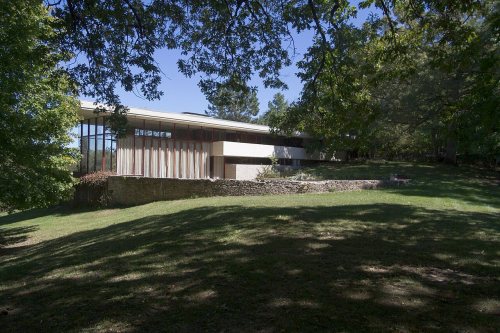
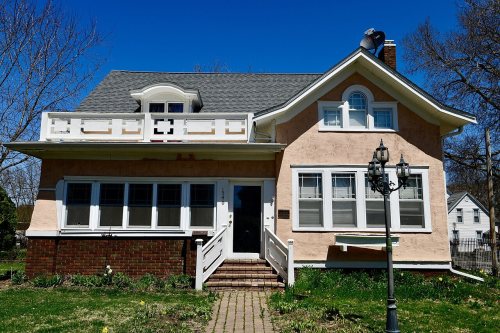
13 listings: 10 buildings, among them the Granger House (listed 1976, the first), and 3 historic districts, the Pucker Street Historic District, the Terrace Park Historic District and the Marion Commercial Historic District, with 99 contributing buildings. 112 historic buildings in all.
How old are the homes in Marion?
8% of Marion’s homes were built before 1940 (Census estimate, ±1.8 points), against a typical 22% for an Iowa town; the median home was built in 1994.
Founding dates: Wikidata, Wikipedia, the U.S. post office records of Blevins & Helbock (CC0) and the Census. Homes by year built: Census ACS 2020–24. National Register of Historic Places: National Park Service (list of May 22, 2026). Old photos, postcards and papers: Wikimedia Commons, the Library of Congress and other public archives, credited on each item’s page. Maps: U.S. Geological Survey historical topographic maps (via Esri) and Sanborn fire-insurance maps (Library of Congress). History text and census tables: Wikipedia (CC BY-SA 4.0). Places that used to be: USGS Geographic Names Information System (2021).
From Wikimedia Commons (2), the Library of Congress (1), Wikidata (3), the National Register of Historic Places (13), Wikipedia, Wikidata and Wikipedia for famous people, U.S. Geological Survey historical maps, U.S. Census counts (via Wikipedia), the US Post Offices dataset (Blevins & Helbock), the USGS Geographic Names Information System, Sanborn fire insurance maps (Library of Congress) and old county and town histories (Internet Archive). Archive images are copied here with their credits and licenses, shown on each photo’s page. Refreshed monthly.






 1907
