Guest, Sign inJoin

Post to Denmark

We’ll email a one-tap link to publish your post. No password, and nothing is public until you click it.
Already a member? Sign in
Denmark IowaPhoto: Billwhittaker at English Wikipedia · CC BY-SA 3.0
–Not graded
History · Denmark

Denmark dates to 1837, and 19% of its homes were built before 1940

Its Register listings are the Denmark Congregational Church and the Hosea S. and Elizabeth Case House. Below: 1 old photo or paper, maps from 1964 on, and old-book passages.

1837founded
2on the National Register
19%homes built before 1940
1old photo or paper
2famous people
From Denmark’s archive · credits on each photo
Quick answers

How Denmark began

When was Denmark founded?

1837

Denmark dates its founding to 1837 (Wikipedia’s history). Its post office opened in 1846.

2020 census: 425189 years
Founding year: Wikipedia. First post office: 1846.The full story ↓

What stands out about Denmark’s past

Read from the archive, the National Register and the record. The page puts what stands out first.

★ What stands out · Help out

Start Denmark’s collection

The first neighbors to add old photos shape how Denmark’s history is told.

Decades since 1900 with photos
00s10s20s30s40s50s60s70s80s90s
0 of 10 decades. The empty ones are waiting for someone’s album.
Timeline

Denmark, 1837 to 1964

Woven from the archive, old maps, post office records, the National Register and the people born here.

  1. 19th century
  2. 1837
    FoundingDenmark is established
  3. 1846Post officeThe Denmark post office opens
  4. 1859Born hereFrank Leverett is born here
  5. 1873Born hereAlbert Henry Krehbiel is born here
  6. 20th century
  7. 1964On the mapFirst mapped by the U.S. Geological Survey
The story

How Denmark came to be

From Wikipedia’s history of Denmark.

Read it all →

In 1836, four families emigrated from the town and church of New Ipswich, NH to Denmark in what was then Wisconsin Territory, now in Iowa. Within a short time they were followed by eight other families. They all carried with them the same standard of right living and wise planning for the best interest of those who should come after them that they had known in New Ipswich. Those who "laid out the town of Denmark, which is three-fourths of a mile square, into town lots for building, donated one-half of those lots to the purpose of Education." In the building of a church and of an academy they followed as closely as possible the example set by the founders of New Ipswich. The church set up by the settlers is the oldest Congregational church in Iowa. They were early known as champions of freedom. "Under the leadership of their pastor, Rev. Asa Turner, they joined with others in the electio…

Text from Wikipedia, licensed CC BY-SA 4.0.

From the old history books

What they wrote about Denmark in 1879

Passages that mention Denmark, cut from the printed page as they were published.

John 0. Smith, the present Postmaster at the village of Denmark, was the second settler. Mr. Smith was born in North Carolina, but spent most of his boyhood's days in Alabama, to which State his parents removed when he was quite young. In later yeai"s, he removed from Alabama to Hancock County, 111…
The history of Lee county, Iowa, containing a history of the county, its cities, towns, &c.1879 · page 406Read the page →
Read the text

John 0. Smith, the present Postmaster at the village of Denmark, was the second settler. Mr. Smith was born in North Carolina, but spent most of his boyhood's days in Alabama, to which State his parents removed when he was quite young. In later yeai"s, he removed from Alabama to Hancock County, 111., and came from Illinois to the Denmark country in March, 1835, and located a claim about one and a half miles east of the present site of the village of Denmark, in what is now Section 34.

Text read by machine from the scan; it may contain errors.
John 0. Smith, the present Postmaster at the village of Denmark, was the second settler. Mr. Smith was born in North Carolina, but spent most of his boyhood's days in Alabama, to which State his parents removed when he was quite young. In later years, he removed from Alabama to Hancock County, 111.…
The history of Lee County, Iowa1879 · page 406Read the page →
Read the text

John 0. Smith, the present Postmaster at the village of Denmark, was the second settler. Mr. Smith was born in North Carolina, but spent most of his boyhood's days in Alabama, to which State his parents removed when he was quite young. In later years, he removed from Alabama to Hancock County, 111., and came from Illinois to the Denmark country in March, 1835, and located a claim about one and a half miles east of the present site of the village of Denmark, in what is now Section 34.

Text read by machine from the scan; it may contain errors.
The business interests of the village of Denmark may be enumerated as follows : Three general stores, owned and managed, respectively, by George L.
The history of Lee County, Iowa1879 · page 674Read the page →
Read the text

The business interests of the village of Denmark may be enumerated as follows : Three general stores, owned and managed, respectively, by George L.

Text read by machine from the scan; it may contain errors.

Scans and text from the Internet Archive. Books published in 1930 or earlier, which are in the public domain.

By decade

Denmark, decade by decade

On the map

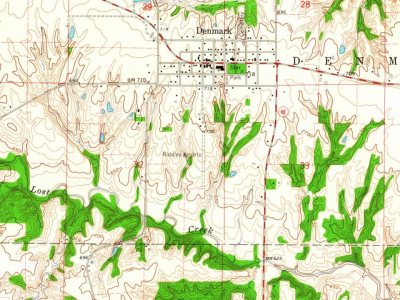
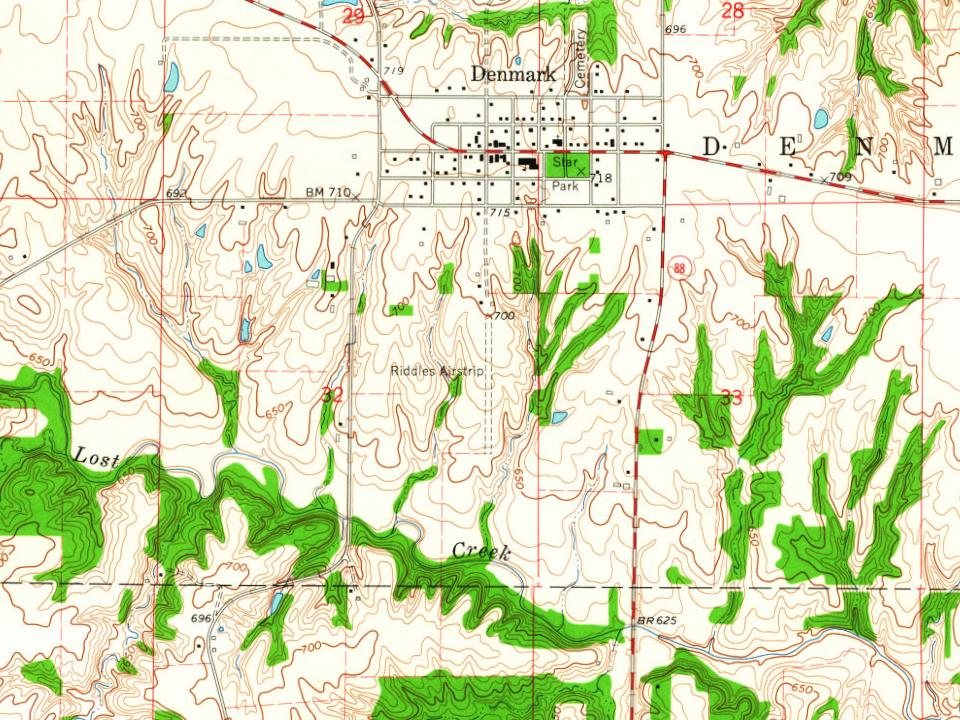
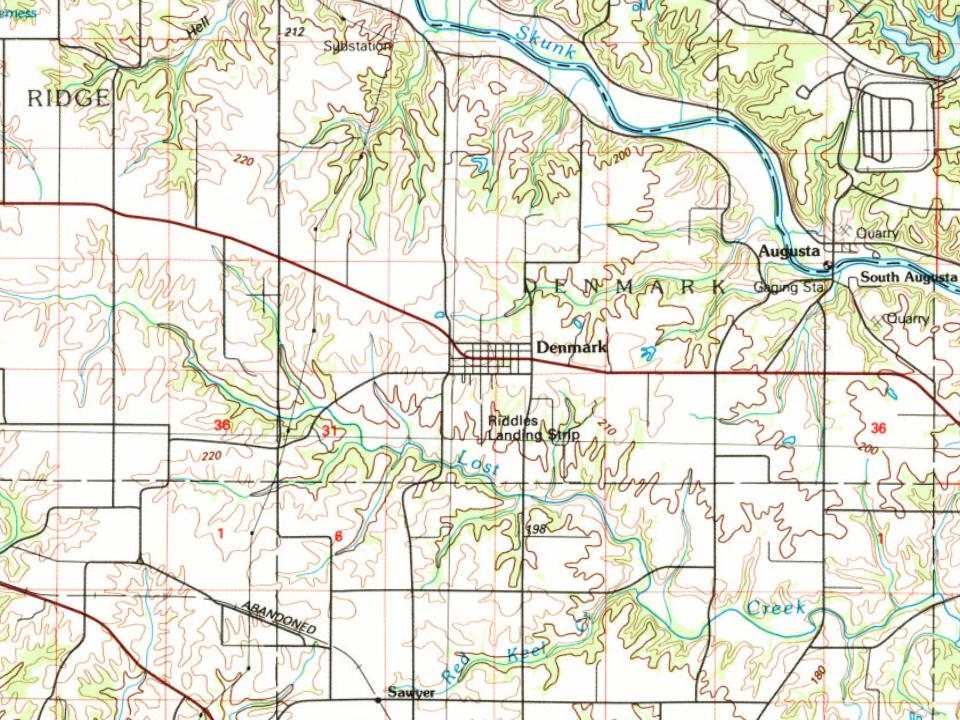
Denmark on the map, 1964 to 1985

Every edition of the U.S. Geological Survey’s map of Denmark. Tap a year, or press play to watch the town change.

Denmark on the 1964 USGS mapDenmark on the 1975 USGS mapDenmark on the 1985 USGS map1964Fort Madison sheet · 1:24,000

U.S. Geological Survey historical topographic maps (public domain), via Esri’s collection of the scans. The red ring marks the center of Denmark.

Then & now

Stand where they stood

No then-and-now pairs yet. Take a photo from the same spot as an old one and they appear here side by side.

Bridgeport Bridge, Spanning Skunk River
Retake this viewBridgeport Bridge, Spanning Skunk River

Find the spot, match the angle, and add your photo. It becomes the first then-and-now pair on Denmark’s page.

Retake this view · +15
On the National Register

2 historic places in Denmark

The country’s official list of buildings and places worth saving.

places listed
2
National Historic Landmarks
0
none yet
historic buildings protected
2
each building in a district counts
first listed
1977
Denmark Congregational Church
All 2 listings

National Park Service, National Register of Historic Places. Photos from Wikimedia Commons, credited on each place’s page.

Famous people

2 famous people were born in Denmark

Writers, athletes, leaders and more, ranked by how widely they’re known.

See all →
Places that used to be

Places now gone and burying grounds

Denmark’s post office has been open since 1846.

Gone or out of use
Riddles Airstripairport
1cemetery inside Denmark
Denmark

US Post Offices dataset (Blevins & Helbock, CC0). Places and cemeteries from the USGS Geographic Names Information System (2021).

Questions about Denmark’s history

What year was Denmark founded?

In 1837, according to Wikipedia’s history of the town. Denmark’s post office opened in 1846.

What is on the National Register in Denmark?

Two places: the Denmark Congregational Church (listed 1977) and the Hosea S. and Elizabeth Case House (2022).

Memory lane

What the archives can’t tell you, neighbors can.

Town Square →
Start a conversation
Sources

Where this page comes from

Founding dates: Wikidata, Wikipedia, the U.S. post office records of Blevins & Helbock (CC0) and the Census. Homes by year built: Census ACS 2020–24. National Register of Historic Places: National Park Service (list of May 22, 2026). Old photos, postcards and papers: Wikimedia Commons, the Library of Congress and other public archives, credited on each item’s page. Maps: U.S. Geological Survey historical topographic maps (via Esri) and Sanborn fire-insurance maps (Library of Congress). History text and census tables: Wikipedia (CC BY-SA 4.0). Places that used to be: USGS Geographic Names Information System (2021). How TownRatings grades history →

From Wikimedia Commons (1), the Library of Congress (1), the National Register of Historic Places (2), Wikipedia, Wikidata and Wikipedia for famous people, U.S. Geological Survey historical maps, the US Post Offices dataset (Blevins & Helbock), the USGS Geographic Names Information System and old county and town histories (Internet Archive). Archive images are copied here with their credits and licenses, shown on each photo’s page. Refreshed monthly.