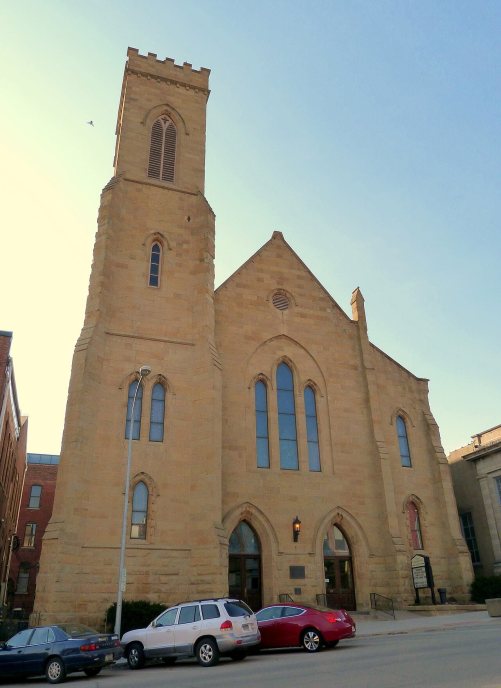
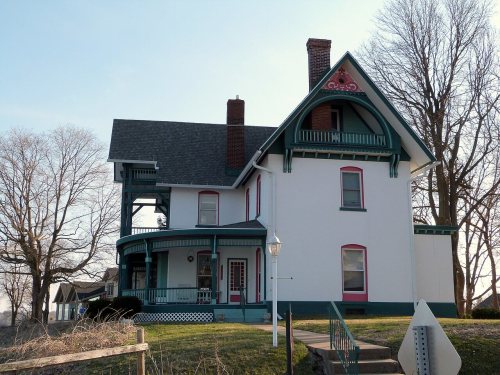
Burlington dates to 1833, and 40% of its homes were built before 1940
More historic than 97% of U.S. towns · #5 of 140 in Iowa. What drives it
29 places in town are on the National Register, among them eight historic districts with 309 buildings between them. Below: maps from 1888 on and the census since 1850.
Founding year: Wikidata. First post office: 1834.The full story ↓
History grade
What drives Burlington’s History grade
On its age, its old homes and the National Register, Burlington is more historic than 97% of U.S. towns, #5 of 140 in Iowa. All 3 inputs are above most U.S. towns; its share of homes from before 1940 ranks highest and its age lowest.
A+
HistoryA character grade: shown, never part of Burlington’s overall grade.
Iowa towns list more on the Register than most of the country (a typical Iowa town has 9.1 per 10,000 residents, the U.S. 2.4), so Burlington’s 139 sits above most of its state (87% of Iowa towns have fewer) while its 329 historic buildings outnumber those of 96% of U.S. towns.
How sure. Graded on any two of the three inputs instead, the letter would range from A to A+. The pre-1940 share is a Census survey estimate (±3.1 points). Two sources give 1833.
Founding year: Wikidata (other dates in Quick answers). Homes: Census ACS 2020–24. National Register: National Park Service, May 2026 list; each listing counted once (boundary changes and added documentation belong to their listing), and a historic district counts its contributing buildings. How TownRatings grades history →
What stands out about Burlington’s past
Read from the archive, the National Register and the record. The page puts what stands out first.
Prior to European settlement, the area was neutral territory for the Sauk and Meskwaki peoples, who called it Shoquoquon (Shok-ko-kon), meaning Flint Hills.
In 1803, President Thomas Jefferson organized two parties of explorers to map the Louisiana Purchase. The Lewis and Clark Expedition followed the Missouri River, while Lt. Zebulon Pike followed the Mississippi River. In 1805, Pike landed at the bluffs below Burlington and raised the United States Flag for the first time on what would become Iowa soil and recommended construction of a fort. The recommendation went unheeded.
Passages that mention Burlington, cut from the printed page as they were published.
History of Des Moines County, Iowa1915 · page 165Read the page →
Read the text
On March 29, 1849, a meeting of the qualified electors of the City of Burlington, composing School District No. 2 of the Township of Burlington, was called to meet at the Congregational Church in Burlington for the purpose of organization by virtue of a notice which reads as follows : "Burlington, March 19th, 1849.
Text read by machine from the scan; it may contain errors.
History of Des Moines County, Iowa1915 · page 353Read the page →
Read the text
buildings ; whether the county will construct or aid to construct any road, or bridge which may call for an extraordinary expenditure, etc." The other provisions of the law have reference to the levy of a tax, etc., to raise the money to pay for the amount of money borrowed. The Burlington and Missouri River Railroad Company was organized January 15, 1852, for the purpose of constructing a railroad from Burlington to the Missouri River. The connection of this company with the City of Burlington we have already written. The company was as anxious to get the people of the county interested in the proposition
Text read by machine from the scan; it may contain errors.
Scans and text from the Internet Archive. Books published in 1930 or earlier, which are in the public domain.
Timeline
Burlington, 1833 to 1971
Woven from the archive, old maps, post office records, the National Register and the people born here.
Every edition of the U.S. Geological Survey’s map of Burlington. Tap a year, or press play to watch the town change.
1934Burlington sheet · 1:62,500
U.S. Geological Survey historical topographic maps (public domain), via Esri’s collection of the scans. The red ring marks the center of Burlington.
Every building
Burlington, building by building, 1888–1900
Fire insurance maps drew every building, what it was made of and what it was used for, so insurers could price the risk of fire. Pick a year, then a sheet.
In 1833, according to Wikidata. Burlington’s post office opened in 1834, and the census of 1850 counted 4,082 people here.
How does Burlington rank for history?
Burlington is more historic than 97% of U.S. towns, #5 of 140 in Iowa. The History grade combines the town’s founding era, the share of homes built before 1940 and its National Register listings. It’s a character grade, so it isn’t part of the overall grade. How it works.
What is on the National Register in Burlington?
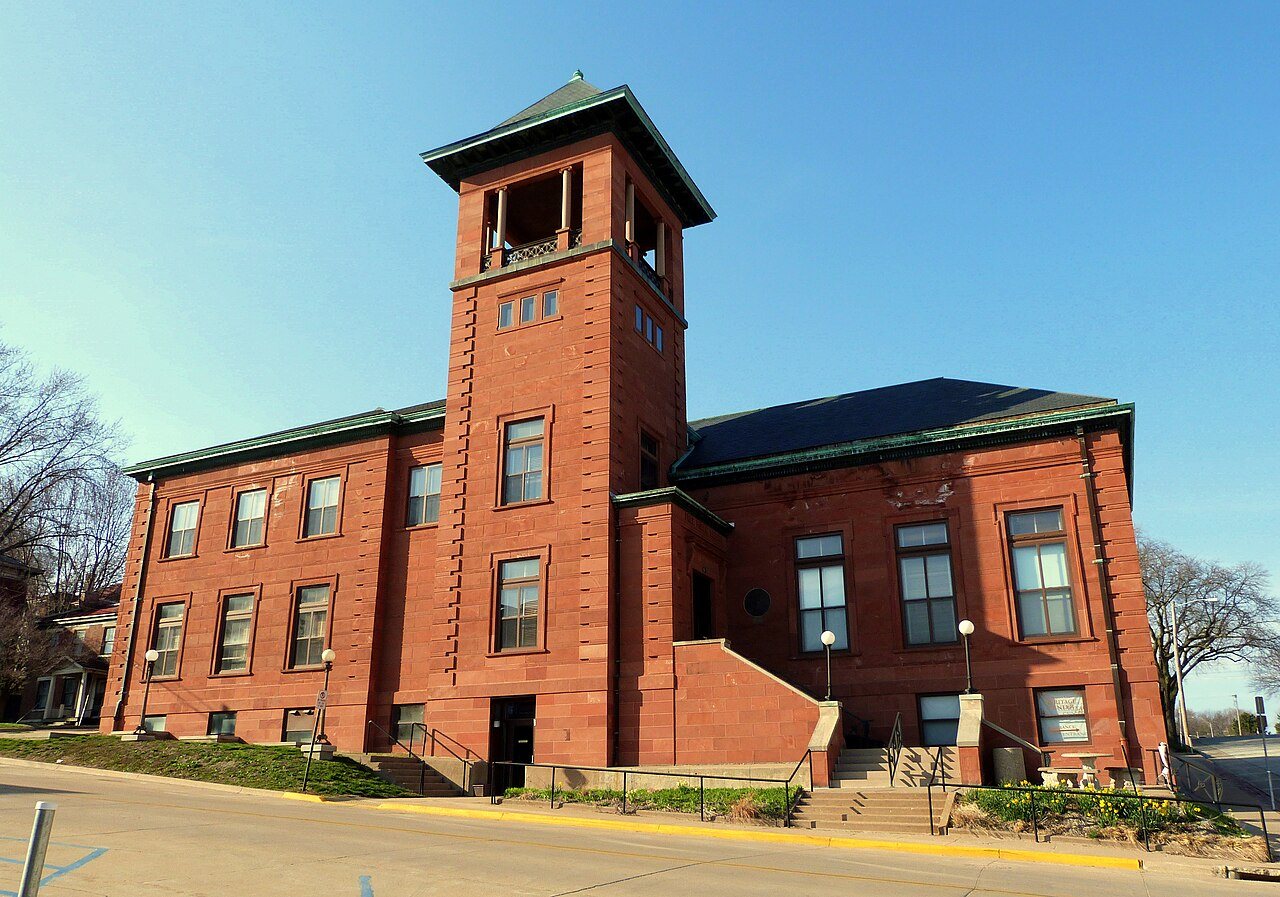
29 listings: 19 buildings, 8 historic districts with 309 contributing buildings, and 2 structures. 329 historic buildings in all.
How old are the homes in Burlington?
40% of Burlington’s homes were built before 1940 (Census estimate, ±3.1 points), against a typical 22% for an Iowa town; the median home was built in 1951.
Founding dates: Wikidata, Wikipedia, the U.S. post office records of Blevins & Helbock (CC0) and the Census. Homes by year built: Census ACS 2020–24. National Register of Historic Places: National Park Service (list of May 22, 2026). Old photos, postcards and papers: Wikimedia Commons, the Library of Congress and other public archives, credited on each item’s page. Maps: U.S. Geological Survey historical topographic maps (via Esri) and Sanborn fire-insurance maps (Library of Congress). History text and census tables: Wikipedia (CC BY-SA 4.0). Places that used to be: USGS Geographic Names Information System (2021).
From Wikidata (6), the National Register of Historic Places (29), Wikipedia, Wikidata and Wikipedia for famous people, U.S. Geological Survey historical maps, U.S. Census counts (via Wikipedia), the US Post Offices dataset (Blevins & Helbock), the USGS Geographic Names Information System, Sanborn fire insurance maps (Library of Congress) and old county and town histories (Internet Archive). Archive images are copied here with their credits and licenses, shown on each photo’s page. Refreshed monthly.