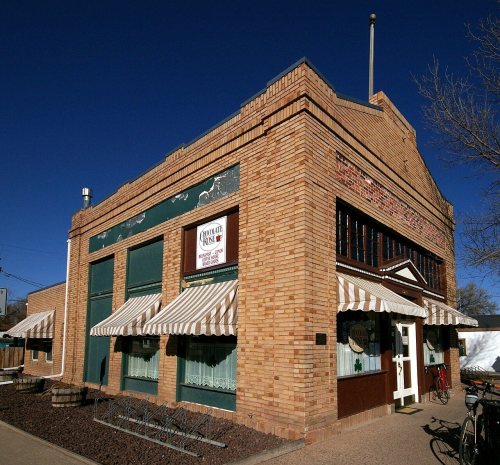
Wellington dates to 1902, and 1 of its places is on the National Register
More historic than 12% of U.S. towns · #113 of 159 in Colorado. What drives it
Most of Wellington was built recently: 0.1% of its homes predate 1940 and the median home dates from 2010. Its Register listing is the First National Bank Building. Below: 16 old photos and papers, maps from 1909 on, and the census since 1910.
Founding year: Wikidata; Wikipedia’s history section gives the same year. First post office: 1903.The full story ↓
History grade
What drives Wellington’s History grade
On its age, its old homes and the National Register, Wellington is more historic than 12% of U.S. towns, #113 of 159 in Colorado. Its National Register listings hold the grade up; its share of homes from before 1940 pulls it down.
D
HistoryA character grade: shown, never part of Wellington’s overall grade.
Few Colorado towns list much on the Register (a typical Colorado town has 1.1 per 10,000 residents, the U.S. 2.4), so Wellington’s 0.8 sits near the middle of its state (49% of Colorado towns have fewer) while its 1 listings outnumber those of 51% of U.S. towns.
How sure. Graded on any two of the three inputs instead, the letter would range from D− to C−. The pre-1940 share (±0.3 points) is firm at this size. Two sources give 1902.
Founding year: Wikidata (other dates in Quick answers). Homes: Census ACS 2020–24. National Register: National Park Service, May 2026 list; each listing counted once (boundary changes and added documentation belong to their listing), and a historic district counts its contributing buildings. How TownRatings grades history →
What stands out about Wellington’s past
Read from the archive, the National Register and the record. The page puts what stands out first.
Nothing in the archives for these yearsWeddings on Main Street, storms, parades, school pictures, the old store. If it’s in your family album, it belongs here.
The town was founded in 1902, incorporated in 1905, and named for C. L. Wellington (an employee of the Colorado and Southern Railroad). In the early 20th century, especially during the years of prohibition, Wellington doubled as a place to drink and a service town for drivers commuting from Cheyenne to Fort Collins and vice versa.
The town, more or less, sustained a population of 500 throughout the century which proceeded to build homes, restaurants, churches, and various other elements of small-town life. U.S. Supreme Court Justice Byron White lived in Wellington as a child. He made a point of returning to Wellington on an annual basis for his high school reunions up until 1999 when his physical health worsened significantly.
press of stability, showing that the people are prosperous, happy and contented. In 1903 the Colorado & Southern Railroad company extended its line of track from Fort Collins to Wellington, a distance of twelve miles, and from that town northwest to the town of Waverly, a distance of five miles, over which two daily passenger trains are operated. The town is incorporated and has its mayor,
Text read by machine from the scan; it may contain errors.
the Boxelder valley, but later when his little farm was needed for a reservoir site, he sold it and bought 80 acres situated a mile south of the present town of Wellington. He kept adding to his farm until now he owns 320 acres of as fine land as the state affords, all improved and under a high state of cultivation. He has a beautiful home and is one of the prosperous and stable citizens of the
Text read by machine from the scan; it may contain errors.
Scans and text from the Internet Archive. Books published in 1930 or earlier, which are in the public domain.
Timeline
Wellington, 1902 to 1960
Woven from the archive, old maps, post office records, the National Register and the people born here.
In 1902, according to Wikidata and Wikipedia’s history of the town. Wellington’s post office opened in 1903, and the census of 1910 counted 459 people here.
How does Wellington rank for history?
Wellington is more historic than 12% of U.S. towns, #113 of 159 in Colorado. The History grade combines the town’s founding era, the share of homes built before 1940 and its National Register listings. It’s a character grade, so it isn’t part of the overall grade. How it works.
What is on the National Register in Wellington?
One place: the First National Bank Building (listed 2000).
How old are the homes in Wellington?
0.1% of Wellington’s homes were built before 1940 (Census estimate), against a typical 2.5% for a Colorado town; the median home was built in 2010.
Founding dates: Wikidata, Wikipedia, the U.S. post office records of Blevins & Helbock (CC0) and the Census. Homes by year built: Census ACS 2020–24. National Register of Historic Places: National Park Service (list of May 22, 2026). Old photos, postcards and papers: Wikimedia Commons, the Library of Congress and other public archives, credited on each item’s page. Maps: U.S. Geological Survey historical topographic maps (via Esri) and Sanborn fire-insurance maps (Library of Congress). History text and census tables: Wikipedia (CC BY-SA 4.0). Places that used to be: USGS Geographic Names Information System (2021).
From Wikimedia Commons (18), the National Register of Historic Places (1), Wikipedia, U.S. Geological Survey historical maps, U.S. Census counts (via Wikipedia), the US Post Offices dataset (Blevins & Helbock), the USGS Geographic Names Information System, Sanborn fire insurance maps (Library of Congress) and old county and town histories (Internet Archive). Archive images are copied here with their credits and licenses, shown on each photo’s page. Refreshed monthly.


 1937
 1937
 1937
 1937
 1937
 1937
 1937
 1937
 1937
 1937
 1937
 1937
 1937
 1937
 1937
 1937
 2010
 2009