 Top
National Historic Site · 1892–1894Former Prince Albert City Hall1010 Central AvenuePhoto: Carolyn Carleton · CC BY-SA 3.0 · Commons file
 Former Prince Albert City Hall · Photo: Carolyn Carleton · CC BY-SA 3.0
11historic places on the registers
History of Prince Albert · Canada’s heritage registers
Prince Albert has 11 historic places on the registers, 3 in the top tier
Counted by designation, there are 7 Recognized Federal Heritage Buildings and a provincial or municipal listing. Former Prince Albert City Hall, begun in 1892, is the oldest by its record. As a municipality it dates, by Wikidata, from 1866, a date that can mark incorporation or a merger as well as a founding. Prince Albert has 2.7 for every 10,000 people, a higher rate than 89% of Canadian towns.
Historic places
11
2.7 per 10,000 residents
Highest designations
3
National Historic Sites and Classified Federal Heritage Buildings
Other federal designations
7
Recognized buildings, railway stations, lighthouses
Provincial and local listings
1
provincial and municipal listings with an encyclopedia article
Oldest building
1892
the first construction date on its record
Homes built before 1961
24%
typical town: 18%
Through time
Prince Albert, 1907 to 1916
Set out by date: 3 old photographs of the town. A tap on any picture opens it with its credit.
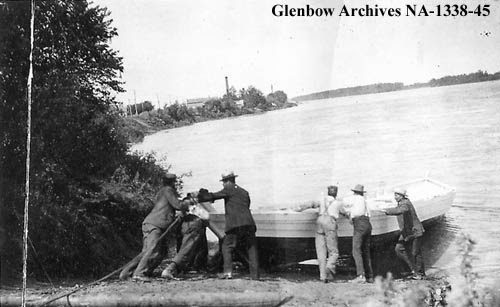 1907
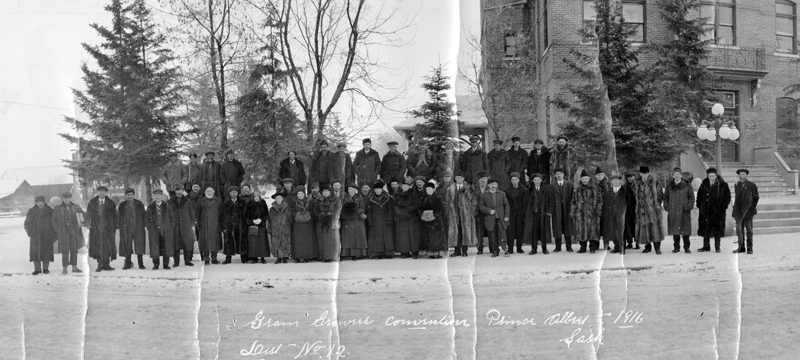 1916
 1916
Public domain or CC0, made before 1950, from Wikimedia Commons; old views of places can be drawings, prints or maps of their time. Each credit opens the image’s page.
The map
Where Prince Albert’s history is
Every place on the registers inside the town, by its designation.
Highest designationsProvincial and local listings
Dots open their places’ pages; hover first to read the name.
The 11, by tier
3 Highest designations7 Other federal designations1 Provincial and local listings
The federal directory kept by Parks Canada supplies most of these places; provincial and municipal lists outside Québec aren’t open data, so only the ones Wikidata documents with an article appear.
Points from Wikidata (Parks Canada’s files carry none) and from Québec’s register, as mapped there. 7 places, placed by their register’s municipality, have no point and aren’t on the map.
Highest designations
3 places in Prince Albert with the highest designation
Their dates run from 1892, with Former Prince Albert City Hall, to 1913. National Historic Sites and Classified Federal Heritage Buildings, Canada’s highest federal recognition. The first was designated in 1975, the latest in 2017. Each one opens its own page.
National Historic Site · 1912–1913The John and Olive Diefenbaker Museum246 19th Street West
National Historic Site · 1913–1914Keyhole Castle1925 1st Avenue East
Other federal designations
7 more federal designations in Prince Albert
Their dates run from 1914, with Armoury, to 1971. Recognized Federal Heritage Buildings, heritage railway stations and lighthouses. Designations came from 1988 to 2017. Each one opens its own page.
Recognized Federal Heritage Building · 1914–1916Armoury8 Avenue East / 10 Street East
Recognized Federal Heritage Building · 1922–1927Prince Albert Penitentiary, Northern Tower D-115th Street West
Recognized Federal Heritage Building · 1922–1927Prince Albert Penitentiary, Northern Tower D-415th Street West
Recognized Federal Heritage Building · 1922–1927Prince Albert Penitentiary, Southern Tower D-215th Street West
Recognized Federal Heritage Building · 1922–1927Prince Albert Penitentiary, Southern Tower D-315th Street West
Recognized Federal Heritage Building · 1926–1928North Field Tower15th Street West
Recognized Federal Heritage Building · 1971–1972South Wall Tower (D12)15th Street West
What’s designated
In Prince Albert, houses lead the list (18%)
Two of the highest-ranked are Former Prince Albert City Hall and The John and Olive Diefenbaker Museum. Its places fall into 5 kinds.
Houses2
Forts and military buildings1
Public buildings1
Theatres, museums and memorials1
Other places6
Kinds read from each place’s name and the functions its register gives; a building keeps the kind it was built as.
Provincial and local listings
One local listing in Prince Albert
Provincial and municipal listings that Wikidata records and an encyclopedia describes. Each one opens its own page.
Municipal heritage property · 1911Prince Albert Historical Museum
How old
Most of Prince Albert’s dated places come from the wars and the Depression
Each place by the first construction date on its record.
British North America 1760–18660
After Confederation 1867–19134
Wars and Depression 1914–19456
Since 1946 1946 on1
When designated
Designated in Prince Albert since 1975
The places by the year of their designation.
1960198020002020
The earliest designation is Keyhole Castle’s, from 1975. The busiest year was 2002, with 4. 2 have been added since 2011.
Homes by age
24% of Prince Albert’s homes are older than 1961, against a usual 18%
The largest single period is from 1961 to 1980, with 37% of Prince Albert’s homes. From 2016 to 2021 Prince Albert added 2.8% of its homes, less than the typical town’s 4.1%. Over half of the homes in Prince Albert were already standing by 1981.
24%
Before 1961
37%
1961–80
24%
1981–2000
12%
2001–15
2.8%
2016–21
Prince AlbertTypical town
2021 Census, private dwellings by period of construction (Statistics Canada); the typical town is the middle Canadian town of 2,500 or more.
Born here
Natives of Prince Albert from 1856 to 1909
Counting only births before 1914, there are 7. By Wikipedia’s reach, Thomas Clayton Davis leads, with 7 articles. At 91, Mona Gould outlived the rest, dying in 1999. 6 of the 7 were born in the decades after Confederation.
Tom Eck
Margaret Cuthbert
Thomas Clayton Davis
Bert Cadieu
George Weaver
Mona Gould
Selwyn Dewdney
18501875190019251950

Thomas Clayton Davis1889–1960 · Canadian politician and diplomat
BC
Bert Cadieu1903–1990 · Canadian politician
GW
George Weaver1908–1986 · Canadian politician
TE
Tom Eck1856–1926 · American athlete and sports coach
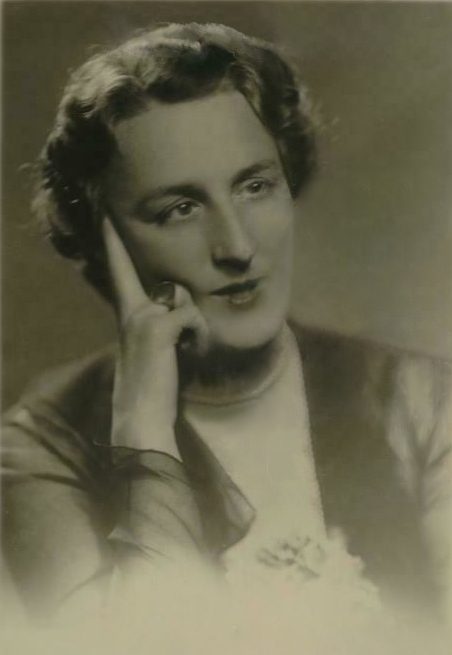
Margaret Cuthbert1887–1968 · Canadian/American pioneer radio executive

Mona Gould1908–1999 · Canadian poet
SD
Selwyn Dewdney1909–1979 · Canadian author and artist
Everyone born in Prince Albert → Born before 1914 (the page’s periods: Confederation to the First World War). Birthplaces from Wikidata, each checked against the person’s Wikipedia article.
Towns its size
Prince Albert has the 1st most of 16 towns its size
Towns of 38,700 to 42,100 residents, by places on the registers.
Prince Albert11
Their median is 0. 11 of them have nothing on the registers.
Neighbours
Prince Albert and its neighbours
| Town | People | Places | Highest | Oldest |
|---|---|---|---|---|
| Prince Albert | 40,728 | 11 | 3 | 1892 |
| Prince Albert No. 461 | 3,589 | 0 | 0 | — |
| Buckland No. 491 | 3,550 | 0 | 0 | — |
In brief
Prince Albert in brief
Prince Albert’s homes from before 1961 come to 24%, against 18% in the typical town. The count is 11 historic places, 3 with the highest designation. Of the 16 towns closest in size, it has the most historic places. Of the 11 with a date, 6 come from the wars and the Depression. Thomas Clayton Davis (1889), Bert Cadieu (1903) and George Weaver (1908) lead its people of the past.
How to read these numbers
What this data can and can’t tell you
- Protection. A National Historic Site designation recognises significance; it doesn’t by itself protect a building the federal government doesn’t own. Legal protection comes from provincial and municipal designations, whose own registers aren’t open data outside Québec.
- The tiers. Three tiers: the top for National Historic Sites, classified federal buildings and Québec’s classements, a second for the other federal designations, a third for provincial and municipal listings.
- Provincial and municipal lists. Provincial and municipal listings here come from Wikidata alone, since the provinces’ own registers can’t be reused; a listing needs an encyclopedia article to get a page.
- The federal register. The federal list is complete and open: Parks Canada’s directory for the designations, the Canadian Register of Historic Places for what each one is and why it matters.
- People and events. National historic persons carry no place in the open file. They appear on a town’s page when born there (same name, same birth and death years) or when a historic place inside it carries their name and its record names them with their dates; national historic events don’t appear.
- The grade. History is described, not graded, for every Canadian town.
- Map points. Pins for federal places come from Wikidata rather than Parks Canada, which gives no points.
Questions about Prince Albert’s history
Which places in Prince Albert have the highest designation?
These: Former Prince Albert City Hall, The John and Olive Diefenbaker Museum and Keyhole Castle.
What is the oldest building in Prince Albert?
Former Prince Albert City Hall, a National Historic Site, begun in 1892.
How old are the homes in Prince Albert?
The 2021 Census dates 24% of its homes before 1961 (18% in the typical town).
Contains information licensed under the Open Government Licence – Canada (Parks Canada).
Sources: Parks Canada, Directory of Federal Heritage Designations · Canadian Register of Historic Places (federal extract) · Wikidata (CC0) for map points, other names and articles · Statistics Canada, 2021 Census (homes by period of construction). Under the Statistics Canada Open Licence.
Adapted from Statistics Canada (Census of Population 2021, population estimates 2025, 2021 census boundaries) under the Statistics Canada Open Licence; this does not constitute an endorsement by Statistics Canada. Neighbourhood names in some cities © OpenStreetMap contributors (ODbL).