 Top
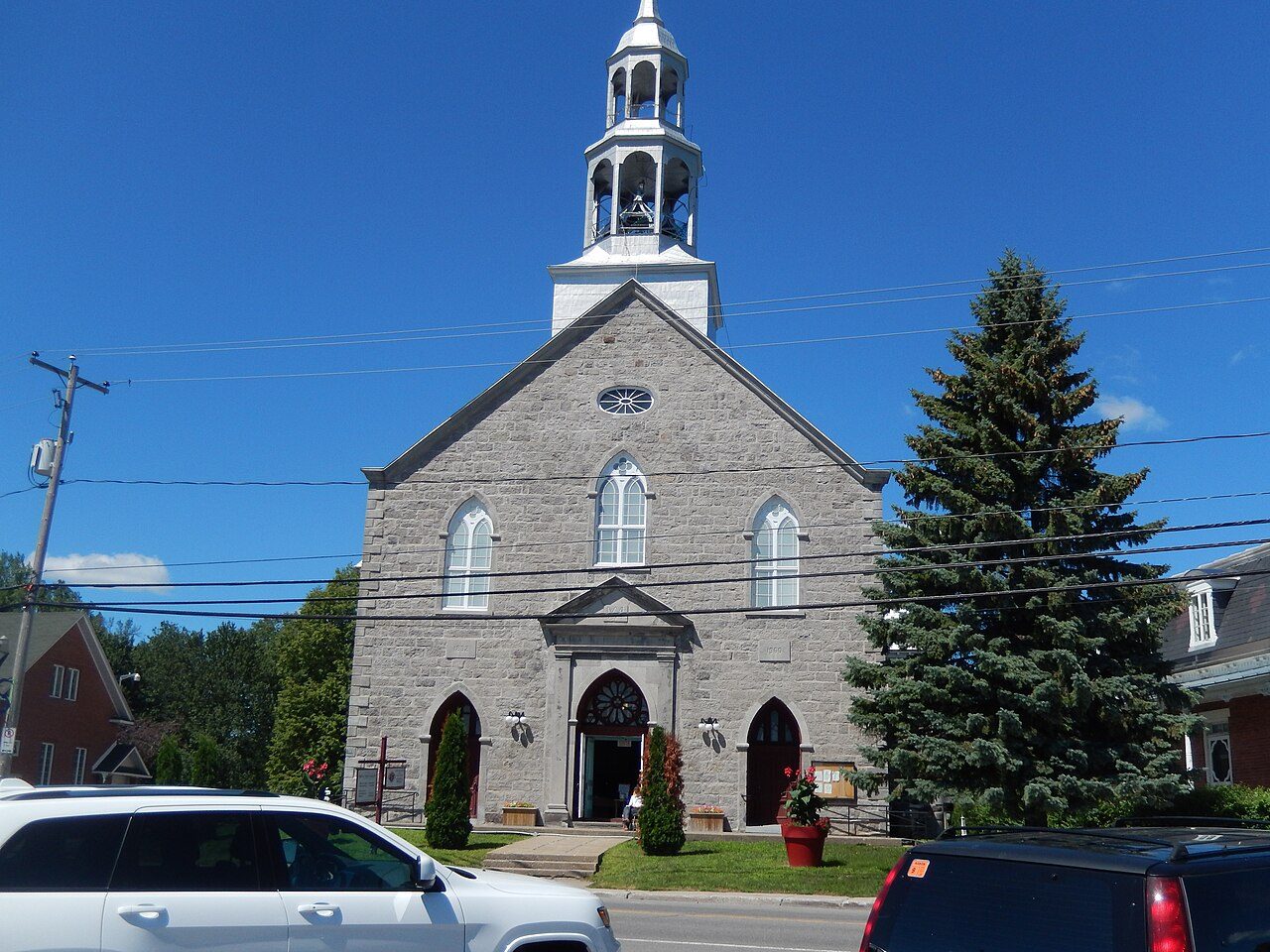
Classified heritage building (Québec) · 1830Chapelle de procession Notre-Dame-de-Pitiérue Notre-DamePhoto: Fralambert · CC BY-SA 4.0 · Commons file
 Chapelle de procession Notre-Dame-de-Pitié · Photo: Fralambert · CC BY-SA 4.0
2historic places on the registers
History of Saint-Sulpice · Canada’s heritage registers
Saint-Sulpice: 2 historic places, every one with the highest designation
Per resident Saint-Sulpice outdoes 95% of Canadian towns, with 5.4 for every 10,000 people. Go back to 1830 and you reach Chapelle de procession Notre-Dame-de-Pitié, the oldest of them. Wikidata gives July 1, 1855 for the municipality, whether that is when it was founded, incorporated or merged.
Historic places
2
5.4 per 10,000 residents
Highest designations
2
National Historic Sites, classified federal buildings and Québec’s classements
Oldest building
1830
the first construction date on its record
Homes built before 1961
13%
typical town: 18%
In pictures
Heritage Saint-Sulpice through 2 photographs
Both of Saint-Sulpice’s designated places are pictured. Among them: Chapelle de procession Notre-Dame-de-Pitié and Saint-Sulpice Church.
Photos from Wikimedia Commons, each credited to its photographer with its licence; names open the place’s page. Tap a photo to step through them full screen.
The map
Where Saint-Sulpice’s history is
Every place on the registers inside the town, by its designation.
Highest designations
Dots open their places’ pages; hover first to read the name.
The 2, by tier
2 Highest designations
Two open registers meet here: Parks Canada’s Directory of Federal Heritage Designations and Québec’s heritage register, which records both provincial classements and municipal citations.
Points from Wikidata (Parks Canada’s files carry none) and from Québec’s register, as mapped there.
Highest designations
2 places in Saint-Sulpice with the highest designation
National Historic Sites and Classified Federal Heritage Buildings, Canada’s highest federal recognition. They date from 1830 (Chapelle de procession Notre-Dame-de-Pitié) to 1831. Each one opens its own page.
 Top
Classified heritage building (Québec) · 1831–1832Saint-Sulpice Church1095 rue Notre-DamePhoto: Fralambert · CC BY-SA 4.0 · Commons file
Around the town
The highest designation, 3 times, within 5 km of Saint-Sulpice
The registers hold 6 within 5 km. Vieux palais de justice de L'Assomption in L'Assomption is the nearest, 4.2 km away. Among them are 3 places classified by Québec and 3 municipal citations.
The 6 nearest, within 5 km
| Vieux palais de justice de L'AssomptionClassified heritage building (Québec) · 1811–1822 · 4.2 km away, in L'Assomption |
| Site patrimonial du Collège-de-L'AssomptionClassified heritage site (Québec) · 1844 · 4.4 km away, in L'Assomption |
| Maison de la Culture de L'AssomptionMunicipal citation (Québec) · 1889 · 4.5 km away, in L'Assomption |
| Église de L'Assomption-de-la-Sainte-ViergeMunicipal citation (Québec) · 1819–1820 · 4.5 km away, in L'Assomption |
| Presbytère de L'Assomption-de-la-Sainte-ViergeMunicipal citation (Québec) · 1897 · 4.6 km away, in L'Assomption |
| Dansereau WindmillClassified heritage building (Québec) · 1822 · 4.8 km away, in Verchères |
Homes by age
Few of Saint-Sulpice’s homes are older than 1961: 13%, against 18%
Only 20% of Saint-Sulpice’s homes were built from 1961 to 1980, less than the typical town’s 27%. Homes built from 1981 to 2000 make up 46% of Saint-Sulpice’s, against 23% in the typical town. From 2016 on, Saint-Sulpice built only 3.1% of its homes; the typical town built 4.1%.
13%
Before 1961
20%
1961–80
46%
1981–2000
19%
2001–15
3.1%
2016–21
Saint-SulpiceTypical town
2021 Census, private dwellings by period of construction (Statistics Canada); the typical town is the middle Canadian town of 2,500 or more.
Born here
Saint-Sulpice’s past in lives: one nationally designated
The line ends with Clément Robitaille (1873). Best known is Albert Lacombe, with articles in 8 Wikipedia languages. In 1737 came the earliest, Pierre Gibault. At 89, Albert Lacombe outlived the rest, dying in 1916.
Pierre Gibault
Eugène-Urgel Piché
Albert Lacombe
Alcide Chaussé
Clément Robitaille
170017501800185019001950

Albert Lacombe1827–1916 · Designated nationally in 1932 · Canadian missionary
PG
Pierre Gibault1737–1802 · Canadian missionary
CR
Clément Robitaille1873–1932 · Canadian politician
EP
Eugène-Urgel Piché1824–1894 · Canadian politician

Alcide Chaussé1868–1944 · Canadian architect
Everyone born in Saint-Sulpice → Born before 1914. Birthplaces from Wikidata, each checked against Wikipedia; national historic persons from Parks Canada’s Directory of Federal Heritage Designations, matched by name and life years.
Towns its size
Saint-Sulpice has the 2nd most of 16 towns its size
Towns of 3,700 to 3,700 residents, by places on the registers.
Saint-Sulpice2
Just one has more: Electoral Area A, Columbia-Shuswap. Their median is 0. For 11, the registers list nothing.
Neighbours
Saint-Sulpice and its neighbours
| Town | People | Places | Highest | Oldest |
|---|---|---|---|---|
| Saint-Sulpice | 3,688 | 2 | 2 | 1830 |
| L'Assomption | 25,126 | 5 | 2 | 1811 |
| Verchères | 5,819 | 4 | 3 | 1692 |
| Lavaltrie | 15,996 | 0 | 0 | — |
| Repentigny | 91,290 | 3 | 3 | 1723 |
| L'Épiphanie | 9,254 | 1 | 1 | 1785 |
| Contrecoeur | 10,708 | 2 | 2 | 1742 |
In brief
Saint-Sulpice in brief
Canada’s heritage lists give Saint-Sulpice 2 historic places, 2 with the highest designation. Just one town of its size, out of 16, has more historic places. Of its people of the past, the best known are Albert Lacombe (1827), Pierre Gibault (1737) and Clément Robitaille (1873). Most of its homes are post-1960: only 13% came earlier, against 18% in the typical town. For the rest, all its places were designated in 1959.
How to read these numbers
What this data can and can’t tell you
- The federal register. Federal places come from Parks Canada’s directory, which counts National Historic Sites, federal heritage buildings, stations and lighthouses; their statements are the register’s own.
- Québec’s register. In Québec the ministry of culture publishes its register openly: provincial classements, declared sites and the municipalities’ citations all appear, with their descriptions.
- The grade. This page gives no grade; history doesn’t count toward a Canadian town’s letter.
- The tiers. The highest designations are National Historic Sites, Classified Federal Heritage Buildings and Québec’s classements; then come the other federal designations; then provincial and local listings.
- People and events. Persons of national historic significance come with no location; a town gets one only by birthplace (name and both life years agreeing) or by one of its own places that bears the name and whose record tells the story. Events, which can’t be tied, are left out.
- Protection. A place classified or cited under Québec’s law is protected; National Historic Site status alone protects only what the federal government owns.
Questions about Saint-Sulpice’s history
Which places in Saint-Sulpice have the highest designation?
They are Chapelle de procession Notre-Dame-de-Pitié and Saint-Sulpice Church.
What is the oldest building in Saint-Sulpice?
Chapelle de procession Notre-Dame-de-Pitié (Classified heritage building (Québec)): the first construction date on its record is 1830.
How old are the homes in Saint-Sulpice?
13% of its homes were built before 1961, against 18% in the typical Canadian town.
Contains information licensed under the Open Government Licence – Canada (Parks Canada). Québec register data: Ministère de la Culture et des Communications du Québec, CC BY 4.0.
Sources: Parks Canada, Directory of Federal Heritage Designations · Canadian Register of Historic Places (federal extract) · Répertoire du patrimoine culturel du Québec (MCC, Données Québec) · Wikidata (CC0) for map points, other names and articles · Statistics Canada, 2021 Census (homes by period of construction). Under the Statistics Canada Open Licence.
Adapted from Statistics Canada (Census of Population 2021, population estimates 2025, 2021 census boundaries) under the Statistics Canada Open Licence; this does not constitute an endorsement by Statistics Canada. Neighbourhood names in some cities © OpenStreetMap contributors (ODbL).