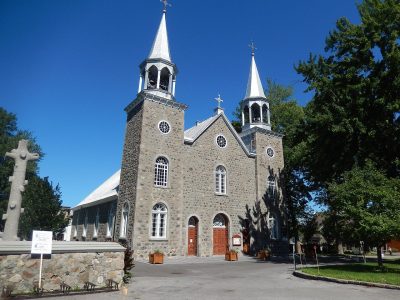
Église de la Purification-de-la-Bienheureuse-Vierge-Marie · Photo: Fralambert · CC BY-SA 4.0
3historic places on the registers
History of Repentigny · Canada’s heritage registers
Back to 1723 in Repentigny, with Église de la Purification-de-la-Bienheureuse-Vierge-Marie
The registers list 3 historic places inside Repentigny, every one with the highest designation. For every 10,000 residents that makes 0.3, ahead of 72% of Canadian towns. Its housing is mostly newer: 6.9% predates 1961, where the typical town has 18%.
National Historic Sites, classified federal buildings and Québec’s classements
Oldest building
1723
the first construction date on its record
Homes built before 1961
6.9%
typical town: 18%
In pictures
All 3 top-tier places in Repentigny, pictured
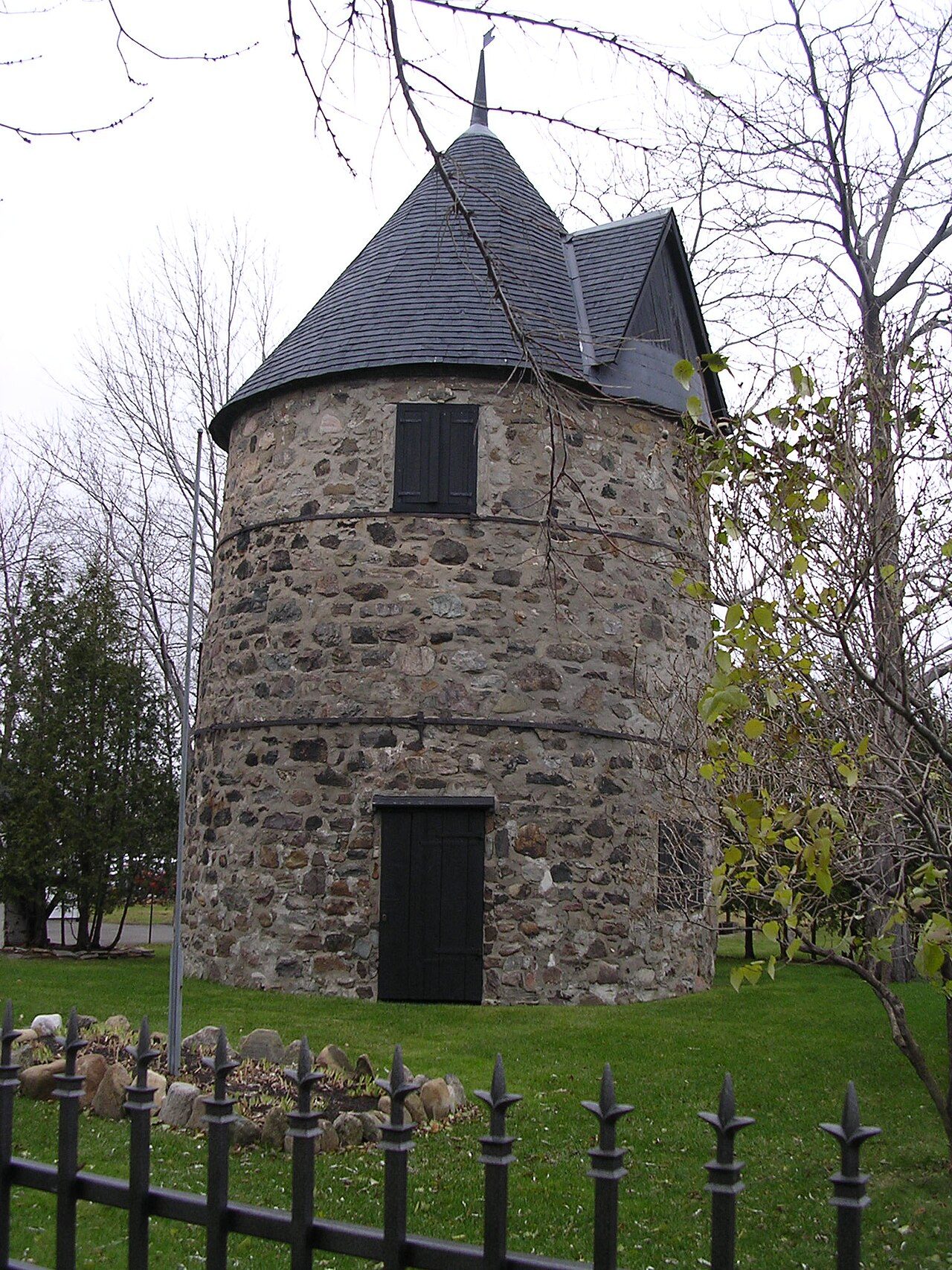
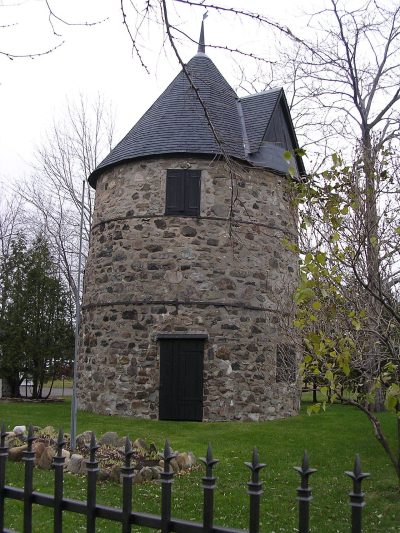
Begin with Église de la Purification-de-la-Bienheureuse-Vierge-Marie, then Moulin à vent Grenier. Every place on Repentigny’s registers has a photo here. On their own pages, 2 of Repentigny’s places show how they once looked.
Photos from Wikimedia Commons, each credited to its photographer with its licence; names open the place’s page. Tap a photo to step through them full screen.
Through time
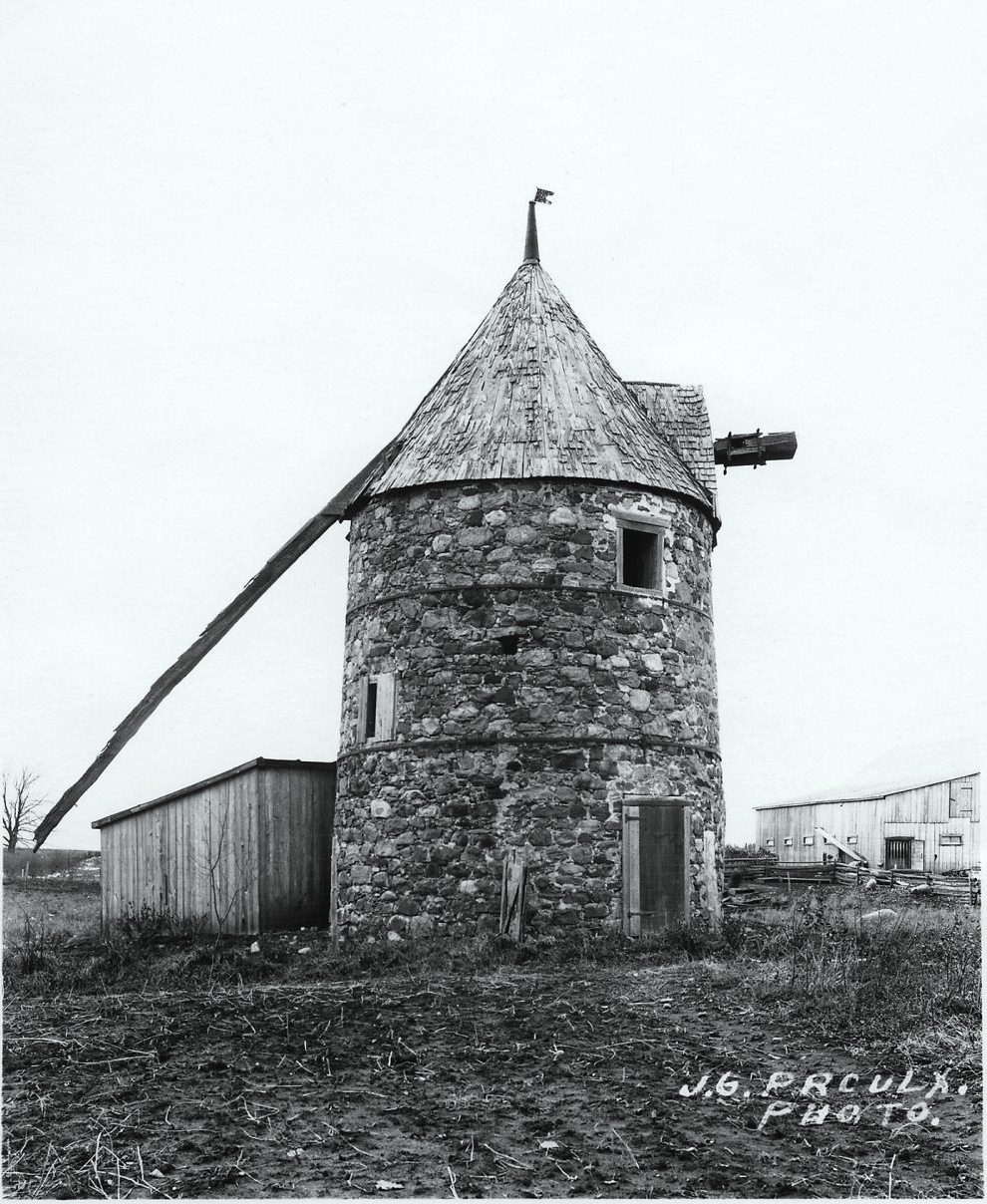
Repentigny through the years, 1909–1936
The oldest views of 2 of its historic places, from oldest to latest. The dots mark each picture’s year; tap one to enlarge it.
1890190019101920193019401950Confederation to 1900Boom yearsThe wars and betweenAfter the war
Public domain or CC0, made before 1950, from Wikimedia Commons; old views of places can be drawings, prints or maps of their time. Each credit opens the image’s page.
How it began
Repentigny through its dates, from 1669
Repentigny is named after Pierre Legardeur, lord in New France. The municipality of Repentigny has the date 1669 on Wikidata; the record doesn’t say whether it marks a founding or an incorporation.
Every place on the registers inside the town, by its designation.
Highest designations
Names show on hover, and a tap takes you to the place’s page.
The 3, by tier
3 Highest designations
Federal designations come from Parks Canada; Québec’s own register adds what the province has classified and what the municipality has cited.
Points from Wikidata (Parks Canada’s files carry none) and from Québec’s register, as mapped there.
Highest designations
3 places in Repentigny with the highest designation
Their designations span 1975 to 1978. National Historic Sites and Classified Federal Heritage Buildings, Canada’s highest federal recognition. The oldest, Église de la Purification-de-la-Bienheureuse-Vierge-Marie, dates from 1723; the newest from 1823. Each one opens its own page.
Only 2.7% of Repentigny’s homes were built from 2016 to 2021 (4.1% is typical)
Repentigny’s largest group of homes, 38%, went up from 1981 to 2000. 21% of Repentigny’s homes were built from 2001 to 2015, more than the typical town’s 15%. Count back from today and half of Repentigny’s homes are older than 2001.
6.9%
Before 1961
31%
1961–80
38%
1981–2000
21%
2001–15
2.7%
2016–21
RepentignyTypical town
2021 Census, private dwellings by period of construction (Statistics Canada); the typical town is the middle Canadian town of 2,500 or more.
Born here
Before 1914, Repentigny gave 6 lives to the record
The widest known is Joe Juneau: 8 Wikipedia editions. Most of them, 4 of 6, came into the world in the years before Confederation. Côme-Séraphin Cherrier comes first, born in 1798. At 87, Côme-Séraphin Cherrier outlived the rest, dying in 1885.
Côme-Séraphin Cherrier
Joe Juneau
Joseph Marion
Joseph Royal
Charles Marchand
Henri-Laurier Coiteux
175017751800182518501875190019251950
Joe Juneau1836–1899 · Canadian explorer, co-discoverer of gold in the Juneau distric
Joseph Royal1837–1902 · Manitoba Lieutenant-Governor, journalist, lawyer, politician
Côme-Séraphin Cherrier1798–1885 · Canadian politician
JM
Joseph Marion1837–1923 · Canadian politician
Charles Marchand1890–1930 · Canadian singer
HC
Henri-Laurier Coiteux1909–1972
Everyone born in Repentigny → Born before 1914 (the page’s periods: Confederation to the First World War). Birthplaces from Wikidata, each checked against the person’s Wikipedia article.
Canada’s heritage lists give Repentigny 3 historic places, 3 with the highest designation. Joe Juneau (1836), Joseph Royal (1837) and Côme-Séraphin Cherrier (1798) are the best known of its historic lives. The census dates only 6.9% of its homes before 1961, against 18% in the typical town. Beyond that, it has 3 historic places, about typical for a town its size (the middle one has 3); and its places were designated between 1975 and 1978.
How to read these numbers
What this data can and can’t tell you
•
Québec’s register. The Répertoire du patrimoine culturel du Québec is open data, so the province’s own designations and its municipalities’ citations are here in full.
•
The federal register. Parks Canada’s Directory of Federal Heritage Designations lists every National Historic Site, federal heritage building, heritage railway station and lighthouse; the Canadian Register of Historic Places adds their statements in English and French.
•
Protection. A place classified or cited under Québec’s law is protected; National Historic Site status alone protects only what the federal government owns.
•
The tiers. The highest designations are National Historic Sites, Classified Federal Heritage Buildings and Québec’s classements; then come the other federal designations; then provincial and local listings.
•
People and events. The open directory puts its national historic persons nowhere, so a town shows one only on firm ground: a birth there, matched by name and life years, or a historic place there named for the person whose record says so. Events are left out.
•
The grade. This page gives no grade; history doesn’t count toward a Canadian town’s letter.
Questions about Repentigny’s history
What is the oldest building in Repentigny?
Église de la Purification-de-la-Bienheureuse-Vierge-Marie (Classified heritage building (Québec)): the first construction date on its record is 1723.
Which places in Repentigny have the highest designation?
They are Église de la Purification-de-la-Bienheureuse-Vierge-Marie, Moulin à vent Grenier and Moulin à vent Antoine-Jetté.
How old are the homes in Repentigny?
6.9% predate 1961, where the typical town has 18%.
Contains information licensed under the Open Government Licence – Canada (Parks Canada). Québec register data: Ministère de la Culture et des Communications du Québec, CC BY 4.0.
Sources: Parks Canada, Directory of Federal Heritage Designations · Canadian Register of Historic Places (federal extract) · Répertoire du patrimoine culturel du Québec (MCC, Données Québec) · Wikidata (CC0) for map points, other names and articles · Statistics Canada, 2021 Census (homes by period of construction). Under the Statistics Canada Open Licence.


 1908–1911
 c. 1936
 Top
 Top
 Top


