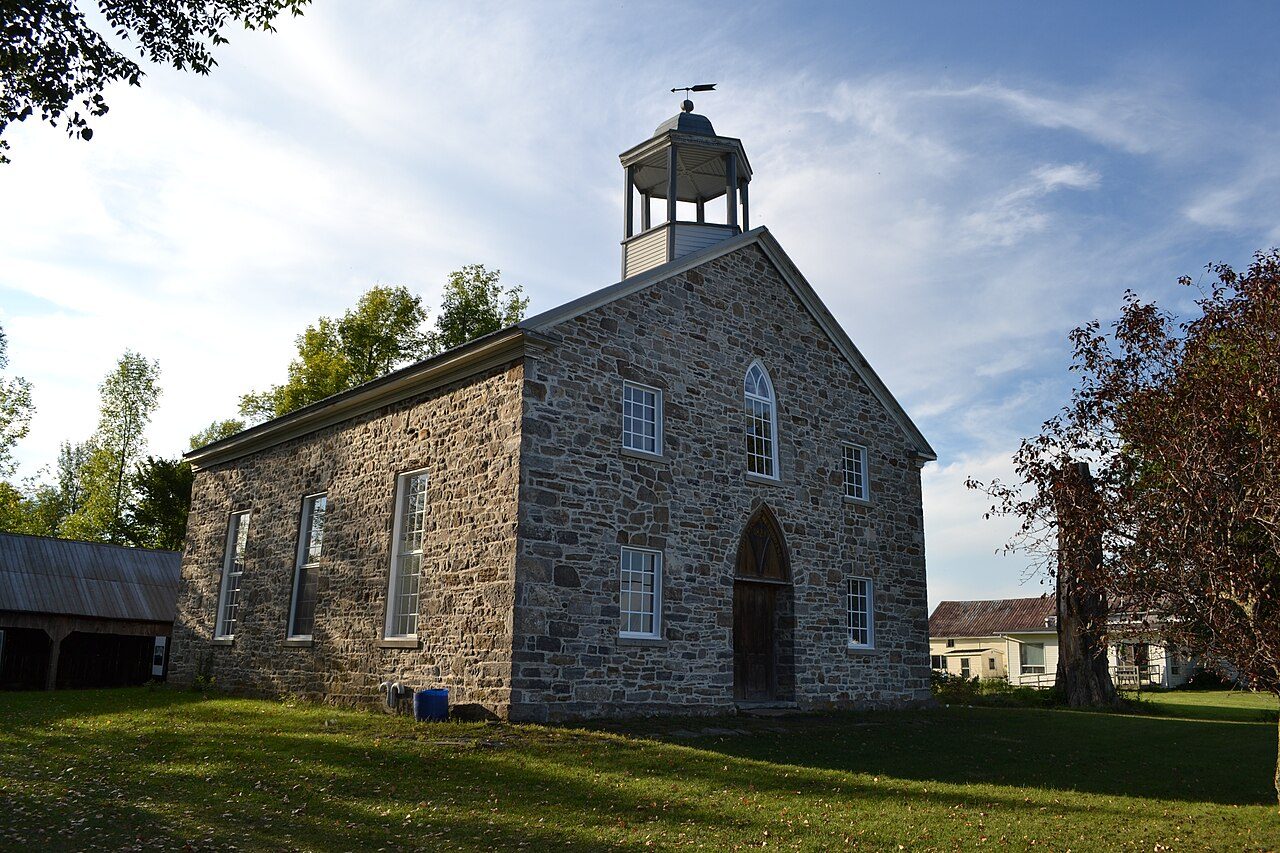
Église d'Odelltown · Photo: Benoit Rochon · CC BY-SA 3.0
6historic places on the registers
History of Lacolle · Canada’s heritage registers
2 top designations among Lacolle’s 6 historic places
The record has 3 municipal citations and a heritage railway station. Lacolle’s 21 per 10,000 residents puts it ahead of 99% of Canadian towns. Older housing stands out: 34% of homes predate 1961, where the typical town has 18%. Battle of Lacolle, begun in 1814, is the oldest by its record.
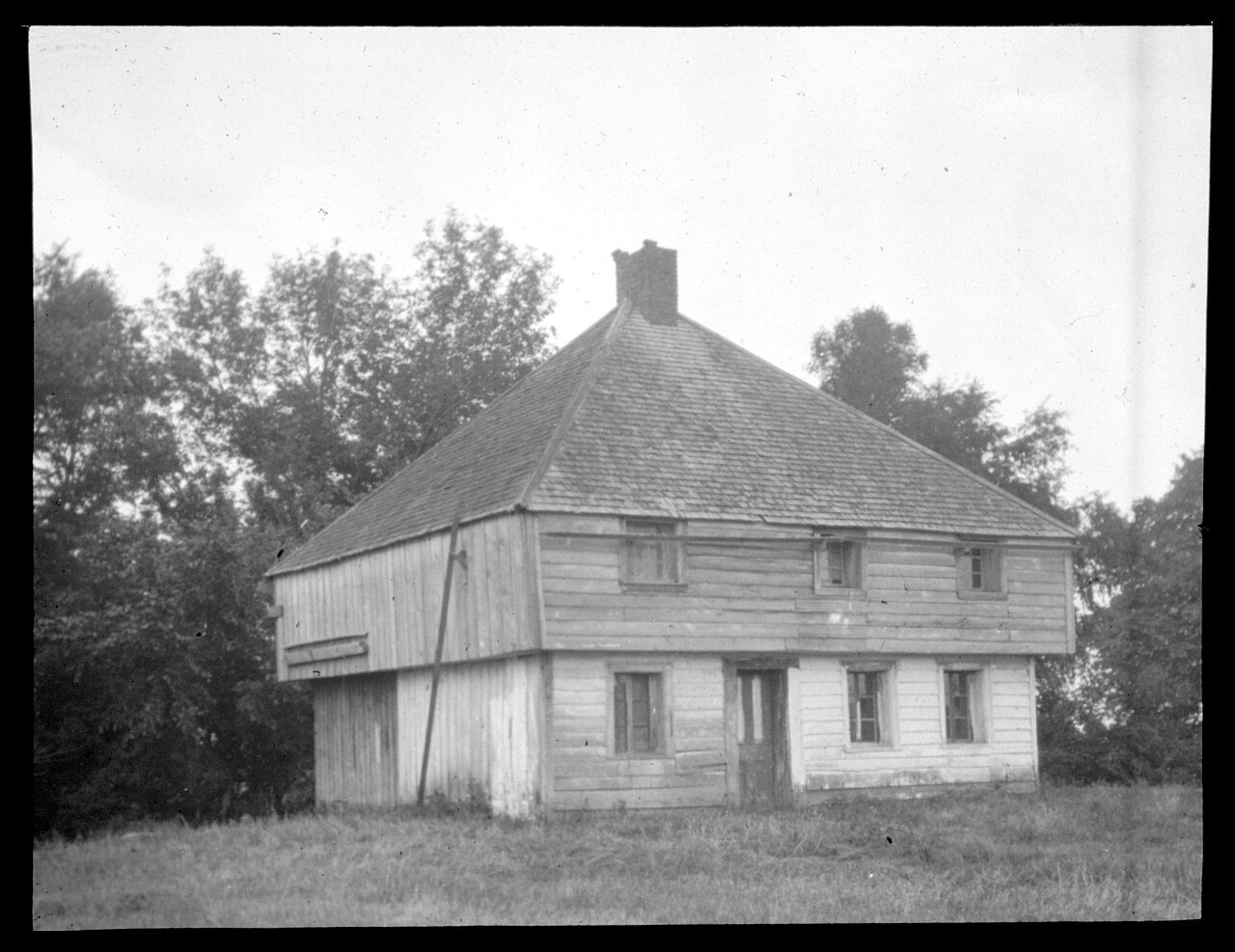
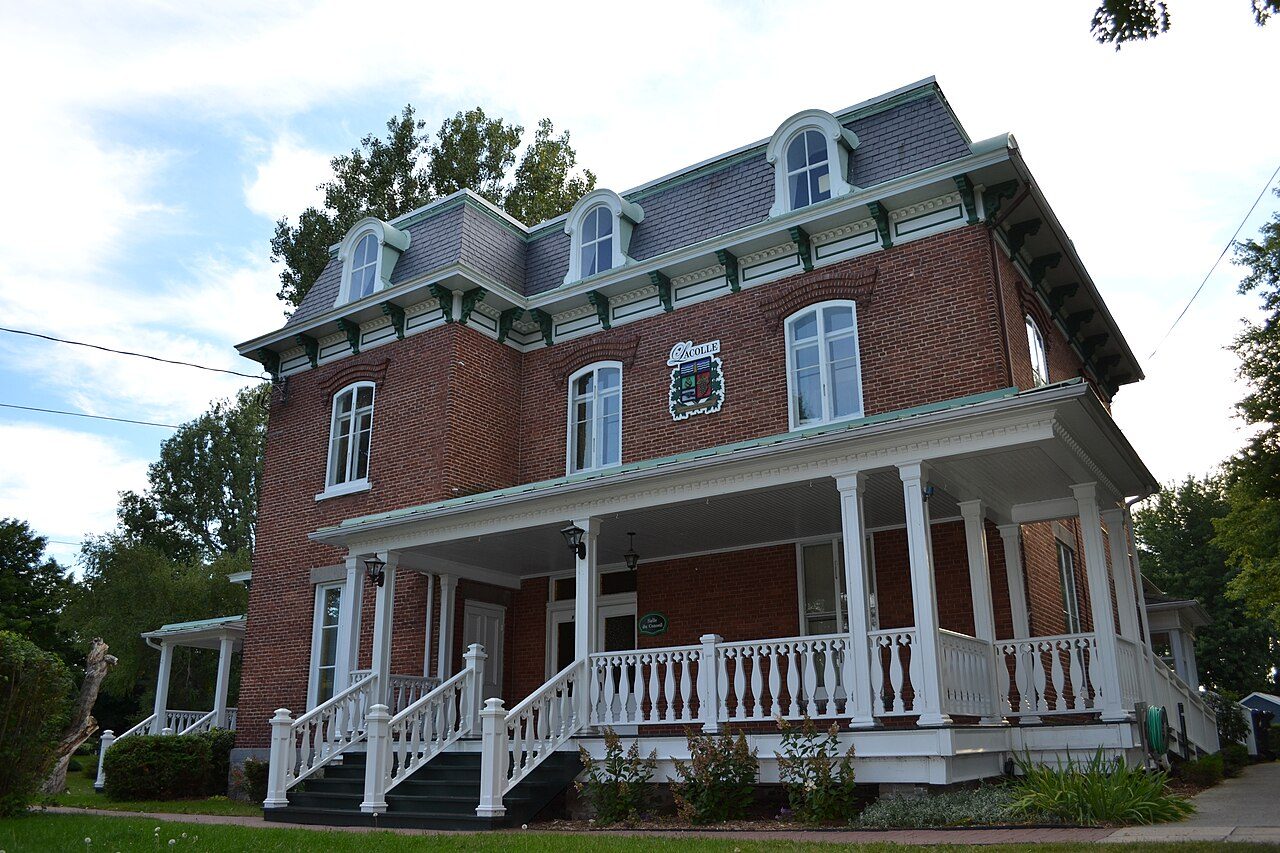
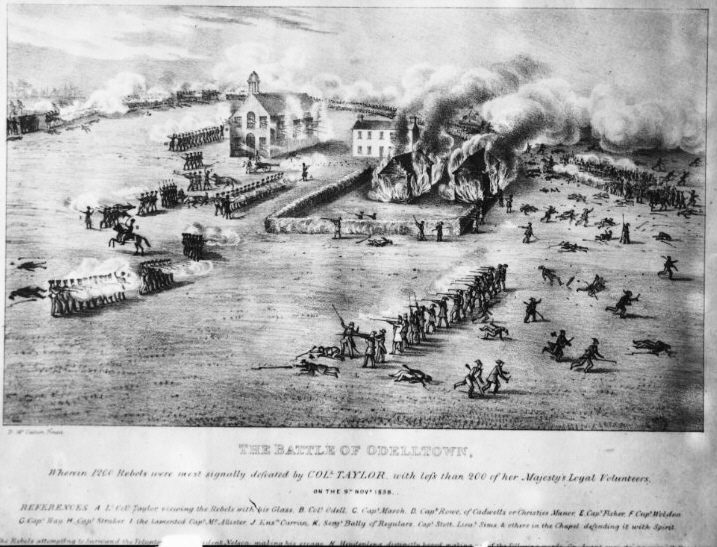
Every place on Lacolle’s registers has a photo here. For 2 of Lacolle’s places, old views sit on the place’s own page. Two worth a look first: Église d'Odelltown and Battle of Lacolle.
Photos from Wikimedia Commons, each credited to its photographer with its licence; names open the place’s page. Tap a photo to step through them full screen.
Through time
Lacolle, 1840 to 1933
By date: one old photograph of the town, with the oldest views of 2 of its historic places. Scroll the strip and tap a picture to open it.
18501875190019251950Before ConfederationConfederation to 1900Boom yearsThe wars and betweenAfter the war
Public domain or CC0, made before 1950, from Wikimedia Commons; old views of places can be drawings, prints or maps of their time. Each credit opens the image’s page.
How it began
Back to 1930: Lacolle’s first record
On the open record, Lacolle as a municipality goes back to September 13, 2001, though that may be a charter rather than a first settlement. Rail service is on record from 1930, when Lacolle railway station opened. Lacolle and Notre-Dame-du-Mont-Carmel gave way to the present municipality in 2001.
Every place on the registers inside the town, by its designation.
Highest designationsOther federal designationsProvincial and local listings
Tap any dot to open that place’s own page; hovering shows its name.
The 6, by tier
2 Highest designations1 Other federal designations3 Provincial and local listings
Two open registers meet here: Parks Canada’s Directory of Federal Heritage Designations and Québec’s heritage register, which records both provincial classements and municipal citations.
Points from Wikidata (Parks Canada’s files carry none) and from Québec’s register, as mapped there.
Highest designations
2 places in Lacolle with the highest designation
They include Battle of Lacolle and Église d'Odelltown. By designation: a National Historic Site and a place classified by Québec. National Historic Sites and Classified Federal Heritage Buildings, Canada’s highest federal recognition. Each one opens its own page.
In Lacolle, churches and religious buildings lead the list (50%)
Leading by designation: Battle of Lacolle and Église d'Odelltown.
Churches and religious buildings3
Stations, lighthouses and bridges1
Other places2
Grouped by what each register says the place is or was; a converted building counts as what it was built for.
Provincial and local listings
3 local listings in Lacolle
Citations the municipality has made, registered with Québec’s ministry of culture. Their dates run from 1880, with “Église anglicane Saint-Saviour (Lacolle, Quebec)”, to 1890. Each one opens its own page.
7.1% of Lacolle’s homes are from 2016 to 2021 (4.1% is typical)
More than half of Lacolle’s housing predates 1981. Few of Lacolle’s homes date from 1961 to 1980: 21%, the norm 27%. 24% of Lacolle’s homes were built from 1981 to 2000, close to the typical town’s 23%.
34%
Before 1961
21%
1961–80
24%
1981–2000
14%
2001–15
7.1%
2016–21
LacolleTypical town
2021 Census, private dwellings by period of construction (Statistics Canada); the typical town is the middle Canadian town of 2,500 or more.
Born here
Born in Lacolle before the First World War: 3 lives
The line ends with Adélard Trottier (1879). Best known is Francis Morice, with articles in 4 Wikipedia languages. It starts with Francis Morice, born in 1851. At 76, Adélard Trottier outlived the rest, dying in 1955.
Francis Morice
Thomas E. Walsh
Adélard Trottier
18501875190019251950
FM
Francis Morice1851–1912 · Police officer and New Zealand cricketer
AT
Adélard Trottier1879–1955 · Canadian politician
Thomas E. Walsh1853–1893 · Irish-Canadian Catholic priest
Everyone born in Lacolle → Born before 1914 (the page’s periods: Confederation to the First World War). Birthplaces from Wikidata, each checked against the person’s Wikipedia article.
Towns its size
Lacolle has the most of 16 towns its size
Towns of 2,800 to 2,800 residents, by places on the registers.
Of the homes standing in Lacolle, 34% went up before 1961, against 18% in the typical town. Together that makes 6 historic places, 2 with the highest designation. It tops the 16 towns nearest its size for historic places. The town’s people of the past are Francis Morice (1851), Adélard Trottier (1879) and Thomas E. Walsh (1853). Everything else is close to the norm: the designations ran from 1923 to 1991.
How to read these numbers
What this data can and can’t tell you
•
Map points. Parks Canada publishes no coordinates, so federal places are pinned where Wikidata puts them.
•
The tiers. The highest designations are National Historic Sites, Classified Federal Heritage Buildings and Québec’s classements; then come the other federal designations; then provincial and local listings.
•
People and events. National historic persons carry no place in the open file. They appear on a town’s page when born there (same name, same birth and death years) or when a historic place inside it carries their name and its record names them with their dates; national historic events don’t appear.
•
The grade. This page gives no grade; history doesn’t count toward a Canadian town’s letter.
•
The federal register. The federal list is complete and open: Parks Canada’s directory for the designations, the Canadian Register of Historic Places for what each one is and why it matters.
•
Québec’s register. In Québec the ministry of culture publishes its register openly: provincial classements, declared sites and the municipalities’ citations all appear, with their descriptions.
•
Protection. A place classified or cited under Québec’s law is protected; National Historic Site status alone protects only what the federal government owns.
Questions about Lacolle’s history
How old are the homes in Lacolle?
The 2021 Census dates 34% of its homes before 1961 (18% in the typical town).
Which places in Lacolle have the highest designation?
These: Battle of Lacolle and Église d'Odelltown.
What is the oldest building in Lacolle?
By its record, Battle of Lacolle, from 1814 (National Historic Site).
Contains information licensed under the Open Government Licence – Canada (Parks Canada). Québec register data: Ministère de la Culture et des Communications du Québec, CC BY 4.0.
Sources: Parks Canada, Directory of Federal Heritage Designations · Canadian Register of Historic Places (federal extract) · Répertoire du patrimoine culturel du Québec (MCC, Données Québec) · Wikidata (CC0) for map points, other names and articles · Statistics Canada, 2021 Census (homes by period of construction). Under the Statistics Canada Open Licence.



 1840
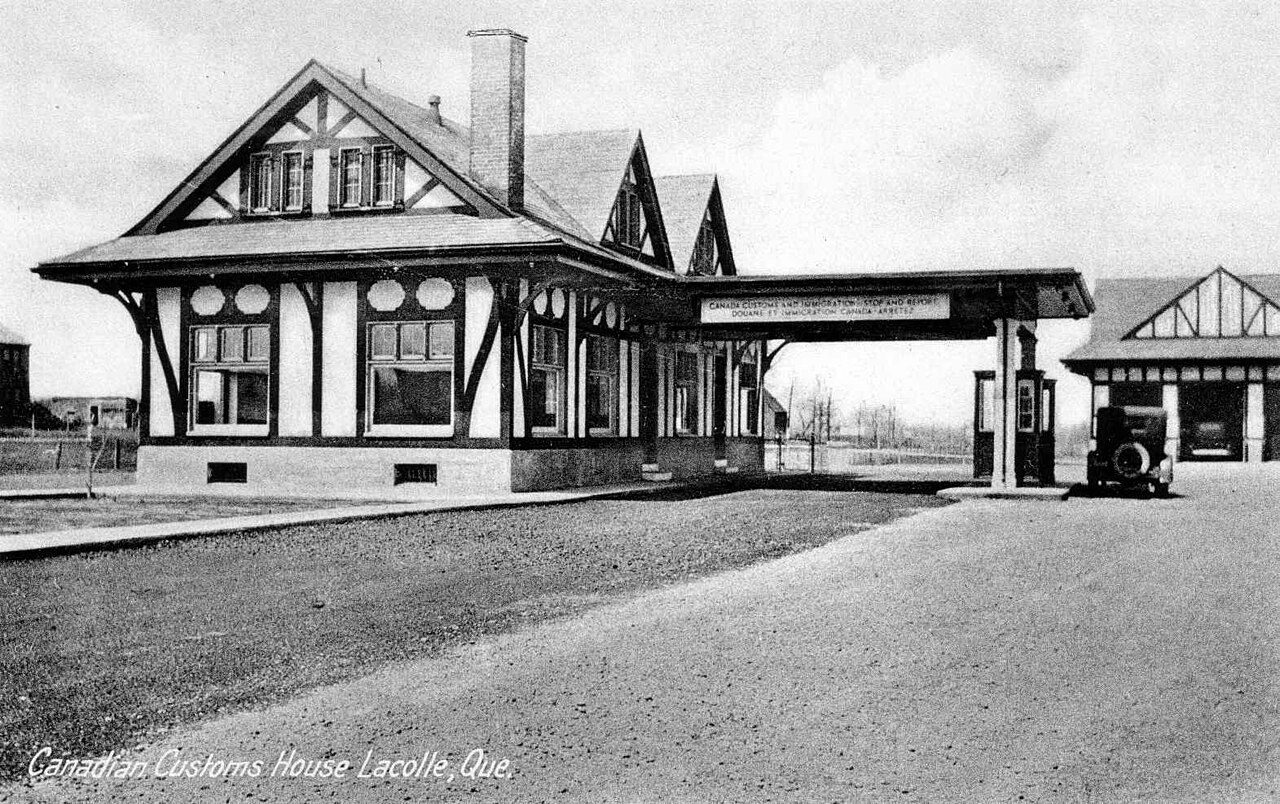 1933
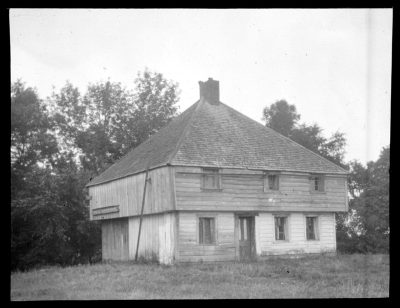 Top
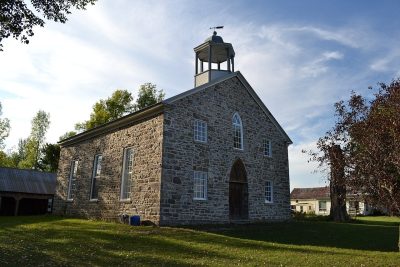 Top
 Fed
 Local
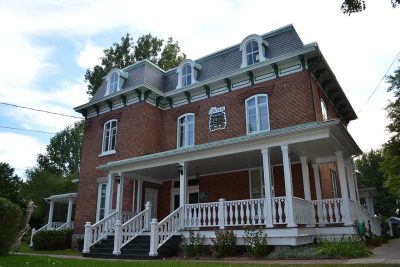 Local
 Local
