 Top
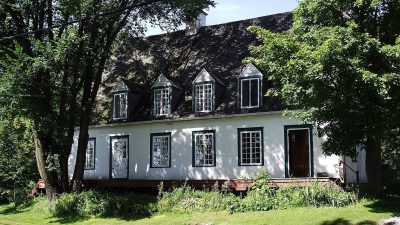
National Historic Site · 1720–1804Pagé - Rinfret House / Beaudry House66 du Roy StreetPhoto: Sylvainbrousseau · CC BY-SA 3.0 · Commons file
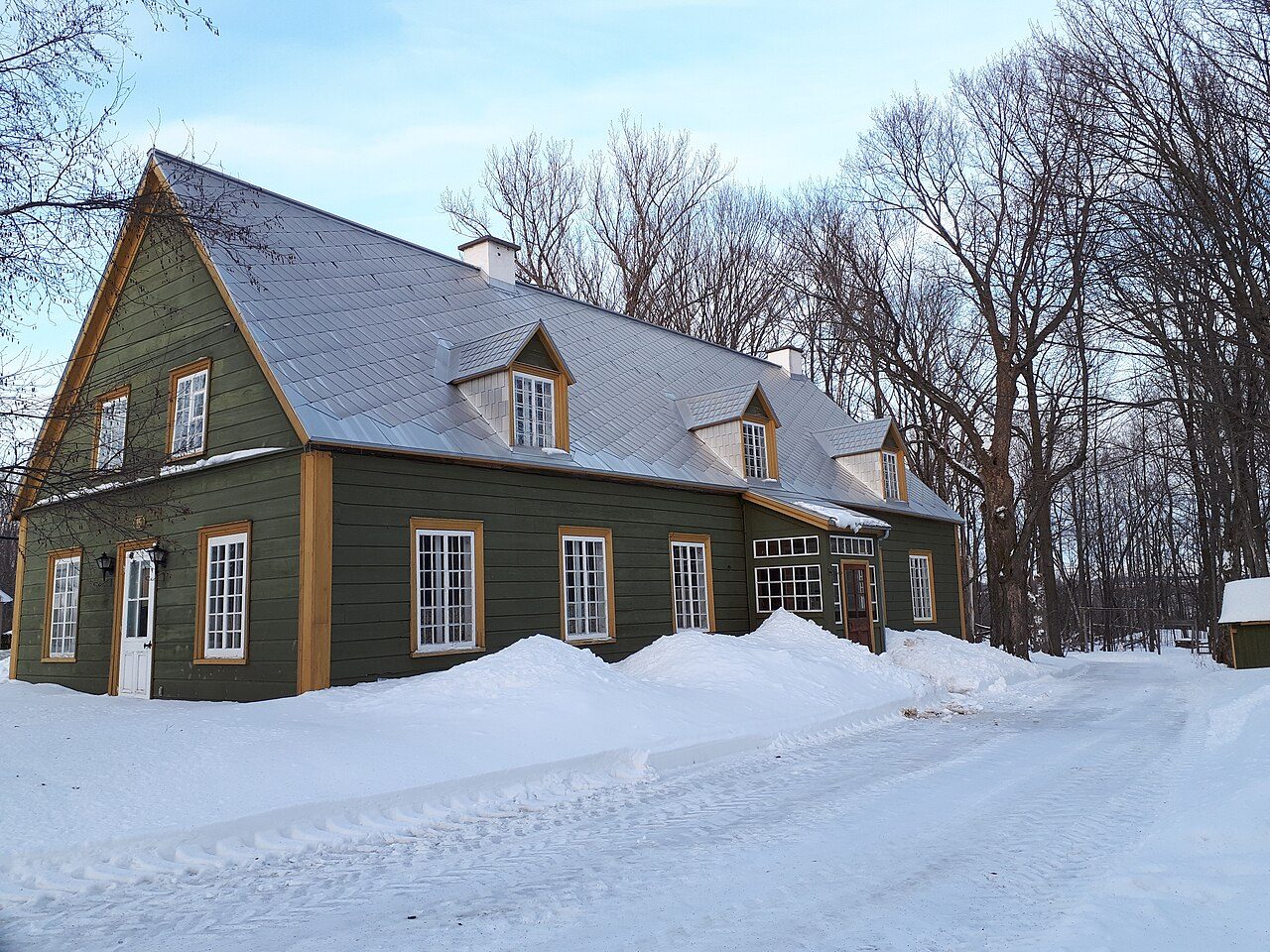 Ensemble d'immeubles patrimoniaux du Fort-Jacques-Cartier-et-du-Manoir-Allsopp · Photo: Lacombelle · CC BY-SA 4.0
4historic places on the registers
History of Cap-Santé · Canada’s heritage registers
History in Cap-Santé goes back to 1720: Pagé - Rinfret House / Beaudry House
Inside Cap-Santé there are 4 historic places, all of them top designations. Only a few towns match it per resident: 10 for every 10,000, ahead of 98% of Canadian towns. The municipality’s date on Wikidata is 1679: a founding, an incorporation or an amalgamation, the record doesn’t say which.
Historic places
4
10 per 10,000 residents
Highest designations
4
National Historic Sites, classified federal buildings and Québec’s classements
Oldest building
1720
the first construction date on its record
Homes built before 1961
24%
typical town: 18%
In pictures
All 4 top-tier places in Cap-Santé, pictured
Up first are Ensemble d'immeubles patrimoniaux du Fort-Jacques-Cartier-et-du-Manoir-Allsopp and Pagé - Rinfret House / Beaudry House. The photos cover every place on Cap-Santé’s registers. 4 different photographers shared them on Wikimedia Commons.
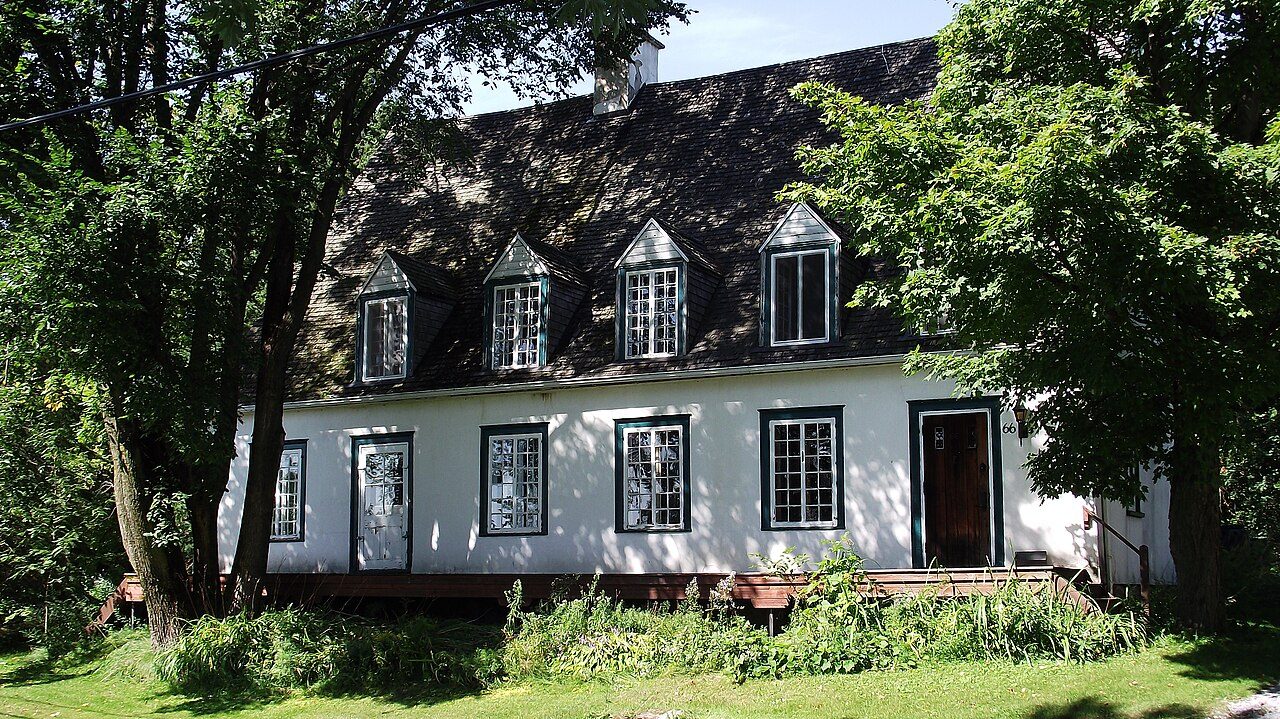 Pagé - Rinfret House / Beaudry House
 Church of the Holy Family, Cap Santé
 Site historique de Sainte-Famille+1See all photos
Photos from Wikimedia Commons, each credited to its photographer with its licence; names open the place’s page. Tap a photo to step through them full screen.
Through time
Old pictures of Cap-Santé
From before 1950 comes the oldest view of one of its historic places. Tap it to see it full screen.
 1926
Public domain or CC0, made before 1950, from Wikimedia Commons; old views of places can be drawings, prints or maps of their time. Each credit opens the image’s page.
The map
Where Cap-Santé’s history is
Every place on the registers inside the town, by its designation.
Highest designations
Hover a dot for its name; tap one to open its page.
The 4, by tier
4 Highest designations
The federal directory and the Répertoire du patrimoine culturel du Québec are both open, so every federal, provincial and municipal designation here has its point.
Points from Wikidata (Parks Canada’s files carry none) and from Québec’s register, as mapped there.
Highest designations
4 places in Cap-Santé with the highest designation
They date from 1720 (Pagé - Rinfret House / Beaudry House) to 1754. By designation: 3 places classified by Québec and a National Historic Site. National Historic Sites and Classified Federal Heritage Buildings, Canada’s highest federal recognition. Each one opens its own page.
 Top
Classified heritage building (Québec) · 1750Ensemble d'immeubles patrimoniaux du Fort-Jacques-Cartier-et-du-Manoir-Allsopp15 rue Notre-DamePhoto: Lacombelle · CC BY-SA 4.0 · Commons file
 Top
Classified heritage building (Québec) · 1754–1767Church of the Holy Family, Cap Santécôte du Quai¤32 place de l'églisePhoto: ED01 at wts wikivoyage · Public domain · Commons file
 Top
Classified heritage site (Québec)Site historique de Sainte-Famille30 place de l'Église¤ côte du QuaiPhoto: Harfang · CC BY 3.0 · Commons file
Homes by age
Old houses stand out in Cap-Santé: 24% predate 1961, where most towns have 18%
28% of Cap-Santé’s homes date from 2001 to 2015, well above the typical 15%. Homes built from 2016 to 2021 are 5% of Cap-Santé’s, about the typical 4.1%. Cap-Santé built little from 1981 to 2000: 18% of its homes, where most towns have 23%.
24%
Before 1961
26%
1961–80
18%
1981–2000
28%
2001–15
5%
2016–21
Cap-SantéTypical town
2021 Census, private dwellings by period of construction (Statistics Canada); the typical town is the middle Canadian town of 2,500 or more.
Born here
1779 to 1898: the people Cap-Santé gave its past
11 of the 12 were born in the years before Confederation. 12 people on the record were born here before 1914. Of them all, Louis Bertrand lived longest: 92 years, until 1871. Fame, by Wikipedia: Pierre Garneau first, in 4 languages.
Louis Bertrand
Isidore Thibaudeau
Antoine-Sébastien Falardeau
Pierre Garneau
Louis George Harper
Joseph-Rosaire Thibaudeau
Pierre-Léandre Marcotte
Charles Marcotte
Côme Isaïe Rinfret
Honoré Petit
Esdras Alfred de Saint-Georges
Gérard Morisset
175017751800182518501875190019251950

Pierre Garneau1823–1905 · Canadian politician and businessman
LH
Louis George Harper1830–1884 · Canadian politician

Esdras Alfred de Saint-Georges1849–1890 · Canadian politician

Isidore Thibaudeau1819–1893 · Canadian politician

Antoine-Sébastien Falardeau1822–1889 · Canadian painter

Côme Isaïe Rinfret1847–1911 · Canadian politician

Honoré Petit1847–1922 · Canadian politician

Joseph-Rosaire Thibaudeau1837–1909 · Canadian politician
Everyone born in Cap-Santé → Born before 1914 (the page’s periods: Confederation to the First World War). Birthplaces from Wikidata, each checked against the person’s Wikipedia article.
Towns its size
Cap-Santé has the most of 16 towns its size
Towns of 3,900 to 3,900 residents, by places on the registers.
Cap-Santé4
The middle one has 0. For 9, the registers list nothing.
Neighbours
Cap-Santé and its neighbours
| Town | People | Places | Highest | Oldest |
|---|---|---|---|---|
| Cap-Santé | 3,885 | 4 | 4 | 1720 |
| Donnacona | 7,785 | 0 | 0 | — |
| Portneuf | 3,410 | 3 | 2 | 1761 |
| Saint-Basile | 2,918 | 0 | 0 | — |
| Sainte-Croix | 2,612 | 4 | 3 | 1829 |
| Pont-Rouge | 11,339 | 3 | 2 | 1870 |
| Saint-Édouard-de-Lotbinière | 1,295 | 0 | 0 | — |
In brief
Cap-Santé in brief
Counted by age, 24% of Cap-Santé’s homes predate 1961, against 18% in the typical town. All told, the registers hold 4 historic places, 4 with the highest designation, Pagé - Rinfret House / Beaudry House among them. Among the 16 towns nearest its size, none has more historic places. Among the lives from its past: Pierre Garneau (1823), Louis George Harper (1830) and Esdras Alfred de Saint-Georges (1849). The other figures are unremarkable: its places were designated between 1969 and 1986.
How to read these numbers
What this data can and can’t tell you
- People and events. Persons of national historic significance come with no location; a town gets one only by birthplace (name and both life years agreeing) or by one of its own places that bears the name and whose record tells the story. Events, which can’t be tied, are left out.
- Map points. Where a federal place sits on the map is Wikidata’s placing; the directory itself has no coordinates.
- Protection. A place classified or cited under Québec’s law is protected; National Historic Site status alone protects only what the federal government owns.
- The grade. This page gives no grade; history doesn’t count toward a Canadian town’s letter.
- Québec’s register. Québec is the one province whose register is open: classements, declarations and municipal citations, described by the ministry in French.
- The federal register. Federal places come from Parks Canada’s directory, which counts National Historic Sites, federal heritage buildings, stations and lighthouses; their statements are the register’s own.
- The tiers. The highest designations are National Historic Sites, Classified Federal Heritage Buildings and Québec’s classements; then come the other federal designations; then provincial and local listings.
Questions about Cap-Santé’s history
What is the oldest building in Cap-Santé?
Pagé - Rinfret House / Beaudry House, a National Historic Site, begun in 1720.
Which places in Cap-Santé have the highest designation?
These: Pagé - Rinfret House / Beaudry House, Ensemble d'immeubles patrimoniaux du Fort-Jacques-Cartier-et-du-Manoir-Allsopp, Church of the Holy Family, Cap Santé and Site historique de Sainte-Famille.
How old are the homes in Cap-Santé?
24% of its homes were built before 1961, against 18% in the typical Canadian town.
Contains information licensed under the Open Government Licence – Canada (Parks Canada). Québec register data: Ministère de la Culture et des Communications du Québec, CC BY 4.0.
Sources: Parks Canada, Directory of Federal Heritage Designations · Canadian Register of Historic Places (federal extract) · Répertoire du patrimoine culturel du Québec (MCC, Données Québec) · Wikidata (CC0) for map points, other names and articles · Statistics Canada, 2021 Census (homes by period of construction). Under the Statistics Canada Open Licence.
Adapted from Statistics Canada (Census of Population 2021, population estimates 2025, 2021 census boundaries) under the Statistics Canada Open Licence; this does not constitute an endorsement by Statistics Canada. Neighbourhood names in some cities © OpenStreetMap contributors (ODbL).